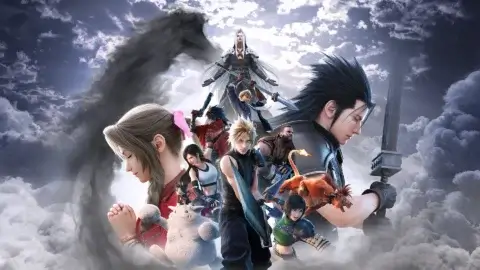
When I first played Final Fantasy VII Rebirth on PlayStation 5, I came away convinced it was one of the best RPGs of this generation. Before the Nintendo Switch 2 version launched, I also had the chance to preview the port, and while I was impressed by what I saw, there were still plenty of questions about how the full experience would hold up. Now, after spending considerable time with the complete game on Nintendo’s new hardware, I can confidently say this is an impressive achievement, even if a few compromises were inevitable.
The biggest talking point with this release is, without question, the fact that Final Fantasy VII Rebirth is now fully playable on a handheld system. A game of this scale, packed with massive open regions, cinematic storytelling, challenging combat, and countless hours of side content, feels right at home on the Nintendo Switch 2. Being able to pick up where I left off while travelling, relaxing on the couch, or away from the TV completely changes how I approached the adventure. It’s easily the biggest selling point of this version and one that shouldn’t be underestimated.
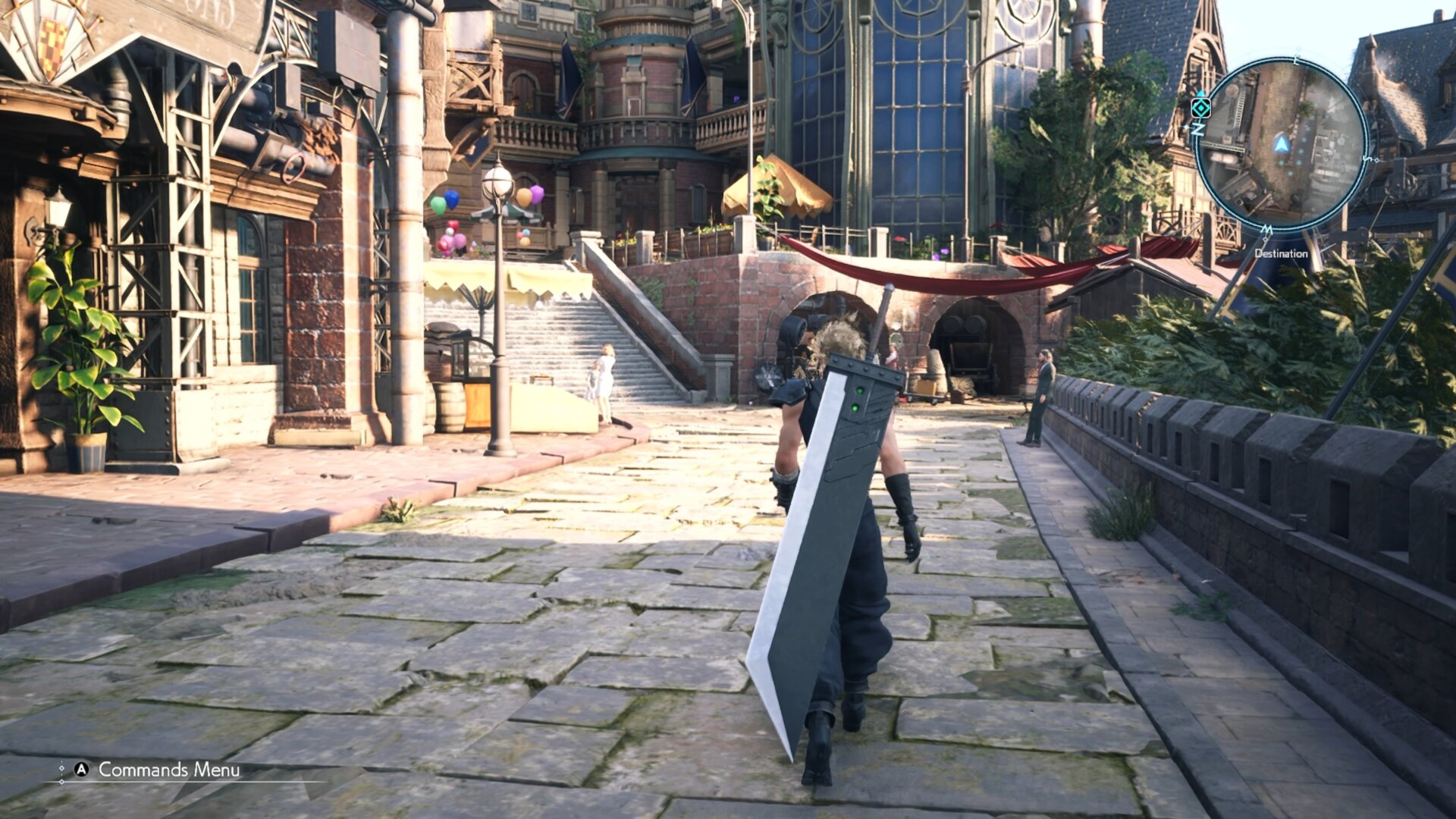
Square Enix has also taken advantage of several Nintendo Switch 2 features to make this feel like more than just a basic port. Load times are impressively quick, handheld performance is remarkably stable for such a technically demanding game, and the system’s improved hardware means the experience remains responsive whether docked or portable. Having the flexibility to seamlessly swap between TV and handheld play makes it easy to fit lengthy gameplay sessions around everyday life, and that’s something I found myself appreciating more and more the longer I played.
Perhaps the most impressive part of this release is that it really is the complete Final Fantasy VII Rebirth experience. Nothing feels stripped back in terms of content. The enormous world, memorable character moments, exciting boss battles, mini-games, and wealth of optional activities are all here. Considering the sheer size and ambition of Rebirth, it’s clear an incredible amount of work has gone into optimising the game for Nintendo’s hardware. There were plenty of moments where I found myself genuinely impressed that a game of this scope was running as well as it was on a portable console.
That isn’t to say sacrifices haven’t been made. The visual downgrade is noticeable, particularly if, like me, you’ve already played the PlayStation 5 version. Texture quality has taken a hit, environmental detail isn’t as sharp, shadows are less refined, and character models occasionally lack the same level of polish seen on other consoles. The image can appear softer in handheld mode, and there are moments where the reduced graphical fidelity is impossible to ignore.
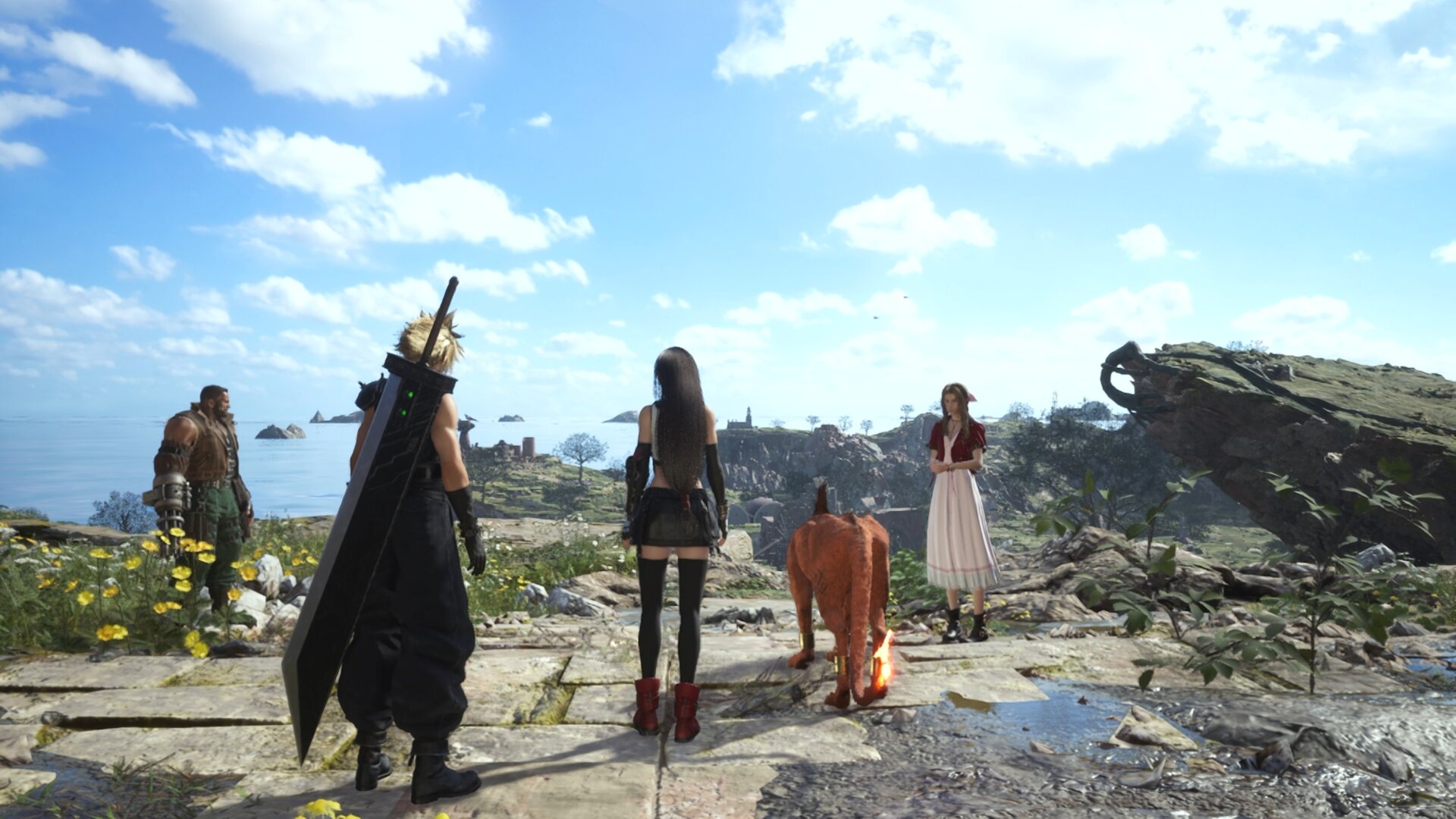
Thankfully, those compromises rarely distracted me from enjoying the game itself. The combat remains just as exhilarating, seamlessly blending real-time action with strategic command inputs. The soundtrack is still phenomenal, the voice acting remains outstanding, and the emotional storytelling loses none of its impact. Performance is generally consistent throughout most of the adventure, which is arguably more important than chasing visual fidelity on a handheld platform.
There are still areas where I think the port could have been improved. A higher resolution performance option would have been welcome, particularly when playing docked, and there are occasional frame rate dips during some of the busiest encounters or densely populated areas. While they’re never severe enough to ruin the experience, they’re noticeable enough that I couldn’t completely overlook them. Sharper image quality in handheld mode would also have helped preserve more of the game’s stunning world design.
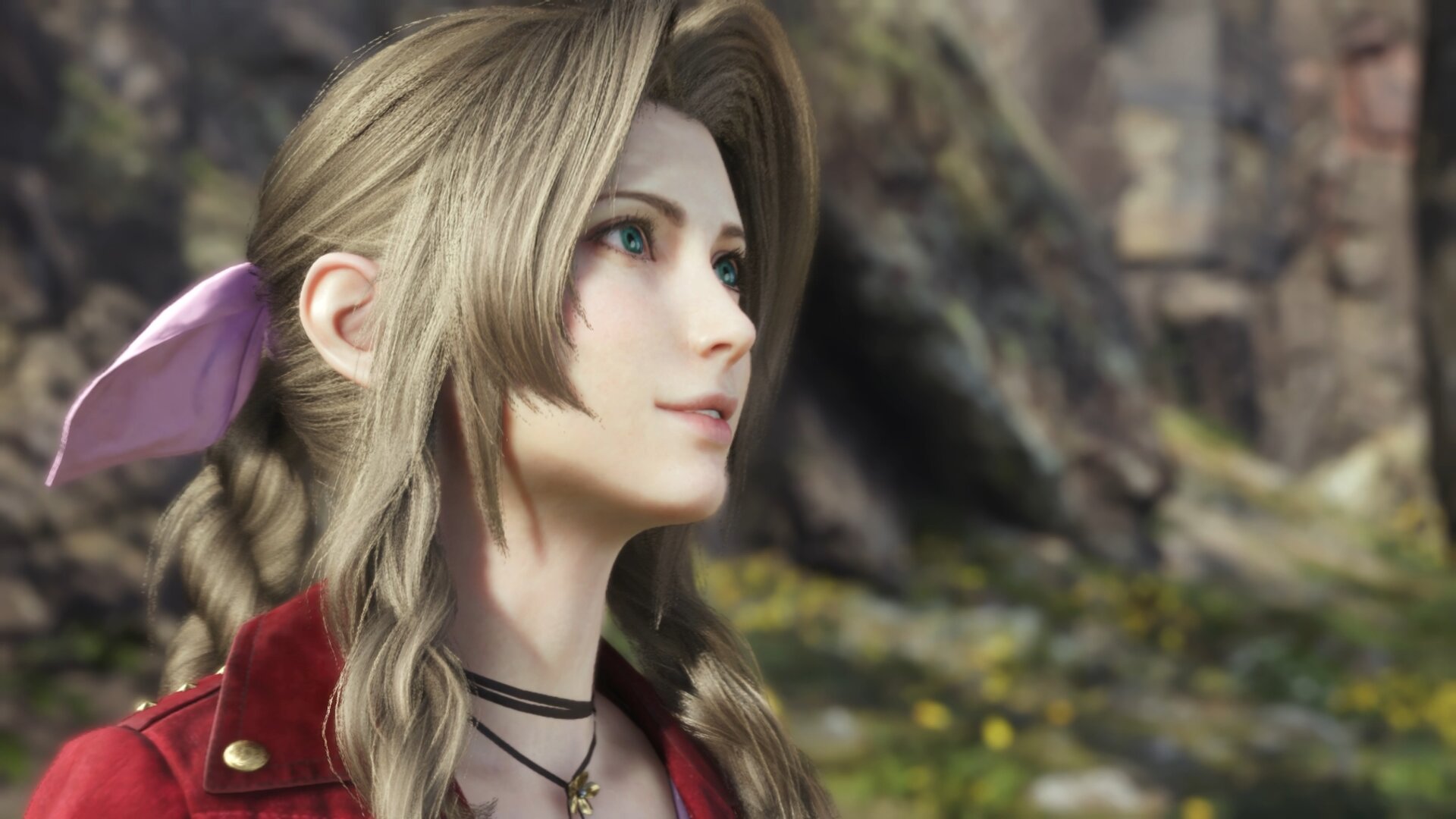
Even with those shortcomings, Final Fantasy VII Rebirth on Nintendo Switch 2 is an outstanding port of an exceptional game. While it doesn’t match the visual spectacle of the PlayStation 5 version, it successfully delivers the complete adventure on a hybrid console without sacrificing what makes Rebirth so special. For me, the ability to take one of the generation’s best RPGs anywhere is a trade off well worth making. If you’ve been waiting for a portable way to experience Cloud’s latest journey, this version absolutely delivers.
For my full thoughts on Final Fantasy 7 Rebirth, check out my original review for the game below.
———————————————————————————
A new Final Fantasy game never fails to excite me. Sure, over the years the series has certainly seen it’s ups and downs, and some of the spin-off titles aren’t super great by comparison, but the series still holds a big place in my heart given it’s been a staple series I’ve loved since childhood. And after experiencing the original Final Fantasy 7 way back when, I’ve been extremely excited for the reality of a modern Remake even when murmurs of it’s existence started brewing over 10 years ago at this point. But we now live in a reality where it is happening, the Remake trilogy is a fact, and we’re now onto its second part. Final Fantasy 7: Rebirth builds upon everything that was introduced in Remake but expands the scope massively, resulting in a game that lets you explore more of the world than ever before, see familiar characters develop in new ways and face many unique challenges along the way. This all comes together to provide a fresh and engaging take on a classic tale but is still packed with so many new twists and turns that will keep you wanting to progress to see everything this section of the trilogy has to offer. An endeavour that will take well over 100 hours to accomplish.

As already touched on, Rebirth is the second entry in the Final Fantasy 7 Remake Project and thus, does pick up right after the events of Remake’s conclusion. The pre-release marketing for Rebirth has mentioned that this game can act as a jumping on point for newcomers, and there is even a recap video available to watch in-game that is a high-level summary of the events of Remake. While you theoretically can jump into this game without playing the first game, it’s not something I would actually recommend anyone do. You’d be robbing yourself of so many great character moments, payoffs from the first game and narrative context for what is going on. If you do have any interest in jumping into Rebirth, I highly suggest playing the first part of the trilogy. Your experience here will be so much richer for it.
Coming off Remake, Rebirth will feel very familiar to play. Many of its core mechanics are brought straight into the sequel, although many things, such as the combat system for example, have been expanded upon to provide further depth and further echo the larger scope this game possesses.
Rebirth still possesses the ATB combat system, which I absolutely loved in Remake and appreciate that it’s stayed mostly consistent between the games. The fights are still super flashy and fast paced but still has the ability to pause the action, issue direct commands and switch your playable party member at any moment to have finer control over each moment in battle. Where Rebirth’s combat has seen its largest change is within its new Synergy system. This new system quickly becomes a core component of combat and works hand in hand with the existing ATB bar you’re familiar with. The Synergy system has 2 characters team up to execute moves together that are super useful to deal big damage, buff skills and should be strategically used to boost your ATB gauge. The skills themselves can be unlocked and distributed to members of the party via their respective person’s Folio, essentially this game’s version of a skill tree. Executing Synergy skills in battle will help fill up the ATB gauge quicker, which then allows you to execute your character’s core skills, in turn this will charge your Synergy gauge and when filled will allow you to unleash Synergy abilities which act as super flashy duo attacks that play out like a synchronised Limit Break dealing pretty large chunks of damage to enemies. I loved the introduction of this new layer into an already solid combat system, and how well it’s mechanics become interviewed with what was already there while also further echoing this game’s focus on characters coming together.

Mastering the combat system and how strategic it can be is more crucial than ever here as I found Rebirth to be far more challenging than Remake was. So utilising all of the tools in your arsenal is a requirement. There are multiple notable enemies that are incredibly challenging and require you to approach things with a layer of strategy and exploit enemy weaknesses. You can’t just button mash and expect to come out successful a lot of the time. But as with all Final Fantasy games, the feeling of accomplishment that comes with taking down a tough foe never fails to feel so fulfilling in the moment.
Outside of combat, the game’s biggest new feature is the world itself. Where Remake was largely focussed solely within the Midgar portion of the world, Rebirth breaks down the walls and lets you free, literally. Following an opening flashback segment that lets you play the tragic Nibelheim incident, this game is open to explore and captures the sense of adventure many fans of the original Final Fantasy 7 have been waiting for. I don’t want to undersell it when I say Rebirth has so much to see and do. The core story alone is already quite lengthy to complete, but you can easily spend the same amount of hours again just completing side quests, world objective’s and mini games and completionists are going to spend way north of 120+ hours in the game to complete everything. If you’re a person that gauges a games value on the amount of content there is within, or you remember how many hours you spend enjoying the world in the original FF7, you’re not going to be disappointed with the amount of things on offer here in Rebirth.

There is so much to see and do, if you choose to. There are side stories that not only flesh out the lore of the world, but connect with it’s people and lets you see the impact of what’s already happened in the story, and gives you further drive to push on and stop the plans of the game’s enemy factions. World objectives that allow you to uncover new areas of the map, learn more of the game’s history and take down tough foes. And mini games, oh so many mini games.
The mini games provide a moment to breathe in what is otherwise a pretty deep and heavy story and also allows the silly side of Final Fantasy to shine through. For the most part I appreciated the ability to take some time between the dark story beats when it felt natural to do so to enjoy some side activities. There were some times where it did distract from the pacing of the main progression, such as within a specific section of the game where they are a required portion of the narrative or when side objectives were being thrown at me and within those segments there were the inclusion or introduction of further mini games, but otherwise, for the most part, you’re free to choose when and how much you wish to engage with them. And they can be mostly ignored if they’re not your cup of tea, or can be enjoyed later if you want to shift focus to side objectives once the main story wraps up. But not since playing Gwent within The Witcher 3 have I spent as long playing a mini game as I have with Queen’s Blood. That game is so addicting and strategic that I’m holding out for Square Enix to one day release it as a standalone mobile title.
When it comes to the story side of the game, Rebirth commits to having a real focus on it’s characters, developing them, uncovering their backstories and motivations and does so in a way that lets us see a deeper side of them that wasn’t able to be explored within the original PS1 game. The first Remake game was very much driven by Cloud, but this time around, the focus is balanced across multiple characters and gives the whole cast their own moments to shine. I know people were sceptical about splitting the original title into 3 separate games when details of the Remake Project were announced, but this has allowed for wider scope, character development and enhanced moments with this incredible cast, and it’s well and truly justified the expansion in my eyes. Rebirth even has underlying relationship system that tracks Cloud’s bonds with the other party characters and allows you to have personal dialogue interactions with the characters and even story moments that are determined by the strength of specific relationships.

The story itself is further enhanced thanks to amazing acting performances all-round and a soundtrack that is absolutely incredible. Final Fantasy has long been known to have amazing musical pieces, but Rebirth takes things to another level. It not only honours the original game’s score with re-recorded and newly remixed arrangements it also has completely new tracks. And they all come together to deliver an emotional experience and so much power to many of the game’s scenes.
As hinted at during the events of Remake, this project is not just a 1:1 retelling of the OG Final Fantasy 7 from 1997. This series is a reimagining of the events from that game and uses some really clever approaches to storytelling that allows it to do many new and interesting things, while also staying true to the overall plot and themes from the original PS1 title. This is where I think the game will be some-what divisive with some of the choices it’s made and I can see a lot of discussion popping up regarding this game’s ending, especially in the current state we’re in where we don’t have context of what the final part of the trilogy is and how it will play out yet. But for myself, the convoluted nature of the story is something that entrigues me. I like directors brave enough to try new and interesting approaches to storytelling and I’d rather spend the next 4 years waiting for the final part speculating on what certain elements may mean, watching numerous YouTube essays breaking down their interpretations and also speculating on where I’d like to see the story go next rather than knowing exactly what to expect of a sequel and knowing the team are going for a safe ending. I’m also a huge fan of Kingdom Hearts so I’m more than fine to wait the better part of a decade for payoff of a story beat that was established in another game but can completely understand people who say they can’t follow certain threads or didn’t like how particular beats played out.
Rebirth also looks really gorgeous when it comes to the visuals. For the most part. Its vast open world, diverse biomes and the incredible details in the character models really flex the power of the PS5. The fidelity of the character faces and animations really help sell the performances and also help the emotional parts of the story land because your can see just how it’s affecting the characters based on their expressions alone. Saying that, there are some segments of the game where the visuals, mainly in the environments just seem like they’re not up to par. I noticed this more when trying out the game’s performance mode. I knew the trade-off for the higher framerate would be some visual fidelity, but there were quite a few areas where it seemed like the trade-off wasn’t worth it, with textures in the world loading in with surprisingly low resolution, shadows rendering inconsistently and decreased sharpness all around. I quickly returned back to graphics mode and haven’t turned back.

Final Thoughts
Final Fantasy 7 Rebirth is a fantastic next step in the Remake Trilogy. It builds upon what was already established in the first game and has broken down the walls, allowing for a much more open experience that allows for deeper interaction with the game’s world and between the game’s characters. The introduction of new systems into the game’s combat mechanics helps keep this fresh while remaining familiar and it’s all held together with some amazing performances and an amazing soundtrack. It’s a shame it’s likely going to be another 4 years before we get the conclusion to this series, but if it’s able to maintain the quality near set and once again continue to remain fresh, it’s going to be worth the wait.
A PS5 review code was provided by the publisher for the purpose of this review.
If you want to see more content like this and never miss one of our frequent gaming and anime giveaways come and Follow Ani-Game on Twitter.
9.5
- + The open world’s sense of adventure
- + Now playable on the go on Switch 2
- + Amazing visuals and character models
- + One of the best soundtracks of all time
- - Pacing impact from forced mini games
- - Visually inconsistent