There probably isn’t much point in explaining what Elden Ring is at this stage. FromSoftware’s open-world action RPG became a genuine gaming phenomenon when it launched in 2022, winning Game of the Year awards, selling tens of millions of copies and becoming one of the most critically acclaimed games ever made. Still, for the sake of the review, Elden Ring drops you into the Lands Between as a Tarnished, an exiled warrior summoned back to a broken world following the shattering of the Elden Ring. Your goal is to gather the Great Runes, confront the demigods who possess them and ultimately claim the title of Elden Lord.
I’m also coming at this from the perspective of someone who has been a FromSoftware fan for a very long time. I’ve reviewed just about everything the studio has released since I started this site almost ten years ago, and my original Elden Ring review was already pretty definitive about how highly I thought of it. I called it a masterclass in design and worldbuilding, and more than four years later, I still feel that way.
The brilliance of Elden Ring is in how little it tells you to do. You create your character, pick a starting class and are then largely left to figure things out for yourself. You can follow the guidance of Grace towards major objectives, but there’s nothing stopping you from riding off in the opposite direction and spending hours exploring a cave, stumbling across an unexpected boss or finding an entirely new region.
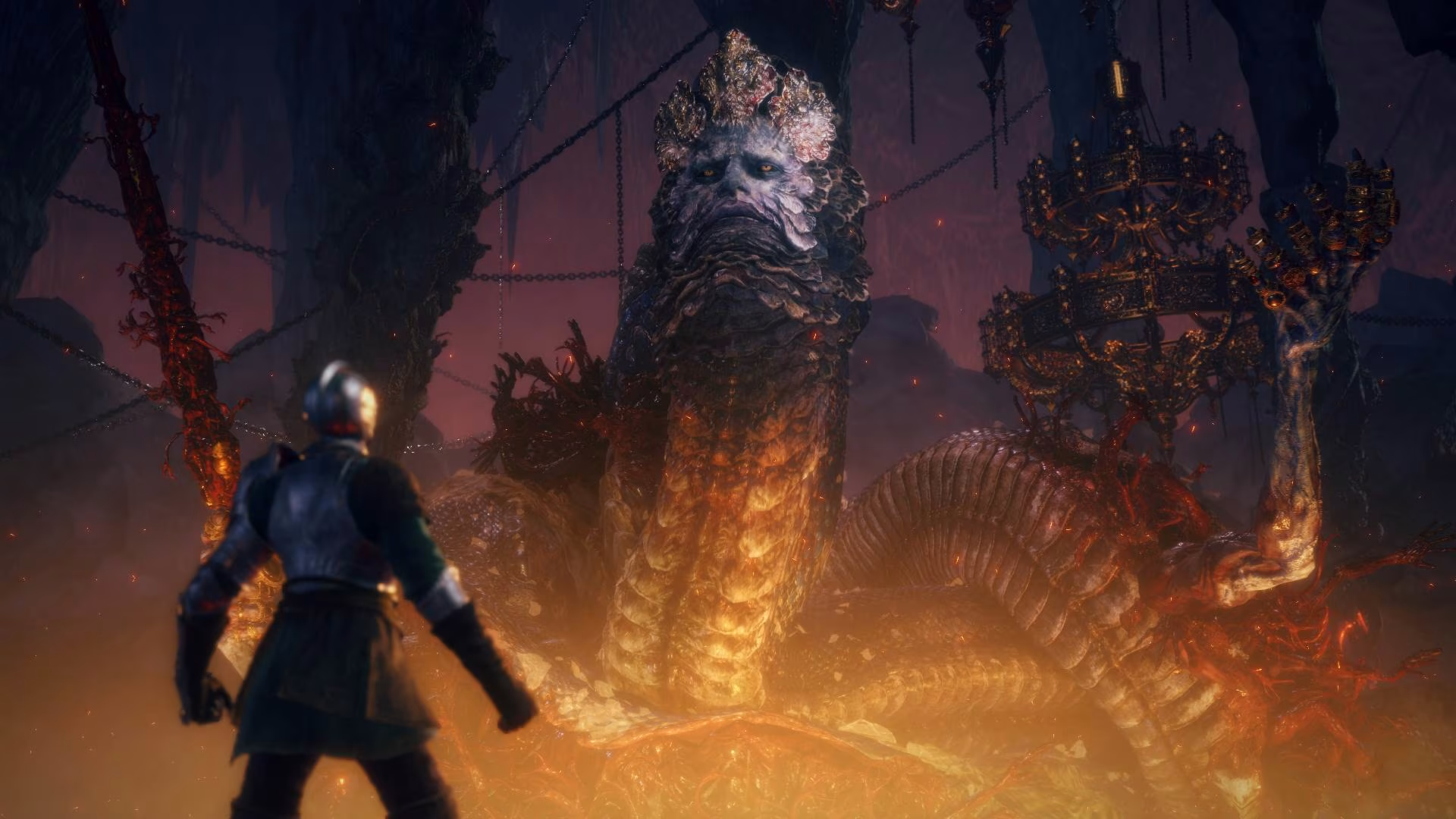
Moment to moment, Elden Ring is a constant cycle of exploration, combat, discovery and experimentation. You fight enemies, collect runes, find weapons, armour, spells and Ashes of War, and gradually build your character around whatever playstyle you enjoy. If a boss destroys you repeatedly, you’re encouraged to leave and do something else rather than simply banging your head against the same wall. There is almost always another dungeon, NPC, enemy camp or mysterious structure waiting somewhere over the horizon.
That structure is what makes the game so special. The Lands Between feels like a world rather than a checklist. The map isn’t even fully revealed when you arrive in a new region, and you’re expected to find map fragments yourself. NPC dialogue, environmental clues and item descriptions gradually fill in the enormous gaps in the story. It’s the kind of worldbuilding that made me keep wondering what was around the next corner, even after I had already spent dozens of hours there.
And then there’s the combat. It’s still the incredibly precise, demanding combat that FromSoftware is known for, but the open world gives it a remarkable amount of flexibility. You can fight on foot, ride Torrent, use magic, summon Spirit Ashes or other players, sneak around encounters or simply decide that you’re not ready for something yet. Dying is part of the process, and losing your runes can hurt, but learning from that failure is ultimately what makes finally overcoming a difficult boss so satisfying.
That entire experience is now portable on Nintendo Switch 2, and honestly, I wasn’t sure how well that was going to work.
That’s because the journey to this release has been unusually long. Tarnished Edition was originally announced for 2025, but following some pretty rough early hands-on impressions, FromSoftware delayed it to 2026 specifically to allow more time for performance adjustments.
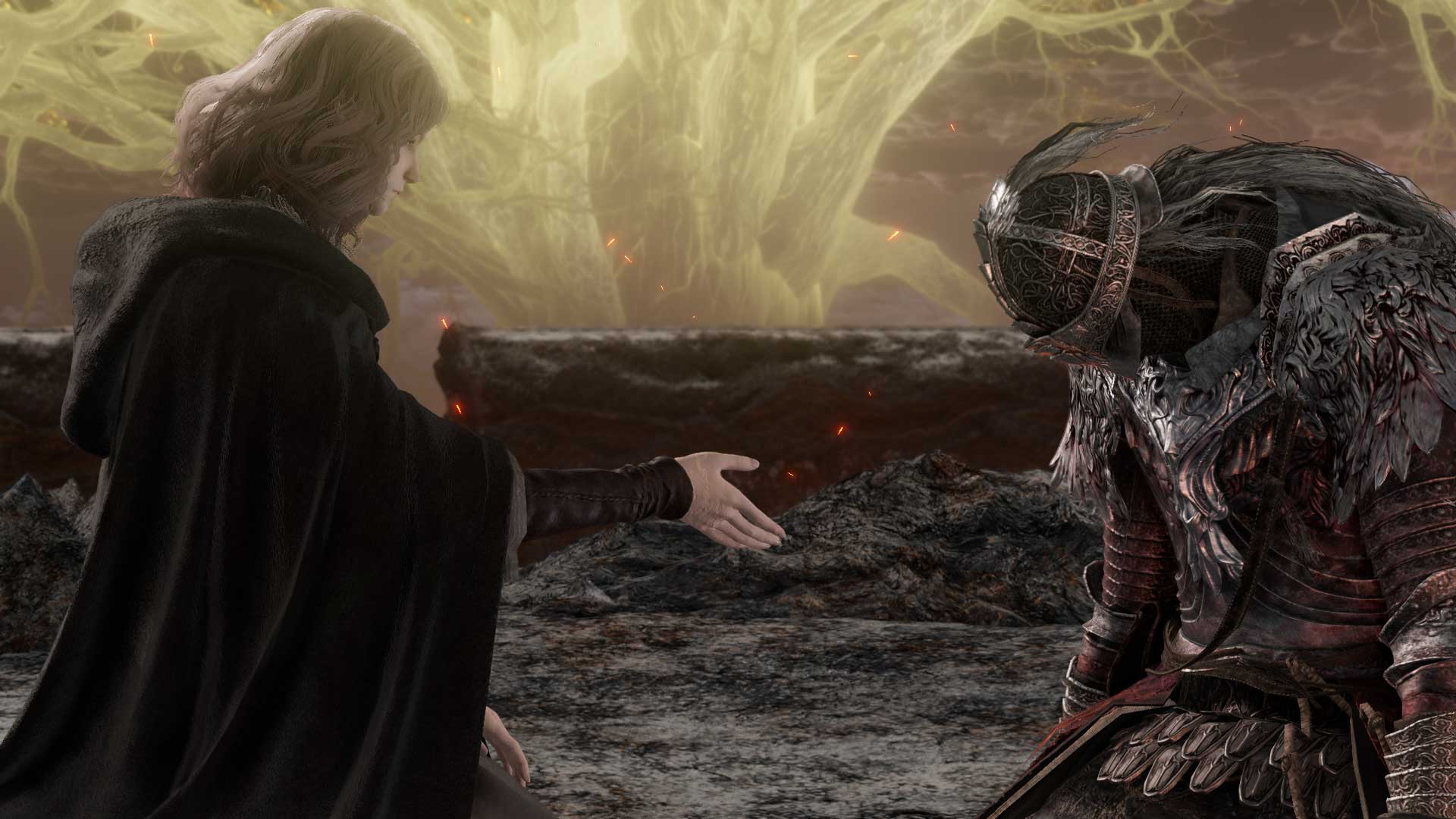
Thankfully, that extra time appears to have been worthwhile.
I’ve played a large portion of my time with Elden Ring: Tarnished Edition in handheld mode, and I’m genuinely surprised by how well it runs. Performance is really solid, particularly considering just how enormous this game is. Traversing the open world, fighting enemies and exploring some of the game’s denser areas all felt remarkably comfortable on the Switch 2. The experience isn’t free from the occasional imperfection, but after seeing those early reports from the original demo builds, I was expecting considerably worse.
What surprised me almost as much was the battery consumption. Elden Ring is hardly a small or technically simple game, yet it didn’t feel like I was watching the Switch 2 battery evaporate every time I sat down for a session. That’s a big deal for me because this is exactly the kind of game where I want to be able to pick up the console, disappear into the Lands Between for an hour or two and then put it back down.
Visually, there are compromises, though. There is some noticeable fuzziness, particularly when you’re looking across larger environments or when the game is pushing a lot of detail into the distance. That’s becoming something of a norm with ambitious AAA ports on Switch 2, and Elden Ring is no exception. But I never reached the point where I thought I was playing some severely compromised version of the game. The scale, atmosphere, lighting and overall art direction remain remarkably intact.
The Switch 2 version also includes HDR support when connected to a compatible display, alongside handheld, tabletop and TV modes. More importantly, Tarnished Edition isn’t simply the base game dumped onto Nintendo’s hardware. It includes Shadow of the Erdtree, four new armour sets, two new starting classes and three different appearance options for Torrent.
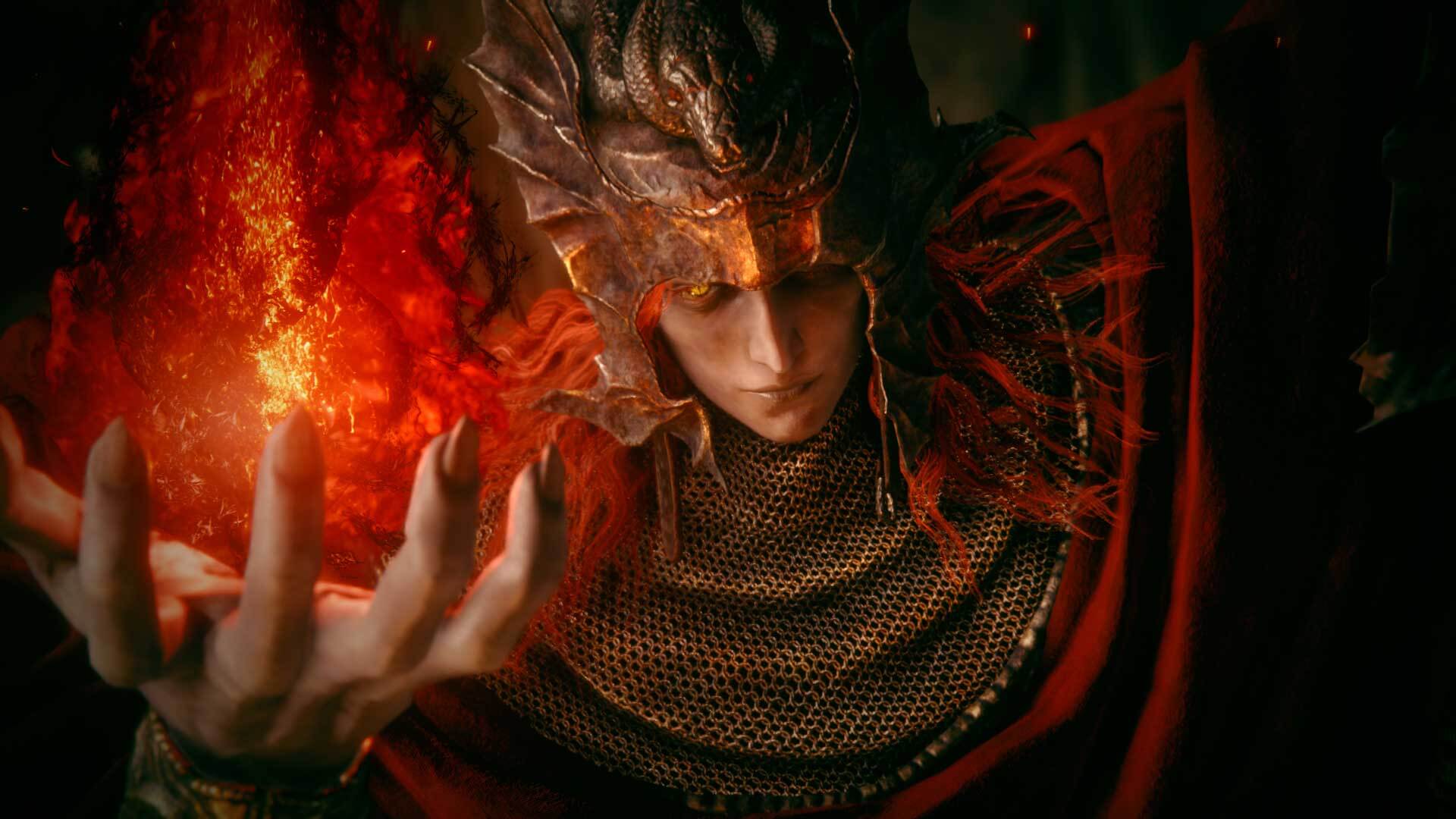
And Shadow of the Erdtree is a huge inclusion. I loved the expansion when I reviewed it in 2024, describing it as feeling closer to a sequel than a traditional piece of DLC. It adds an enormous new region, new bosses, weapons, armour, spells, NPCs and an absurd amount of additional lore. The Shadow Realm is packed with secrets and some of FromSoftware’s best level design, including Legacy Dungeons that can rival anything in the original game.
Having the complete experience in a handheld is something I still find a little ridiculous.
Between Elden Ring: Tarnished Edition and Final Fantasy VII Rebirth, Switch 2 is increasingly demonstrating that Nintendo’s new hardware is capable of handling the sort of enormous, technically demanding open-world games that would have seemed completely unrealistic on the original Switch. That’s exciting to me. It makes me genuinely curious about what Nintendo and third-party developers are going to be able to do with this hardware over the next few years.
Elden Ring was already one of my favourite FromSoftware games. None of that has changed here. What has changed is how accessible this particular version makes it. The Lands Between is an incredible place to explore, Shadow of the Erdtree makes the package even more ridiculous in terms of value and content, and the Switch 2 does a surprisingly impressive job of bringing the whole thing to a handheld.
There are slight compromises, and the visual softness is worth acknowledging, but they don’t stop this from being an excellent version of an exceptional game.
Elden Ring is great. Tarnished Edition is great. And honestly, it’s still incredible to me that I can sit on the couch, jump on a train or curl up in bed and play one of the biggest and best open-world RPGs ever made. We’re living in a pretty incredible time for portable gaming.
A Nintendo Switch 2 review code was provided by the publisher for the purpose of this review.
If you want to see more content like this and never miss one of our frequent gaming and anime giveaways come and Follow Ani-Game on Twitter.
9.5
- + The same incredible game, now portable
- + Runs very well
- + Includes the huge Shadow of the Erdtree expansion
- + Amazingly crafted open world
- - Slight visual compromises