As a lifelong Dragon Ball fan, it honestly doesn’t take much to get my attention when a new game based on Akira Toriyama’s iconic series is announced. I’ve spent countless hours with Dragon Ball games over the years, including both Xenoverse titles. That said, it’s been quite a while since I’ve properly immersed myself in the Xenoverse universe. While I played plenty of Dragon Ball Xenoverse and Xenoverse 2, I certainly haven’t kept up with every content update released throughout Xenoverse 2’s remarkable decade-long lifespan. Even so, when Bandai Namco started teasing Project Age 1000, I was immediately curious. Now that the project has officially been revealed as Dragon Ball Xenoverse 3, what I’ve seen so far has left me with more questions than answers, but in the best possible way.
Recently, I was invited to a presentation from Bandai Namco where I was given my first detailed look at Dragon Ball Xenoverse 3’s gameplay systems and overall structure. While the demonstration offered a solid understanding of the game’s core gameplay loop, its story remains something of a mystery. According to the developers, more details about the narrative will be revealed in the near future, but even from this early showing, it’s clear that time travel and timeline manipulation once again play a major role in the experience.
For those who haven’t been following the game’s development, Xenoverse 3 was originally unveiled under the codename Project Age 1000 before eventually being confirmed as the next mainline Xenoverse entry. The game takes place during Age 1000, several hundred years after the adventures of Goku and his friends. We’ve already seen an original character designed by the late Akira Toriyama, alongside a reveal trailer featuring several familiar faces. One of the biggest questions raised by that trailer involved a character who looked suspiciously like Bulma. During the presentation, Bandai Namco confirmed that it is indeed the same Bulma fans know from the series. Considering the game’s setting is centuries beyond her natural lifespan, that confirmation alone tells us there are some major timeline shenanigans happening behind the scenes.
Another encouraging detail is that Xenoverse 3 is being produced by the same producer who worked on both previous Xenoverse games. That’s potentially good news for longtime fans, as it suggests there will be a cohesive vision connecting all three titles. It also raises interesting questions about post-launch support. Xenoverse 2 became one of the most heavily supported Dragon Ball games ever released, receiving years of updates, characters, and content expansions. While nothing has been confirmed regarding Xenoverse 3’s long-term plans, having leadership continuity certainly makes it feel possible that Bandai Namco may be looking at another lengthy support cycle.
The gameplay demonstration focused heavily on player created characters, one of the defining features of the Xenoverse series. During the presentation, only two races were available to view, Earthlings and Saiyans. The primary character featured throughout the demo was a female Earthling named J-Sen. We were told additional races will be available in the final game, though Bandai Namco wasn’t ready to reveal the complete roster just yet.
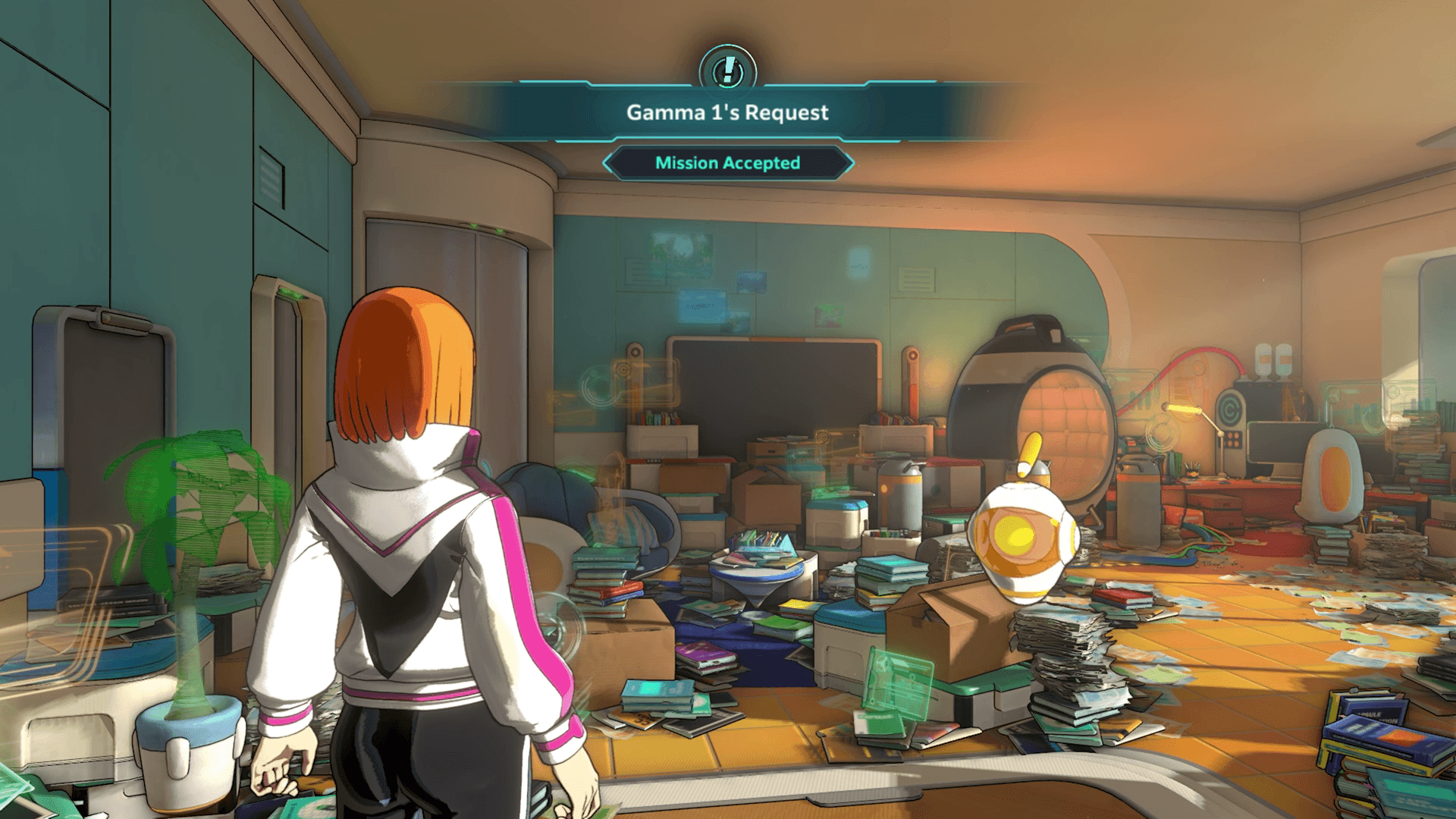
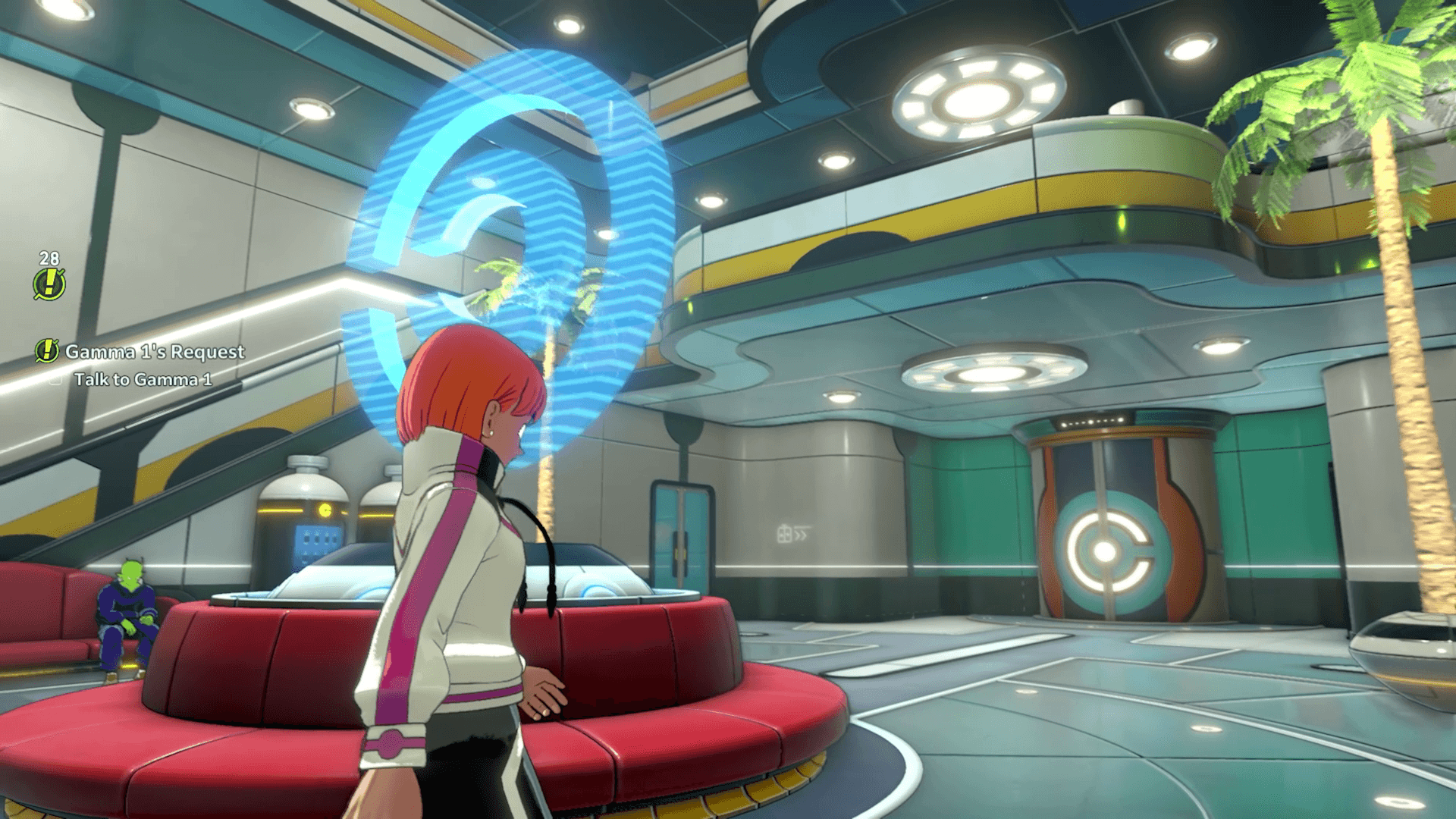
The demo began inside J-Sen’s personal room, which appears to serve as the player’s home base. This is where character customisation takes place and where players will presumably manage equipment and progression systems. Although the visuals are still a work in progress, I was immediately impressed by how faithfully the environment captured Toriyama’s distinctive artistic style. The room felt vibrant and packed with small details, helping make the world feel authentic rather than simply functioning as a menu hub.
After receiving a quest objective to speak with Gamma 1, J-Sen made her way through the base and out into the city. Along the route, she passed both Future Trunks and a Saiyan Saga-era Vegeta, each of whom could be approached and spoken to. Naturally, this immediately raised a few questions. If the game is set hundreds of years in the future, why are these characters present? It’s another mystery that appears tied directly to the game’s larger story, and one I’m eager to see explained.
Stepping outside offered our first real look at West City during Age 1000. The futuristic metropolis was filled with towering structures, flying vehicles, and dense urban development. It looked like a natural evolution of the cities fans have seen throughout Dragon Ball’s various eras, maintaining the familiar aesthetic while pushing the setting further into the future.
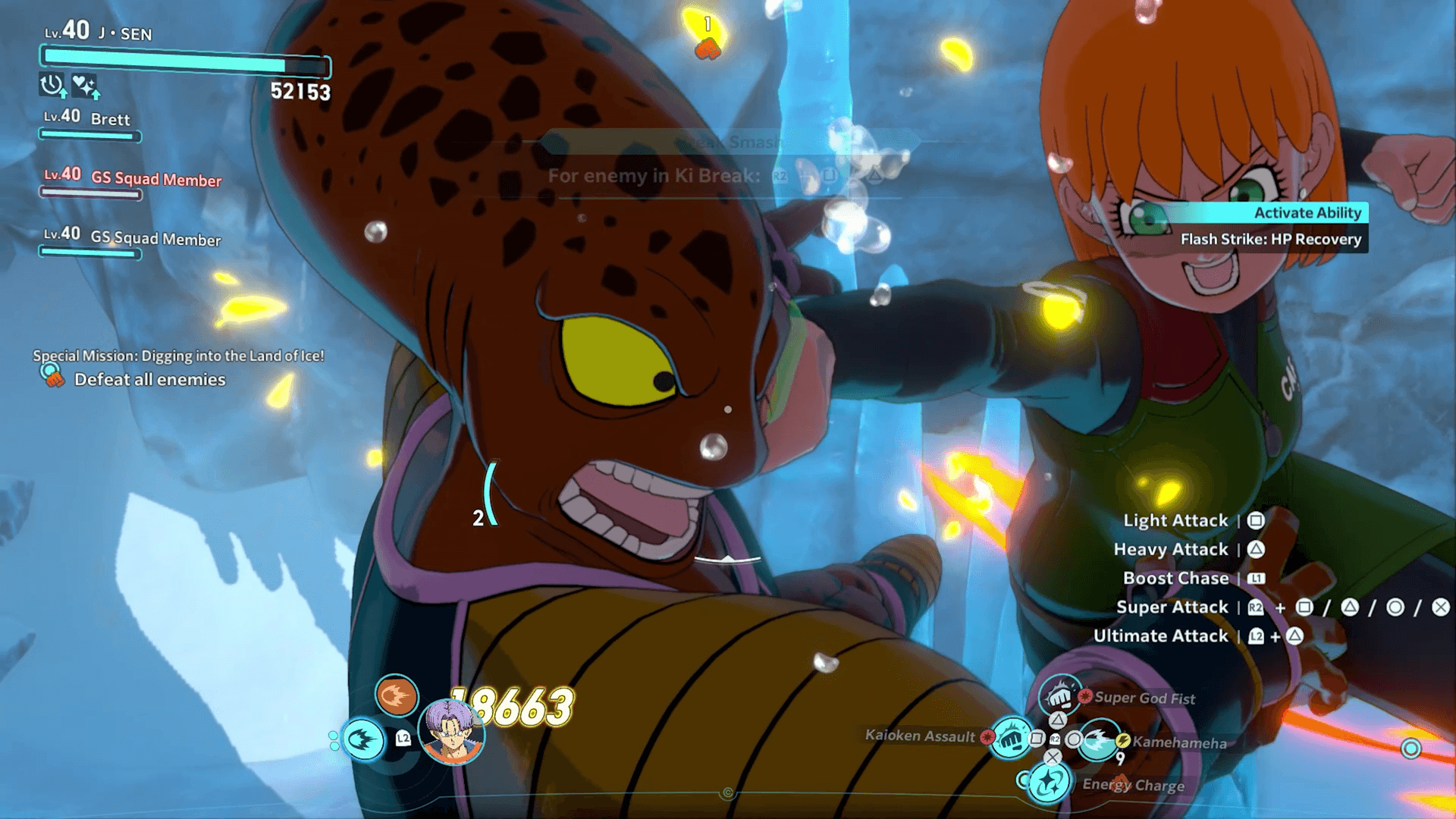
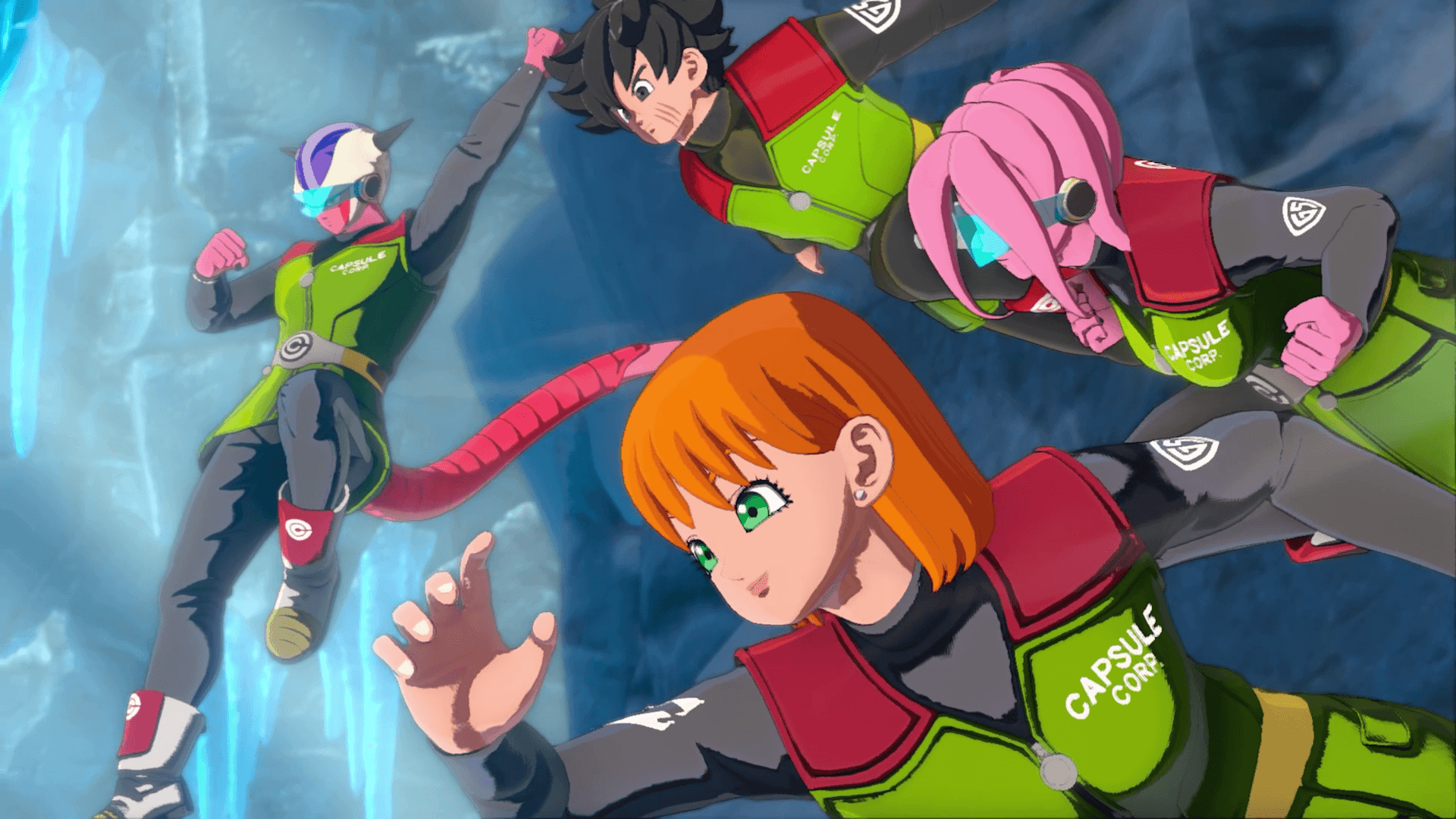
Upon meeting Gamma 1, the game transitioned directly into a mission. J-Sen was launched through a portal, transporting her to a combat encounter and giving us our first glimpse at how missions function. One notable addition is the ability to bring up to three companions into battle. Players can select who joins their party, allowing them to tailor team compositions to their preferred playstyle. During this sequence, I also spotted characters representing other playable races, including one that appeared to belong to Frieza’s race and another that looked like a Majin. While they weren’t playable during the demo, their presence strongly suggests those races will be featured in some way.
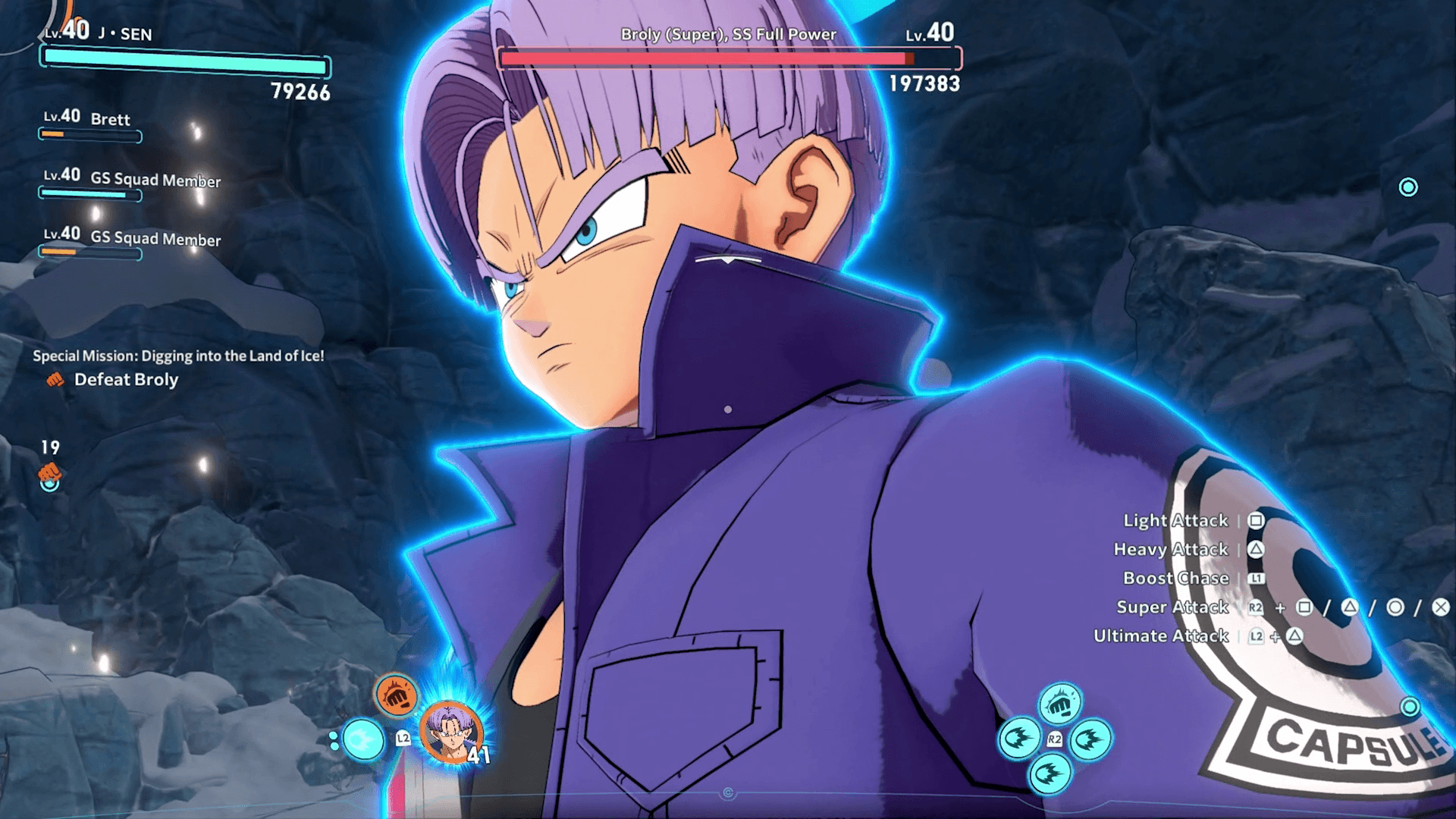
Combat itself looked immediately familiar to anyone who has played Xenoverse 2. Characters zip across battlefields at high speed, boost in multiple directions, unleash devastating combos, and fire off iconic energy attacks. The core structure revolves around light attacks, heavy attacks, Super Attacks, and Ultimate Attacks. Players can equip four Super Attacks, each activated using a combination of R2 and a face button, while Ultimate Attacks serve as the larger cinematic finishers.
One interesting change involves ability cooldowns. Rather than relying solely on traditional resource management, attacks enter cooldown periods after use. However, players can reduce these cooldowns by actively charging energy, adding another layer of decision making during combat.
The presentation also introduced a feature called Soul Assist. During battle, J-Sen briefly summoned Vegeta to support her attack. Vegeta appeared, fired off a powerful Gallick Gun, and then vanished almost immediately. We were told numerous characters from across Dragon Ball’s history can be called upon in this way, which could create some very exciting combinations.
Watching the combat in motion, it was definitely faithful to Dragon Ball. The action was fast, flashy, and packed with the explosive visual effects fans expect. Combined with familiar sound effects and attack animations, the game undeniably captures the feeling of participating in a Dragon Ball battle.
After clearing waves of grunt enemies and a stronger robotic foe, the mission’s boss finally appeared. To my surprise, it was Broly. Not only was it exciting to see the legendary Saiyan show up, but his appearance seemingly confirms Dragon Ball Super characters will be woven into the game’s narrative. Of course, his presence also generated another major question regarding how all these characters from different points in history are interacting within Age 1000.
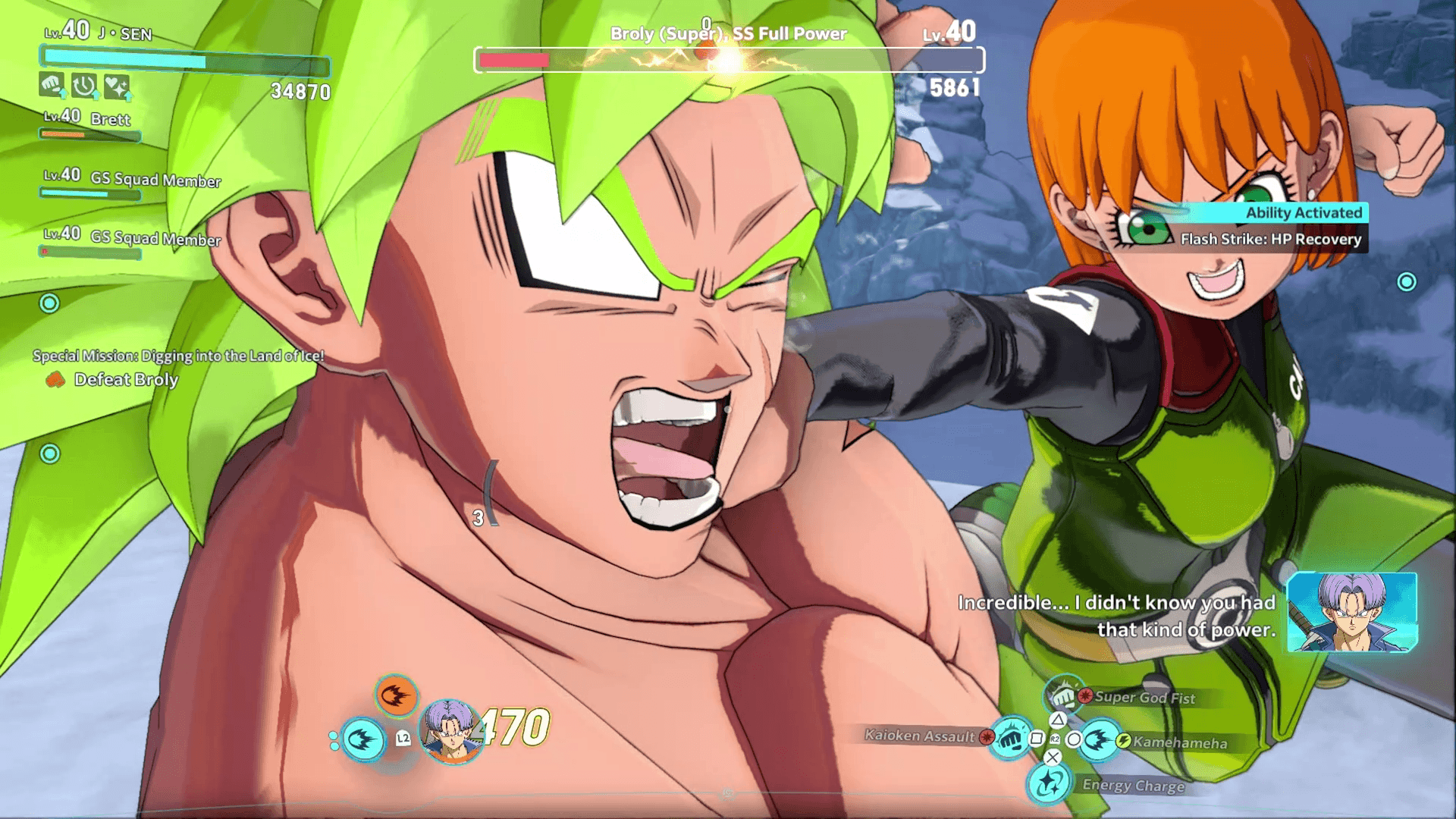
The Broly encounter also showcased one of Xenoverse 3’s most intriguing new mechanics. Soul Switching. During the fight, J-Sen activated a Soul Switch linked to Future Trunks. Instantly, she transformed into Trunks himself, gaining his appearance, abilities, and combat style. The transformation also fully restored her health bar, making it a potentially powerful comeback mechanic during difficult encounters. The effect appeared temporary, with the player eventually reverting back to J-Sen after a short duration.
Once the mission concluded, rewards including Zeni, experience points, and customisation items were distributed. These rewards will presumably feed back into the progression systems tied to the player’s home base, creating the familiar loop of completing missions, strengthening characters, and earning new equipment.
Before wrapping up, Bandai Namco showed how gameplay differs when using a Saiyan character. Instead of Soul Switching, Saiyans gain access to Awakening abilities. Activating an Awakening transforms the character into a Super Saiyan, boosting their power while also restoring health. The demonstration didn’t stop there either. We were shown the character advancing beyond Super Saiyan and reaching Super Saiyan 3, complete with the iconic appearance fans know and love.
Even after seeing only a relatively small slice of Dragon Ball Xenoverse 3, I walked away intrigued. The gameplay looks like a natural evolution of the Xenoverse formula, with new mechanics layered on top of a combat system that already feels distinctly Dragon Ball. More importantly, the game’s story setup has captured my attention. Between the Age 1000 setting, the return of familiar faces from across multiple eras, and the obvious timeline manipulation at play, there are plenty of mysteries waiting to be solved.
No release date has been announced yet, but Bandai Namco has confirmed Dragon Ball Xenoverse 3 is scheduled to launch sometime in 2027. For now, I’ll be keeping a close eye on future reveals because if the final game can successfully tie together all of these intriguing story threads, it could become one of the most fascinating Dragon Ball games we’ve seen in years.
If you want to see more content like this and never miss one of our frequent gaming and anime giveaways come and Follow Ani-Game on Twitter.