When Kirby Air Riders was first announced for the Nintendo Switch 2, I honestly had to double check that it was real. Kirby Air Ride has always been one of those strange Nintendo cult classics. People who love it really love it, but it has also spent its entire life living in Mario Kart’s shadow. It came and went on the GameCube, never got a follow up, and slowly became a “remember that game?” kind of title. Seeing Nintendo bring it back this many years later feels surprising in the best way, like they finally decided this series deserved another shot instead of being left as a weird footnote.
Kirby Air Riders is not trying to replace Mario Kart, and that becomes clear very quickly. Instead, it doubles down on what made the original stand out while modernizing almost every part of the experience. This time around, there is more structure, more content, and an actual sense of progression that gives you reasons to keep playing beyond just quick races. What surprised me most is how confident the game feels in its identity. It knows it is different, and it leans into that.
One of the biggest changes is the addition of a full story mode. This alone makes Kirby Air Riders feel like a much more complete package than its predecessor. The story follows Kirby and friends as a mysterious force begins corrupting the skies across multiple regions. Races become battles for control of these skies, with rival riders, strange creatures, and environmental hazards standing in your way. It is not a deep or emotional story, and it does not need to be. It exists to give context to the races and push you through a wide variety of challenges, and in that role it works well.
What I liked most about the story mode is how it is structured. Instead of being a straight line from start to finish, it branches out into multiple paths. Certain races unlock alternate routes, side challenges, or optional chapters that reward you with new characters and machines. It gives the mode a sense of discovery, and it makes replaying chapters feel worthwhile instead of repetitive. There is a lot of content packed into it, and it kept surprising me with new twists even several hours in.
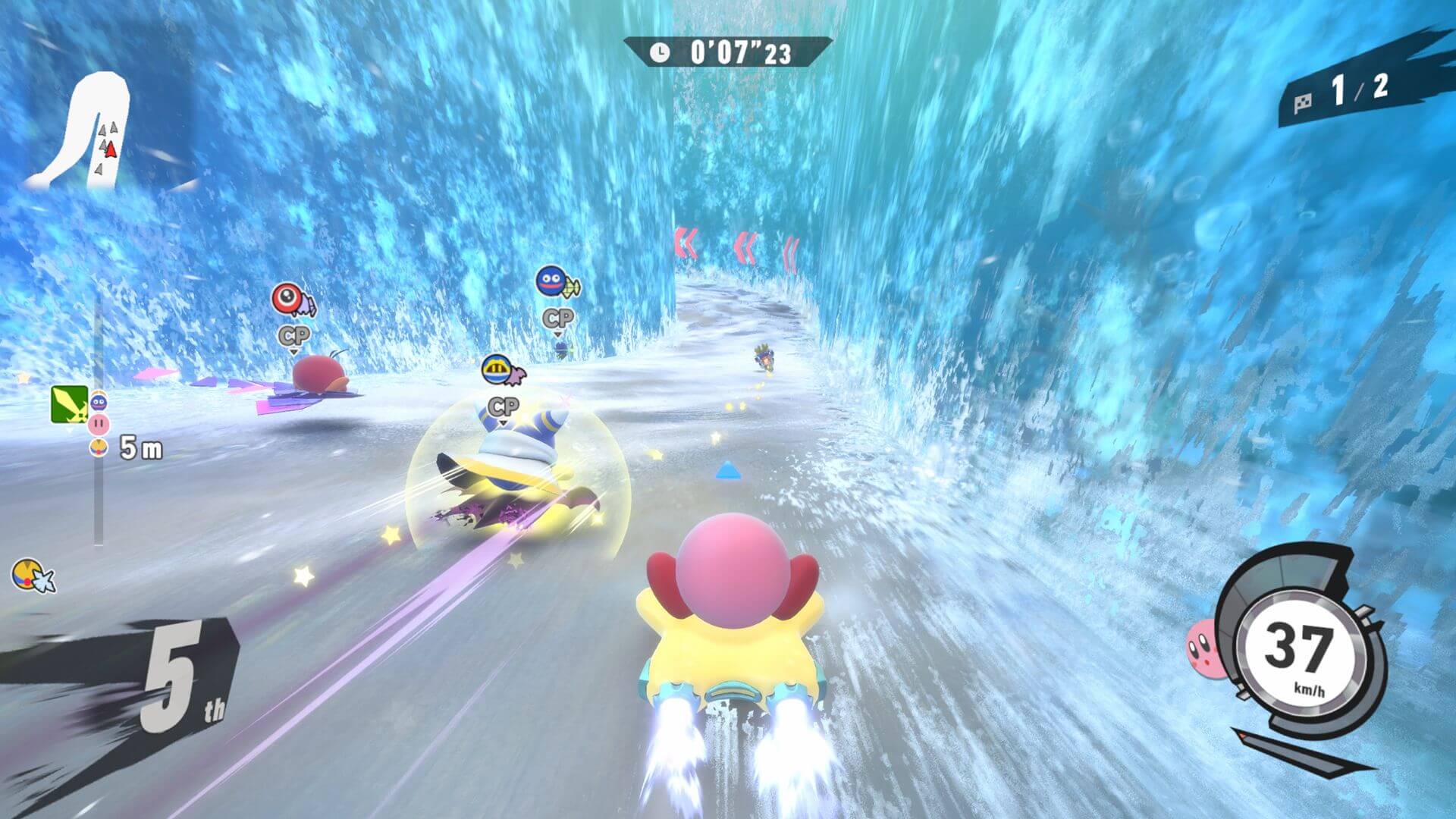
The core racing itself still feels distinctly like Air Ride. This is not a kart racer in the traditional sense. You are not constantly managing acceleration, braking, and drifting. Instead, the game is built around momentum, positioning, and smart use of your abilities. Once you get moving, maintaining speed becomes the real challenge. Slopes, boosts, enemy hits, and environmental hazards all play a role in how fast you can go, and small mistakes can cost you a lot of ground.
Because of this, races feel more like controlled chaos than clean lines and perfect drifts. You are constantly making split second decisions. Do you take a risky shortcut that might launch you ahead or send you crashing into a wall? Do you attack a nearby opponent and risk losing speed yourself? That sense of constant motion and danger gives Kirby Air Riders a very different feel from Mario Kart, and I found it refreshing.
The character roster is surprisingly large, with plenty of familiar Kirby faces and some deeper cuts as well. Each character comes with their own stats that affect speed, handling, defense, and attack power. On top of that, they have unique abilities that can dramatically change how a race plays out. Some characters are better at aggressive play, while others excel at maintaining speed or surviving chaotic sections. Choosing your character is not just cosmetic. It genuinely affects how you approach races.
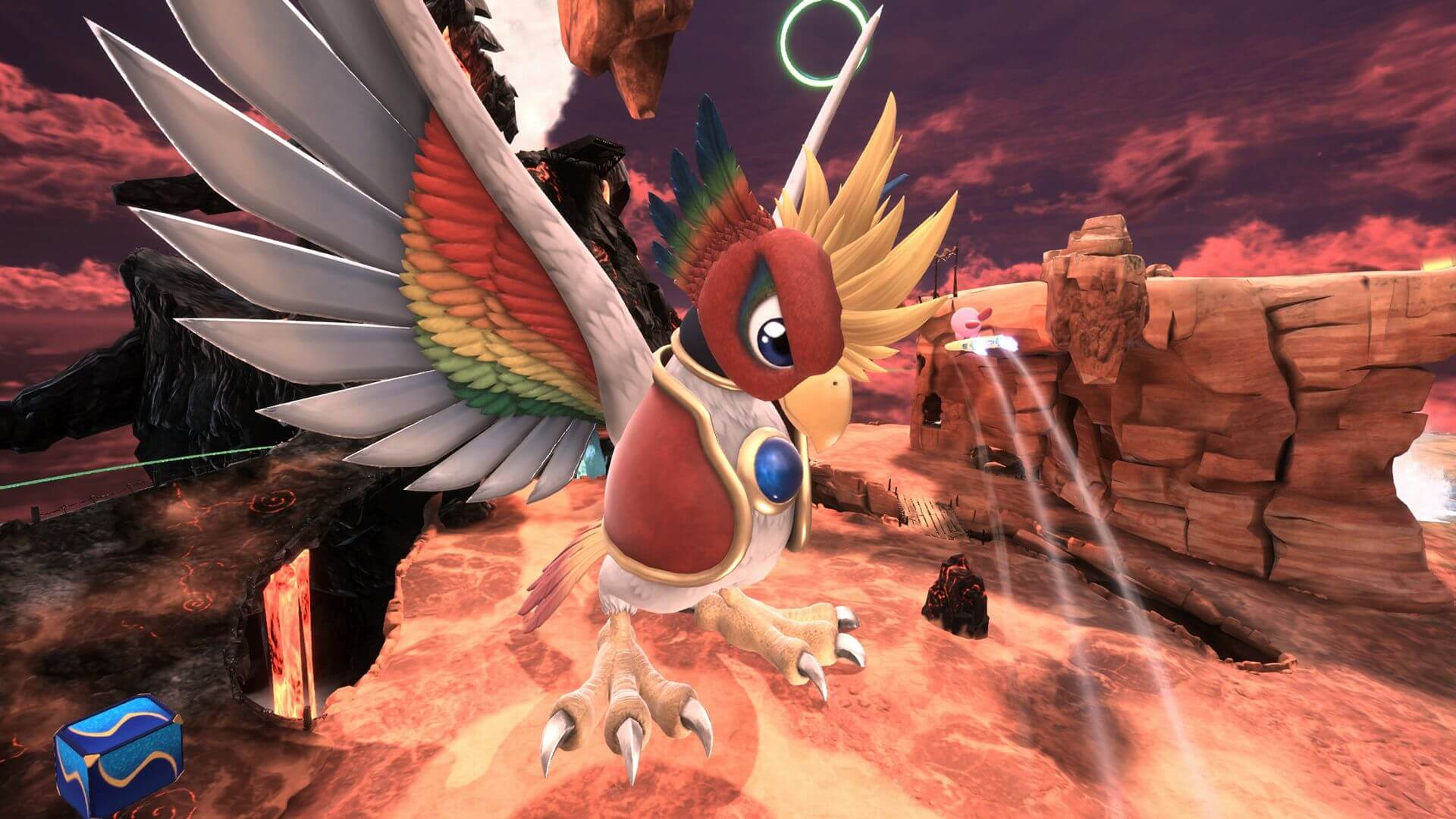
Machines might be even more important than characters. The vehicle you pick can completely change your experience. Some machines are built for raw speed but are fragile and hard to control. Others are slower but tanky, letting you plow through enemies and hazards with less risk. There are machines that reward precise movement and others that encourage reckless play. Learning how each machine handles takes time, but that depth is one of the game’s biggest strengths.
There is definitely a learning curve here. Kirby Air Riders does not explain everything upfront, and early races can feel overwhelming. Understanding how momentum works, when to attack, and how to position yourself takes practice. At first, I felt like I was losing races for reasons I did not fully understand. But once things clicked, the game became incredibly addictive. Races turn into wild, chaotic sprints where everything feels just barely under your control, and that tension is what makes it so fun.
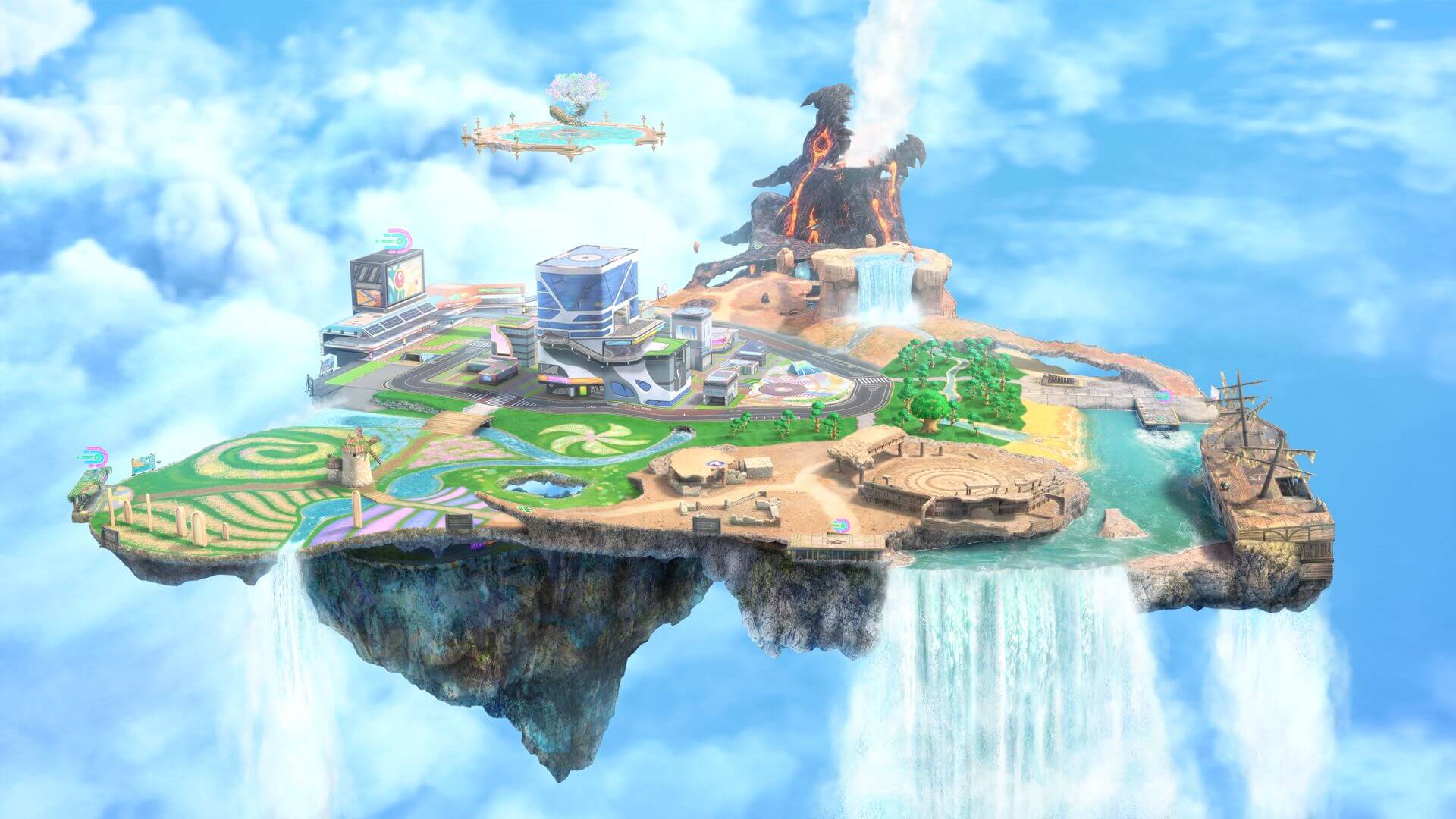
The tracks themselves do a great job supporting that chaos. Each stage is packed with visual spectacle and mechanical variety. You are racing through floating islands, mechanical cities, lava filled caverns, and surreal dreamlike spaces that feel right at home in the Kirby universe. Many tracks offer multiple paths, each with its own risks and rewards. Some routes are safer but slower, while others are dangerous shortcuts that can completely change your position if you pull them off.
I appreciated how visually distinct the tracks are. Even after replaying the same courses multiple times, they never blurred together in my mind. The environments are colorful, expressive, and full of personality. Environmental hazards are not just there to look pretty either. They force you to make choices, adapt on the fly, and sometimes completely rethink your strategy mid race.
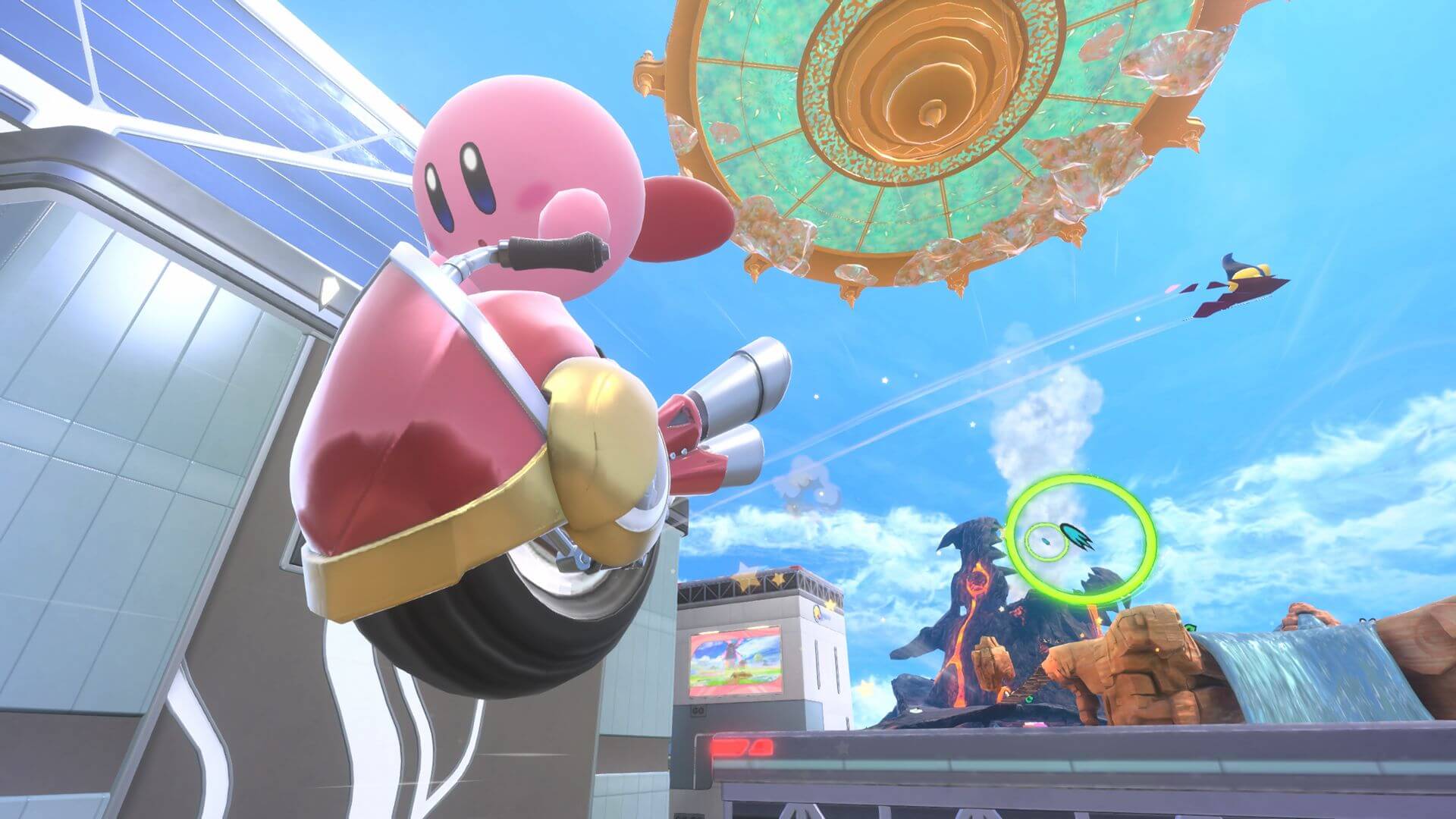
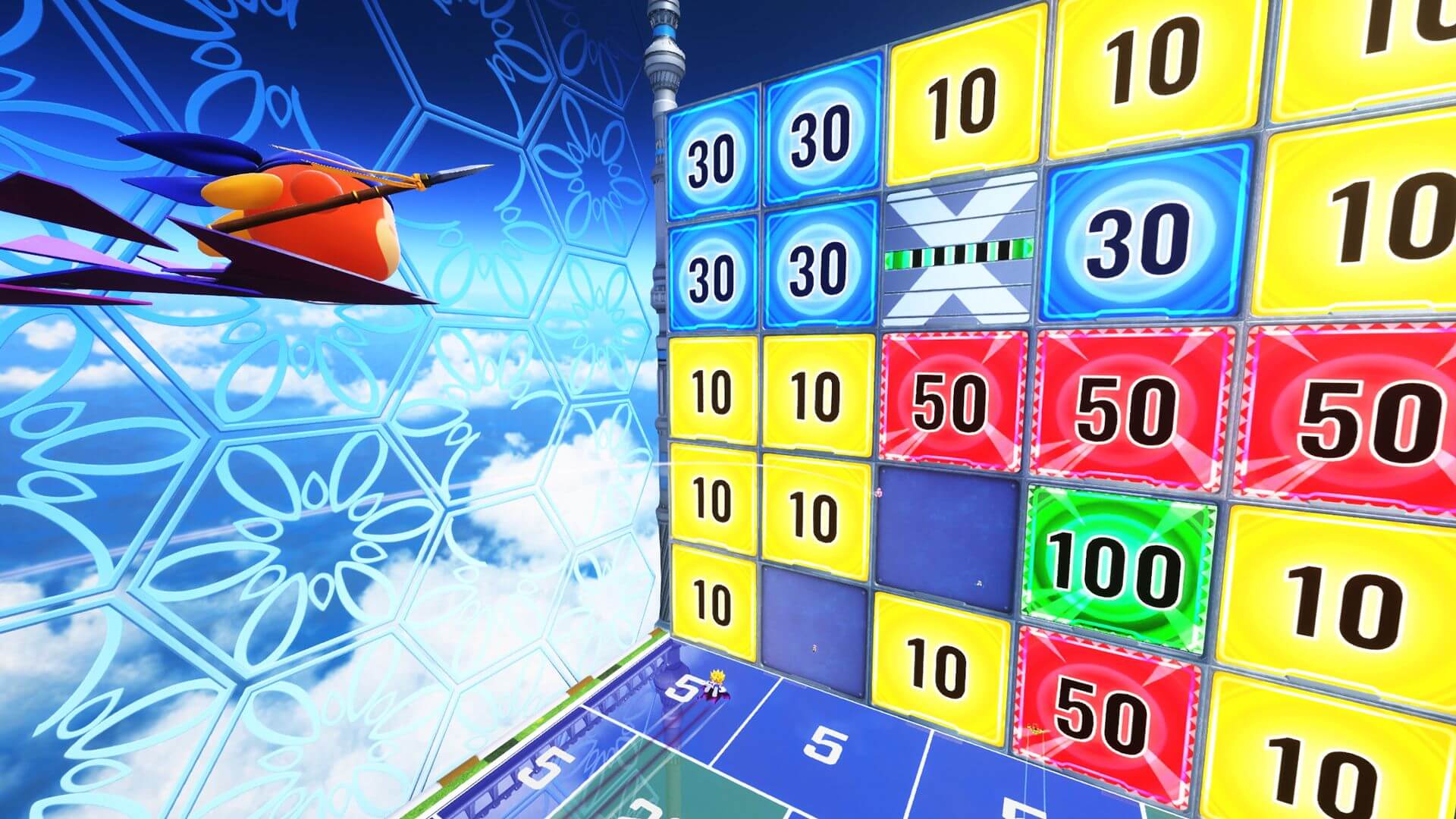
The story mode deserves special mention as a learning tool. It does an excellent job of gradually introducing mechanics and building on them. Chapters mix standard races with mini games and special challenges that focus on specific skills. One mission might emphasize attacking enemies, while another is all about managing speed through tight spaces. By the time I finished the story, I felt far more confident jumping into the more competitive modes.
Outside of the story, there is a solid variety of modes to explore. City Trial returns, and it is still one of the most unique racing modes Nintendo has ever made. Dropping multiple players into a large open map, letting them power up over time, and then throwing them into a final challenge never gets old. Top down races offer a completely different perspective that changes how you read tracks and react to opponents. Online races are smooth and chaotic in all the right ways, and the game does a good job of keeping matches fast and engaging.
Customisation was another pleasant surprise. I expected basic color swaps, but Kirby Air Riders goes much deeper. You can change color schemes, add patterns, experiment with different materials, and apply decals and accessories to your machines. It does not affect gameplay, but it adds a lot of personality. Seeing a grid full of wildly customized machines online adds to the fun and helps the game feel more personal.
Visually, the game looks great. It is vibrant, flashy, and full of motion. Kirby Air Riders feels like it was designed to show off the Switch 2, with bright colors, smooth animations, and busy tracks that never feel cluttered. Performance was rock solid throughout my time with the game. Races run smoothly, even when things get chaotic, and I never noticed any major drops or technical issues.
That said, the game is not perfect. The learning curve, while rewarding, might turn off players who expect something immediately accessible like Mario Kart. Some mechanics could have been explained more clearly early on. Online modes could also use more robust options, especially when it comes to matchmaking filters and private lobbies. The story, while enjoyable, does not take many risks and feels more functional than memorable.
Still, those issues never overshadowed my overall experience. Kirby Air Riders feels like a thoughtful, confident sequel to a game I never expected to see again. It respects what made the original special while expanding it in meaningful ways. By the time I rolled the credits and kept playing anyway, I realised how much this game had won me over.
In the end, Kirby Air Riders is not trying to be the next Mario Kart, and that is its greatest strength. It is weird, chaotic, sometimes frustrating, and incredibly fun once you meet it on its own terms. As a long delayed sequel, it delivers far more than I expected. It feels good to see this series finally get another chance, and even better to see it make the most of it.
A Nintendo Switch 2 review code was provided by Nintendo for the purpose of this review.
If you want to see more content like this and never miss one of our frequent gaming and anime giveaways come and Follow Ani-Game on Twitter.
8
- + A fun, unique take on racing
- + Large cast of characters to unlock and customise
- + Lots of machine customisation options
- + Numerous game modes to keep you engaged and test your skills
- - Has a decent learning curve with aspects that could be explained better
- - Would have loved a deeper or more interesting main story