I’ve been a fan of the God of War series for as long as I can remember. What’s always pulled me in isn’t just the brutal combat or the spectacle. It’s the way the games blend action with mythology and character driven storytelling. From ancient Greece to the Norse realms, the series has never been afraid to take big swings. When God of War launched, it proved that this franchise could completely reinvent itself and come out stronger for it. So when God of War: Sons of Sparta was announced with a new perspective and a clear pivot in genre, I was excited. Curious, too. This isn’t just another sequel. It’s a bold sidestep.
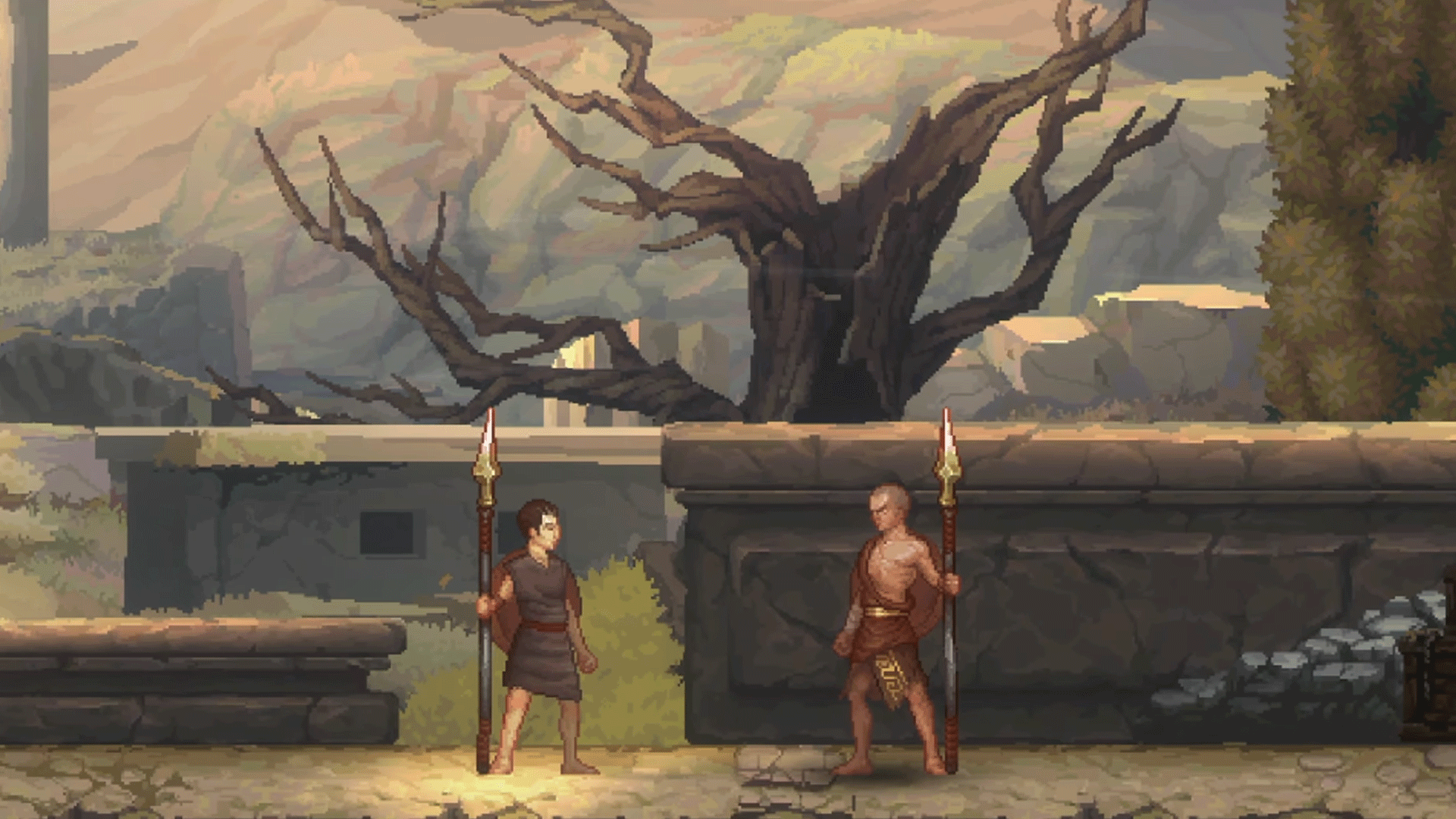
Sons of Sparta takes the series into 2D territory, leaning heavily into metroidvania design rather than the traditional character action formula. At first glance, that shift can feel jarring. God of War has always been about big arenas, cinematic camera sweeps, and heavy, deliberate combat. Here, the camera pulls back. The scale feels smaller. But once I settled in, I began to appreciate what the developers were going for. This isn’t trying to replace the mainline games. It’s exploring a different angle of Kratos’ past, both narratively and mechanically.
The story setup is one of the more interesting twists. You play as a much younger, stripped-down Kratos, long before he became the Ghost of Sparta we know. The framing device is Kratos recounting these events to his daughter Calliope, turning the entire experience into a playable flashback. It’s a clever way to humanise him. Instead of the hardened warrior we’re used to, we see a boy shaped by Sparta’s brutal traditions.
The main thrust of the plot revolves around the Agoge, Sparta’s ruthless training system for young boys. A fellow child has gone missing, and Kratos, along with his brother set out to find him. What starts as a straightforward rescue mission gradually unravels into something more layered. There are hints of political tension, manipulation, and early signs of the rage that will one day define him. That said, the story takes its time getting there. The opening hours are slow. You spend a fair bit of time running errands, unlocking basic traversal tools, and fighting relatively simple enemies before the narrative truly gains momentum. I won’t lie, there were moments where I questioned whether the story justified the game’s existence. But once it finds its footing, it delivers enough emotional weight to feel meaningful.
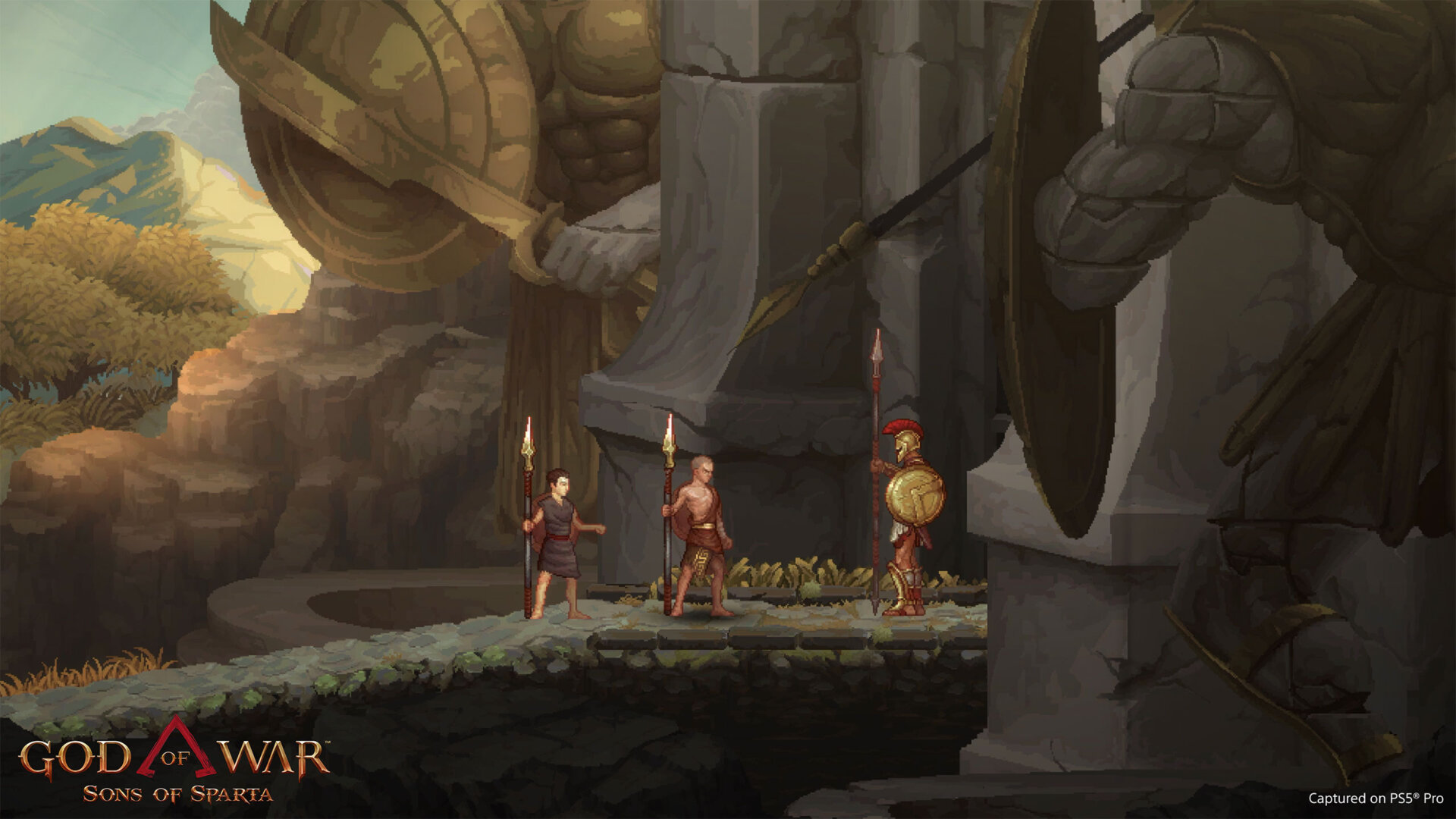
Gameplay-wise, the metroidvania structure is front and center. You explore interconnected areas, unlock new abilities, and backtrack to previously inaccessible zones. It’s familiar territory if you’ve played other games in the genre. There’s a steady drip-feed of new passive skills and obstacle-clearing abilities. Early on, combat and movement are intentionally limited. You can’t even drink potions to restore health at first. That ability comes later, once you’ve learned to rely on dodging and careful positioning. Eventually, you gain tools to burn through thorn-covered pathways and unlock a double jump to reach higher platforms.
I actually liked how the game handled this pacing. It doesn’t overwhelm you. Instead, it builds your toolkit piece by piece, giving you time to get comfortable with each mechanic before adding another layer. In true metroidvania fashion, returning to familiar areas with new abilities feels satisfying. That previously unreachable ledge suddenly becomes accessible. That blocked tunnel can finally be cleared. It’s a classic design loop that works well.
Skill progression ties neatly into this structure. As you defeat enemies and complete objectives, you earn orbs that can be spent across several skill trees. These trees offer new combat abilities, passive buffs, and traversal enhancements. I found myself carefully considering each purchase. Do I invest in boosting spear damage, improve shield parries, or unlock a new special attack? It adds a light RPG layer without becoming overwhelming.
On top of that, there’s item customisation. You can swap out shield rims, spear shafts, tips, and pommels. Each piece offers stat adjustments or status effects like burn or stagger bonuses. On paper, it’s a robust system. I enjoyed experimenting early on, especially when I was still figuring out my preferred playstyle. But as the game progressed and combat encounters grew more intense, I found myself sticking with one reliable setup. Swapping gear mid-dungeon rarely felt necessary. The customisation is there, and it’s well-designed, but it ends up slightly underutilised. Once I found what worked, I had little incentive to change.
That feeling carries over to the broader metroidvania design. What’s here is solid. The map is interconnected in satisfying ways, and the gradual ability unlocks feel well paced. But I couldn’t shake the sense that it never quite pushes beyond good into great. There are plenty of other metroidvanias that experiment more boldly with level design or environmental storytelling. Given the God of War name, I was hoping for something that would redefine expectations for the genre. Instead, it plays things relatively safe.
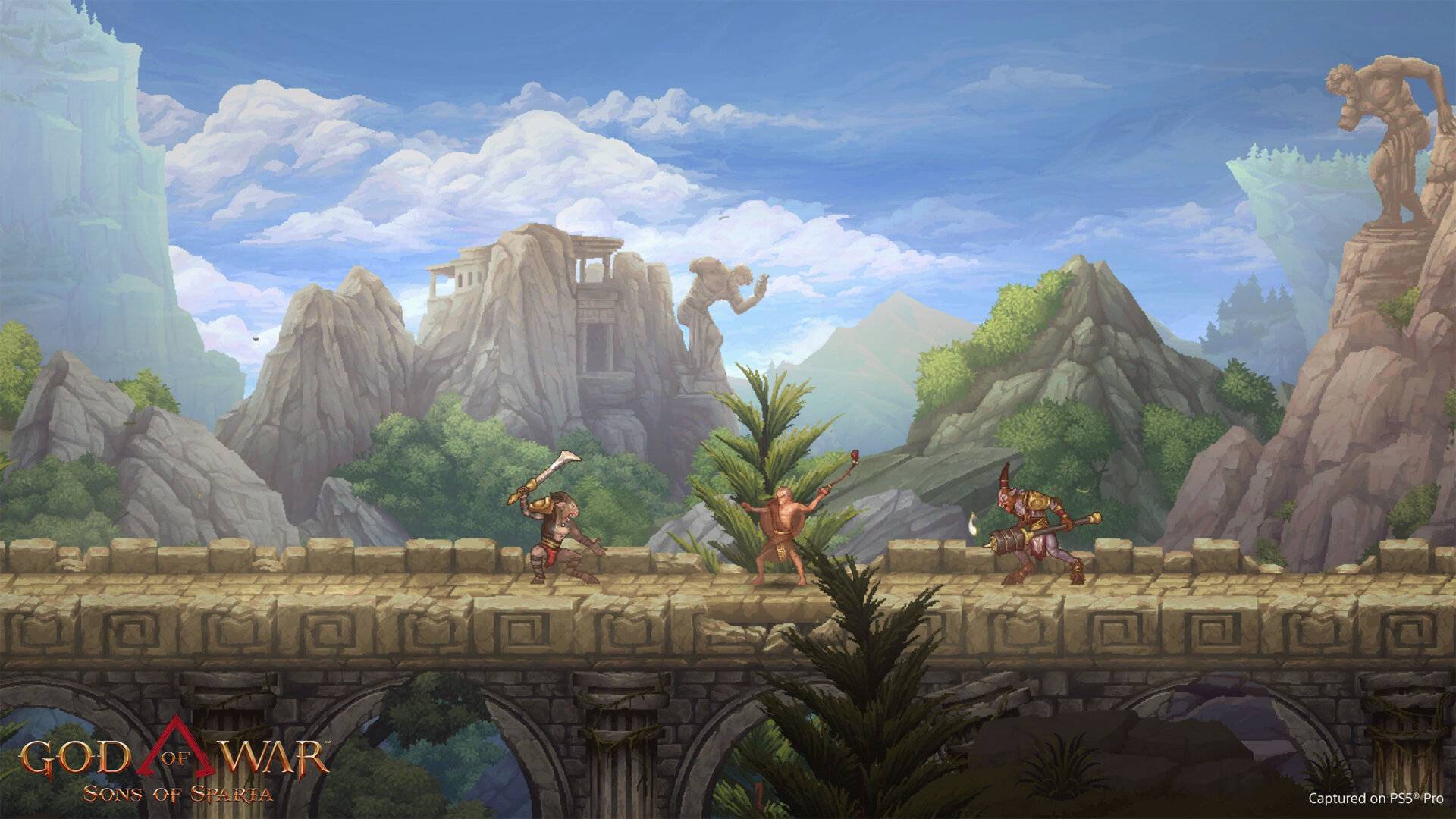
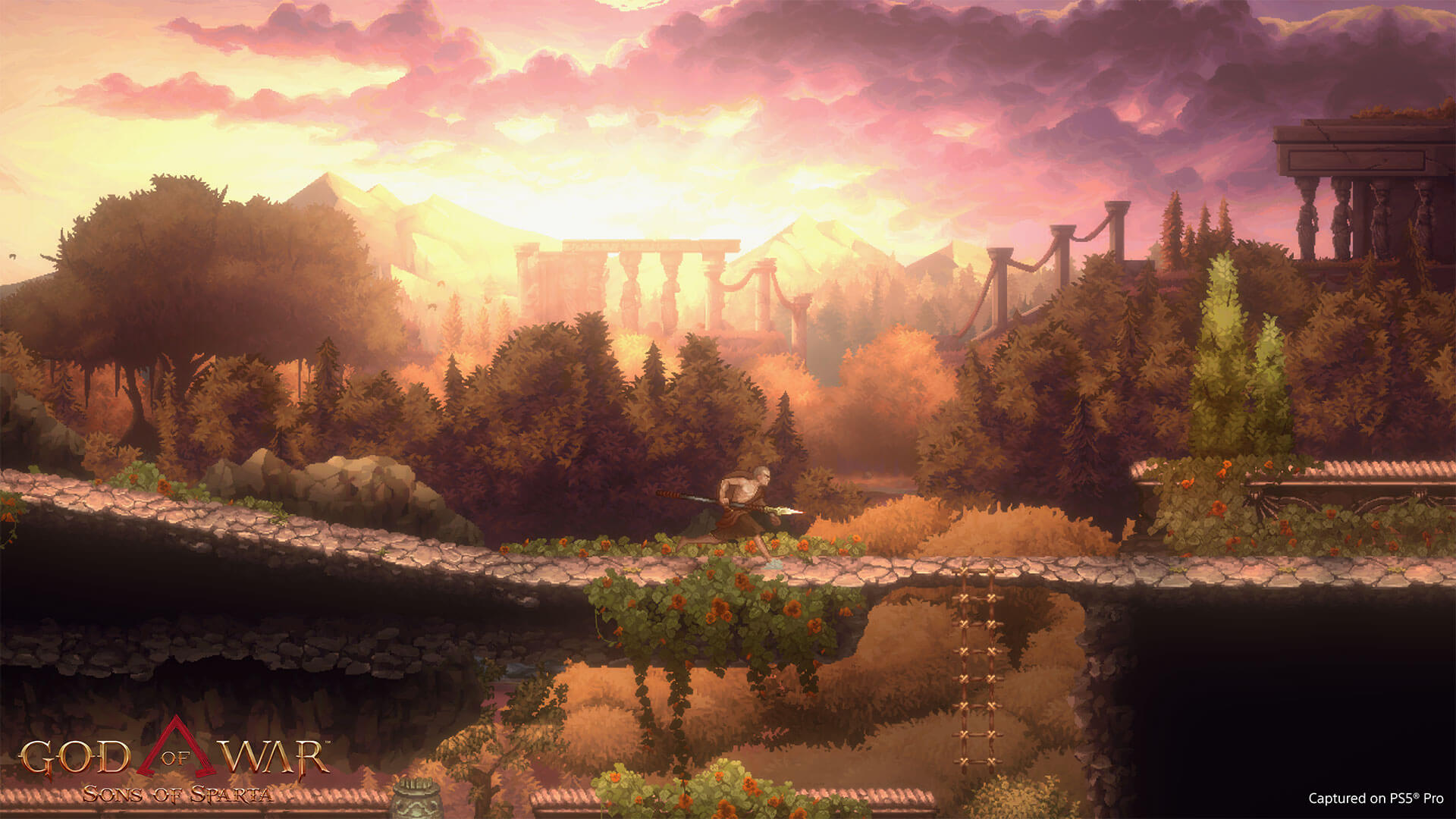
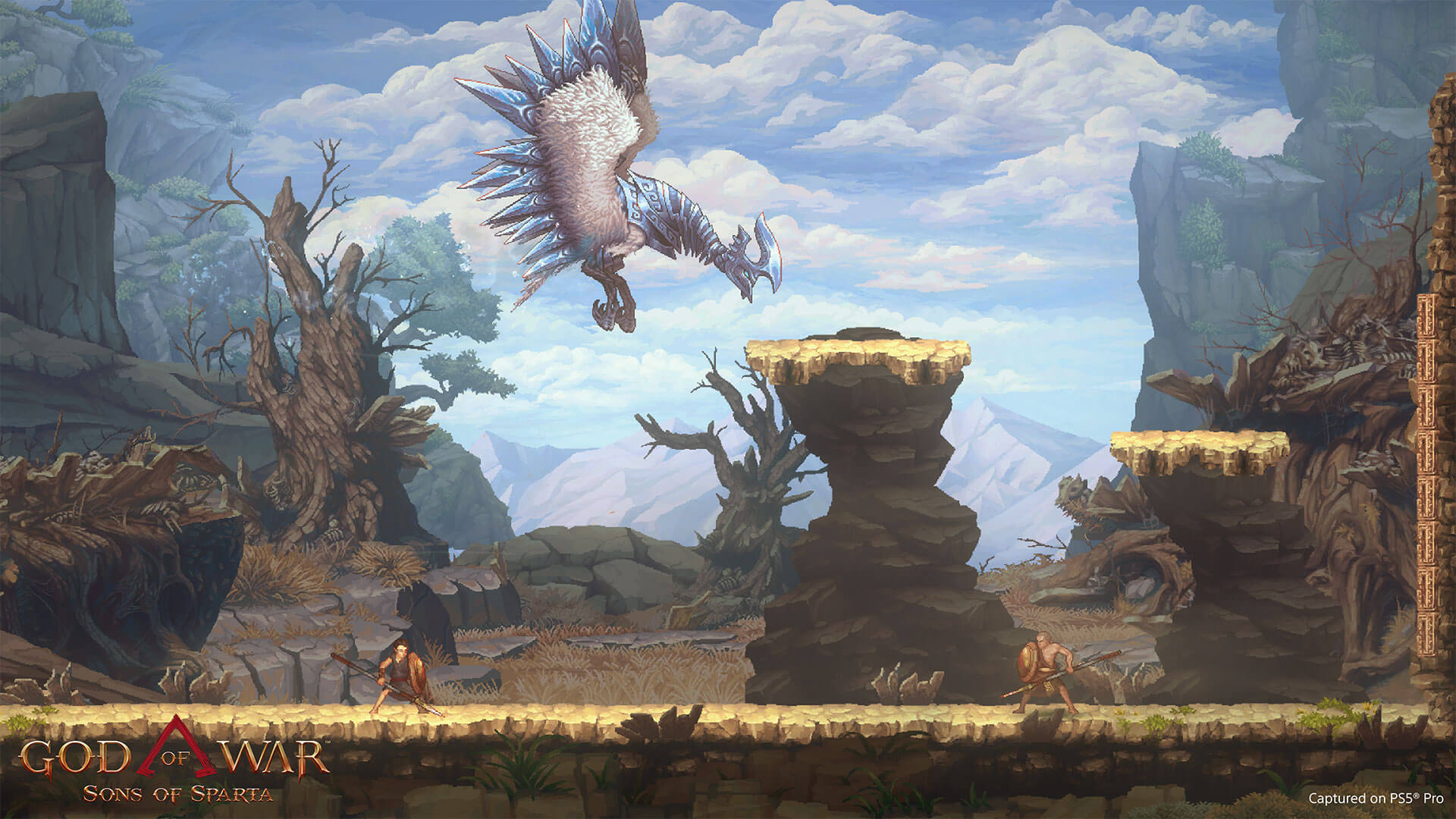
Where the game absolutely shines is in its production value. The sprite work is fantastic. Environments are detailed and moody, whether you’re exploring Spartan training grounds, shadowy caves, or haunted ruins. The varied biomes keep things visually fresh. I was genuinely impressed by the scope. When this was first announced, I expected something smaller. Instead, it feels fully realised. The game is fully voiced, with a sizeable cast that brings personality to even minor characters. That commitment to presentation goes a long way in making the experience feel worthy of the franchise.
Boss fights are a clear highlight. They’re tough. You can’t just mash your way through them. Each boss has distinct attack patterns and phases that demand patience and observation. The first time I faced one of the major encounters, I was flattened in seconds. It took multiple attempts to learn the rhythm, spot openings, and manage my limited resources. That challenge feels intentional. Victory comes from understanding the fight, not smashing through it. And when you finally win, it’s incredibly satisfying.
On the technical side, the game makes excellent use of the PS5’s DualSense controller. You feel the impact of every heavy strike through the rumble. Tension builds in the adaptive triggers as you brace with your shield. It’s subtle at times, but it enhances immersion in a way that feels thoughtfully implemented rather than overly gimmicky.
One design choice I can’t ignore, though, is the lack of d-pad support for movement or primary controls. For a 2D game, that omission stands out immediately. Using the analog stick works fine, but the d-pad feels like a natural fit for this style of gameplay. It’s a small thing, but it affects the tactile feel of movement. I genuinely hope it’s patched in later because it feels like a missed opportunity.
Overall presentation is strong. The varied environments, the orchestral score, the voice acting, and the cohesive art direction create a package that feels polished. Even when I had minor frustrations with pacing or underused systems, I couldn’t deny the care that went into crafting this experience.
In the end, God of War: Sons of Sparta is a good game that occasionally flirts with greatness. It takes a risk by shifting genres and perspective, and I respect that immensely. The metroidvania structure is well-executed, even if it doesn’t revolutionise the formula. The combat is challenging, especially in boss encounters. The production values are high, and the story, once it gets moving, adds meaningful context to Kratos’ early years.
As a long-time fan, I appreciate seeing the series experiment again. Not every risk needs to redefine a franchise. Sometimes it’s enough to explore a different side of a character we thought we already understood. Sons of Sparta may not stand at the very top of the metroidvania genre, but it stands as a confident, well-crafted chapter in a series that continues to evolve. And as someone who’s been along for the ride since the beginning, I’m glad it exists.
A PS5 review code was provided by the publisher for the purpose of this review.
If you want to see more content like this and never miss one of our frequent gaming and anime giveaways come and Follow Ani-Game on Twitter.
7
- + Great art style with detailed environments
- + Fun and challenging boss encounters
- + Good production value and fully voiced
- + Varied biomes to visit
- - Story pacing is on the slows side
- - Doesn’t do much to stand above other metroidvania games
- - Lack of d-pad support on launch