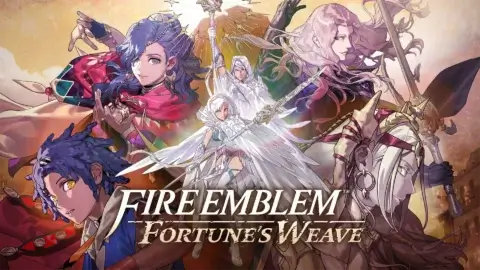
When Fire Emblem: Fortune’s Weave was first revealed, I was immediately intrigued by the direction Intelligent Systems was taking the series. Fire Emblem has always been a franchise that thrives on its combination of strategic combat, memorable characters and surprisingly emotional storytelling. However, after the success of Fire Emblem: Three Houses, I was particularly interested to see how the developers would approach another large-scale narrative with multiple protagonists and interconnected storylines.
Thankfully, Fortune’s Weave doesn’t simply attempt to recreate what made Three Houses so successful. Instead, it takes some familiar ideas and builds something considerably more ambitious around them. With four playable heroes, an enormous cast of recruitable characters, a time-bending narrative and some of the most satisfying tactical combat the series has offered, there’s a tremendous amount to get stuck into here.
And for me, that’s what makes Fortune’s Weave such a compelling experience. Fire Emblem: Fortune’s Weave takes place in the Dagdan Empire, a prosperous land preparing to host the annual Heroic Games. Fighters from across the region gather in the capital city of Dagsion, hoping to claim victory in the tournament. The prize? A single wish granted to the champion.

It’s an interesting premise, particularly when you consider the motivations behind the four central characters. You have Cai, a young man hoping to win the tournament and free his imprisoned father. There’s Dietrich, a wandering swordsman searching for his next great challenge, and Theodora, a ruler determined to restore the reputation of her goddess. Finally, there’s Leda, a dancer whose motivations are driven by revenge.
Each character has their own reasons for entering the Heroic Games, and each brings a different perspective to the unfolding story. However, there’s considerably more happening here than a traditional tournament narrative.
Five years into the future, the Dagdan Empire has fallen into ruin following the resurrection of the demon god Balor. With the world facing destruction, the progenitor god Sothis sends you back through time to change the fate of the four heroes and prevent the catastrophe from happening. It’s a fairly elaborate setup, but one that gives Fortune’s Weave plenty of opportunities to explore its characters and gradually reveal the connections between their individual journeys.
What I particularly appreciate is how the narrative is structured around these four protagonists. Rather than forcing me to choose one character and completely abandon the others, the game allows me to move between their individual storylines throughout the adventure.
This is a fantastic decision. Each hero has their own cast of supporting characters, personal motivations and unique abilities, meaning that switching between them never feels like I’m simply repeating the same experience with a different character model. It fleshes out the experience because of the varied perspectives you gain insight of as you experience them.
There’s also a genuine sense of discovery as the different storylines begin to overlap. Events that initially seem relatively insignificant in one character’s journey can take on an entirely different meaning when viewed from another perspective. It’s something that reminded me quite a bit of Three Houses, particularly in the way the game gradually expands its central conflict.

The dialogue also has that unmistakable Fire Emblem personality. There’s plenty of dramatic character interaction, larger-than-life personalities and emotional moments that occasionally lean heavily into anime melodrama. Personally, I wouldn’t have it any other way.
That said, the narrative isn’t without its problems. Having four protagonists, alongside the mysterious fifth character at the centre of the future timeline, occasionally makes the overall structure feel unnecessarily complicated. There are also moments where the pacing slows considerably, particularly once the initial excitement of the individual Heroic Games storylines begins to settle.
I still found the overarching narrative incredibly engaging, but I do think some sections could have benefited from a little more focus.
And that brings me to the gameplay. Fire Emblem has always been about its tactical combat, and Fortune’s Weave delivers an experience that feels like a natural evolution of everything the series has been building towards.
The traditional grid-based battles return, with units moving across the battlefield, positioning themselves around enemies and taking advantage of their individual strengths and weaknesses.
On the surface, it’s familiar territory for anyone who has played previous entries. However, Intelligent Systems has introduced enough additional mechanics to make encounters feel considerably more involved.
One of the biggest additions is the Blaze Art system. Each of the four main heroes possesses unique abilities that can provide powerful advantages during combat. These abilities can dramatically change the flow of a battle, allowing me to strengthen my units and create opportunities that might otherwise be difficult to achieve.
However, there’s a catch. Using these abilities comes at the expense of the character’s health. I really like this approach because it introduces another layer of decision-making. Do I use an ability to secure an important advantage now, or save that health for a potentially more dangerous encounter later?
The Combat Art system also adds another interesting consideration, allowing weapons to perform specialised attacks at the expense of additional durability. There’s a lot to think about, and the game does an excellent job of gradually introducing these mechanics without making the combat feel unnecessarily overwhelming.

Of course, positioning remains incredibly important. Understanding weapon advantages, enemy attack ranges and the capabilities of individual units is essential if you want to come out of encounters victorious.
I particularly enjoy how much difference a carefully planned strategy can make. A battle that initially looks completely overwhelming can suddenly become manageable once I start thinking about unit placement, defensive positioning and the order in which I approach enemy formations.
It’s incredibly satisfying when everything comes together.
Fortune’s Weave also introduces an entirely different type of encounter called Clash Battles.
Unlike traditional Fire Emblem combat, these encounters take place outside the familiar grid-based system. Instead, battles play out using a more conventional turn-based RPG structure, with characters attacking enemies directly and working together through combination attacks.
It’s an interesting change of pace, and I appreciate Intelligent Systems experimenting with something different. However, I don’t think these encounters are quite as engaging as the traditional battles. While the combination attacks and additional mechanics provide some interesting tactical opportunities, they can become repetitive, particularly as they appear more frequently throughout the later portions of the adventure. They’re a welcome addition, but the traditional battles remain the highlight for me.

Outside of combat, there’s an enormous amount to explore.
Dagsion acts as the central hub for much of the adventure, providing access to merchants, training facilities, temples, inns and numerous other activities. There’s a real sense of life within the city, with plenty of characters to interact with and opportunities to strengthen the relationships between members of your growing army.
I particularly enjoy the social elements. Sharing meals, spending time with companions and participating in various activities might not sound particularly exciting compared to fighting enormous monsters, but these moments help establish a stronger connection with the characters.
And considering just how many potential allies there are, that’s important.
The world map also provides plenty of opportunities to venture beyond the capital. There are towns to visit, quests to complete, enemies to defeat and dungeons to explore. Each of the four protagonists also possesses unique abilities that can be used during exploration, giving them additional reasons to feel different from one another outside of combat.
Dungeons are another welcome addition. These areas contain valuable resources, equipment and other materials that can be used to strengthen your army. Encounters within them trigger Clash Battles, creating a slightly different experience from the traditional tactical encounters.
I like how all these activities contribute towards the larger adventure. There’s almost always something worthwhile to do, whether that’s gathering resources, recruiting another character or preparing for the next major battle.
However, I do think the sheer number of activities occasionally works against the game’s pacing. With so much happening between major story moments, it’s easy to spend considerably more time managing your army and exploring the surrounding areas than actually progressing the narrative.
The world map management can also become a little tedious, particularly when coordinating multiple units and deciding how best to spend your available time. I appreciate the ambition behind the system, but there are moments when I wish certain activities were a little more streamlined.
Character progression is another area where Fortune’s Weave offers plenty of depth.
As expected, units can improve their abilities, learn new combat techniques and develop into different classes as they gain experience. The class system provides plenty of opportunities to experiment with different combinations, and finding the right role for each character becomes an important part of building an effective army.
I also appreciate how the recruitment system encourages experimentation. With so many potential allies available, there’s plenty of incentive to try different combinations rather than relying exclusively on the same handful of characters throughout the entire adventure.
It gives the game an enormous amount of replayability, particularly when combined with the four separate storylines. And that’s ultimately one of Fortune’s Weave’s greatest strengths. There’s an incredible amount of content here, and the different protagonists provide enough variety to make multiple playthroughs feel worthwhile.
Visually, Fortune’s Weave is a noticeable step forward for the series. Being developed exclusively for Nintendo Switch 2 gives Intelligent Systems an opportunity to create a more detailed world, and Dagsion is easily one of the most impressive locations in the game.
The city feels considerably more alive than previous Fire Emblem environments, with its different districts, bustling streets and numerous characters giving it a real sense of scale.
Character models are also nicely detailed, and the colourful art direction gives the world plenty of personality. I particularly appreciate the character designs. Each protagonist has a distinctive appearance, and the supporting cast features enough variety to make the enormous roster feel interesting rather than interchangeable.
It’s not necessarily the most technically impressive game available on Nintendo Switch 2, but I think it looks fantastic within the context of the series.
The soundtrack is another highlight. The music does an excellent job of establishing the atmosphere, whether I’m exploring the streets of Dagsion, preparing for an important encounter or heading into another major battle. The more dramatic compositions provide the sense of scale you’d expect from a story involving gods, heroes and the potential destruction of an entire empire.
The voice acting also helps bring the characters to life, giving many of the game’s more emotional moments considerably more impact.

Ultimately, Fortune’s Weave feels like a game that understands what makes Fire Emblem special.
It takes the strategic foundations that have made the franchise so popular and combines them with a considerably more ambitious narrative structure, a huge cast of characters and enough additional activities to keep me occupied for an incredibly long time.
There are certainly areas that could be improved. The narrative occasionally struggles with its multiple protagonists, some of the additional battle systems aren’t quite as engaging as the traditional encounters, and the amount of management required between battles can become repetitive.
But these are relatively minor complaints when considering just how much the game gets right.
Final Thoughts
Fire Emblem: Fortune’s Weave is an incredibly ambitious entry in the franchise, and one that successfully builds upon the foundations established by previous games.
The multiple protagonists provide an interesting foundation for the narrative, the tactical combat is excellent, and the sheer amount of content available makes this one of the most substantial experiences currently available on Nintendo Switch 2.
I particularly appreciate how Intelligent Systems has managed to bring together so many different gameplay elements without losing sight of what makes Fire Emblem enjoyable in the first place.

It’s not perfect, and I do think the pacing and some of the additional gameplay systems could have been refined further. However, the quality of the combat, the depth of character progression and the interconnected storytelling make it very easy to overlook those shortcomings.
For longtime fans, there’s a tremendous amount to appreciate here. And for anyone looking for a substantial tactical RPG to sink dozens of hours into, Fortune’s Weave is an incredibly easy recommendation. Intelligent Systems has delivered another fantastic Fire Emblem adventure, and one that makes me very excited to see where the franchise goes next.
A Nintendo Switch 2 review code was provided by Nintendo for the purpose of this review.
If you want to see more content like this and never miss one of our frequent gaming and anime giveaways come and Follow Ani-Game on Twitter.
9
- + Fantastic strategy combat systems
- + Amazing cast of characters and overall story
- + Lot’s of gameplay depth and customisation
- + Looks and runs great on the Nintendo Switch 2
- - Does have some noticeable pacing problems in the story and structure
- - Some systems, such as Clash battles could have been expanded further