I’ve always had a soft spot for Dune. There’s something about its world that feels almost impossible to translate into a video game. Arrakis is vast, hostile and strangely beautiful, while its politics, factions and mythology give the setting far more depth than simply being a backdrop for another science-fiction adventure. So when Dune: Awakening first arrived on PC, I was curious to see whether Funcom could turn that world into something that actually worked as a game.
Now, after its journey through numerous updates and changes, Dune: Awakening has made its way to PS5 in a substantially revamped form. While it was originally presented as an open-world survival MMO, the current version places considerably more emphasis on its survival mechanics and its ability to be enjoyed as a largely solo experience. That change makes a significant difference, particularly for someone like me who would rather explore Arrakis at my own pace than feel compelled to play alongside other people.
At its core, Dune: Awakening is an open-world survival game with MMO elements. I start with very little, gather resources, craft equipment, build shelter and gradually become better equipped to survive the harsh conditions of Arrakis. From there, the game opens up into exploration, combat, missions, crafting, base building and progression.
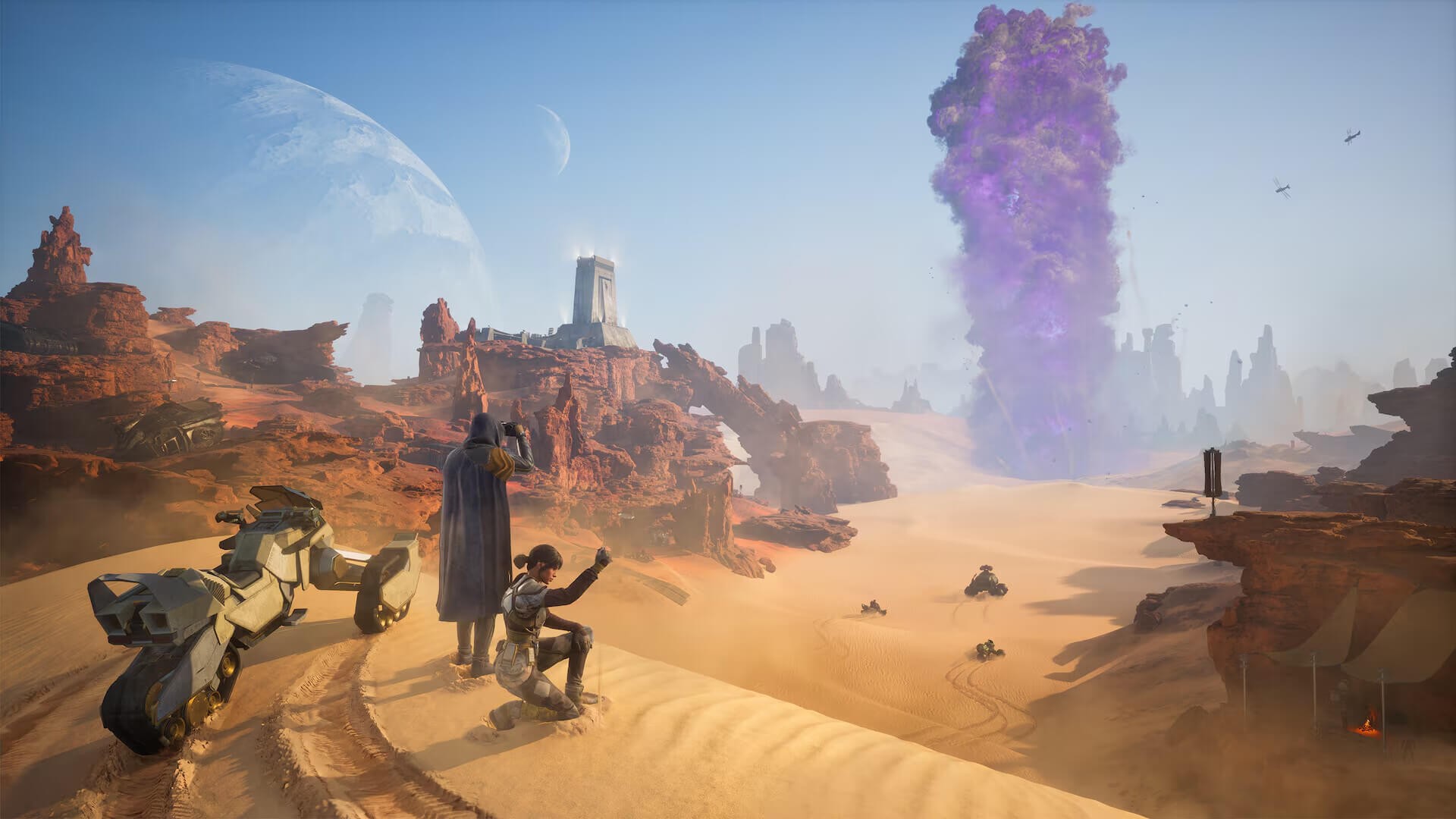
The setting is an alternate take on the Dune universe, built around the disappearance of Paul Atreides rather than following the exact events of the novels and films. That gives the game plenty of freedom to tell its own story while still incorporating many familiar elements of the Dune mythology.
I found myself enjoying that approach. The story gives me a reason to explore Arrakis, investigate what has happened and interact with the various factions and characters scattered throughout the world. It also means the game doesn’t simply feel like I’m wandering around a gigantic sandpit collecting rocks. There is an actual narrative thread pulling me forward.
Perhaps the biggest surprise for me was how well Dune: Awakening works when played solo. Despite its online foundations, I never felt as though I was playing a multiplayer game that had been awkwardly stripped down for a single player. There are other players moving around the world, but much of the experience can be approached on my own terms.
Character creation gives me plenty of opportunity to decide exactly what sort of survivor I want to become. I can customise my appearance before choosing abilities and developing my character around different combat styles. Rather than locking me permanently into a traditional RPG class, the game lets me build my character through different abilities and skill sets.
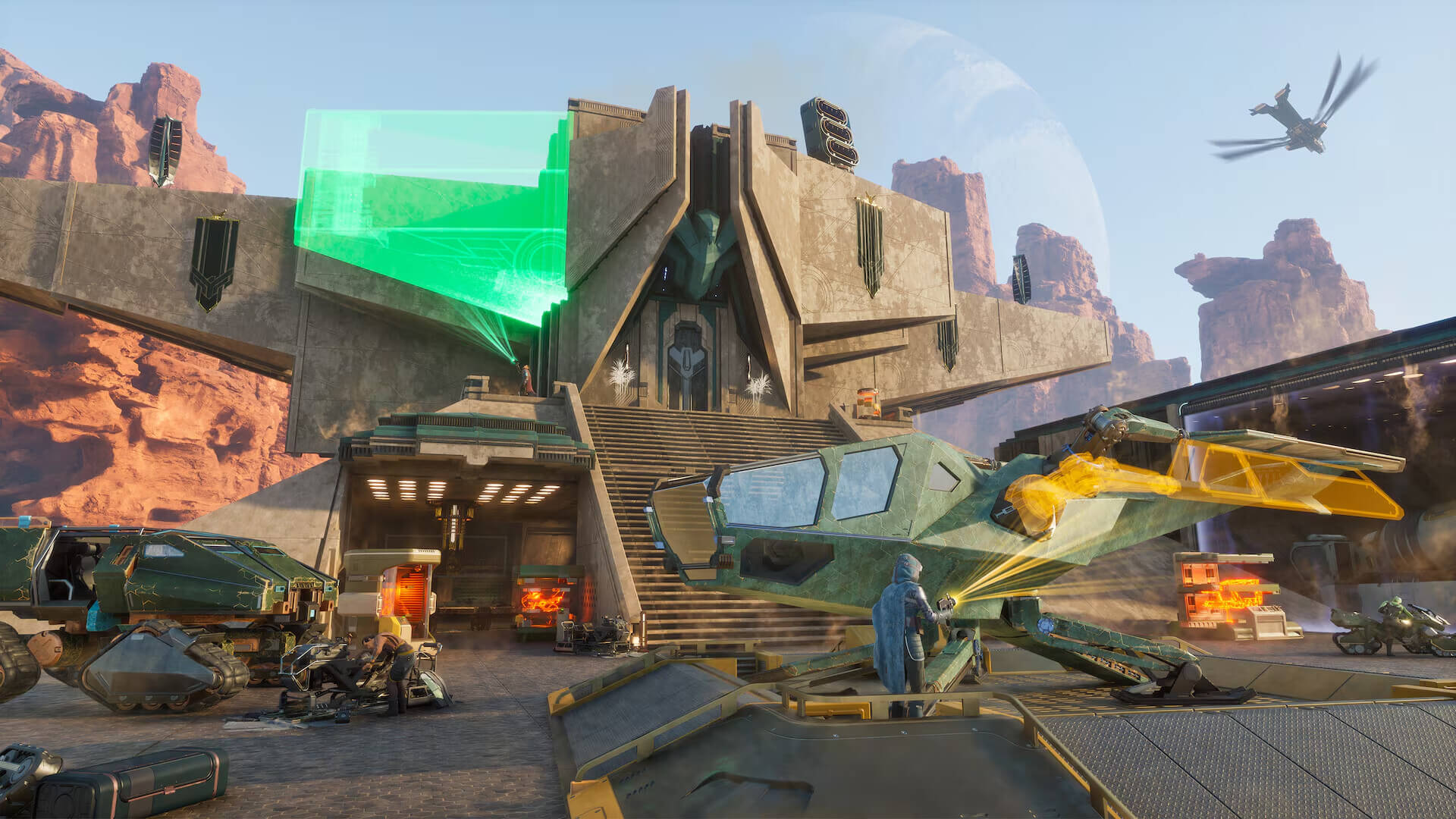
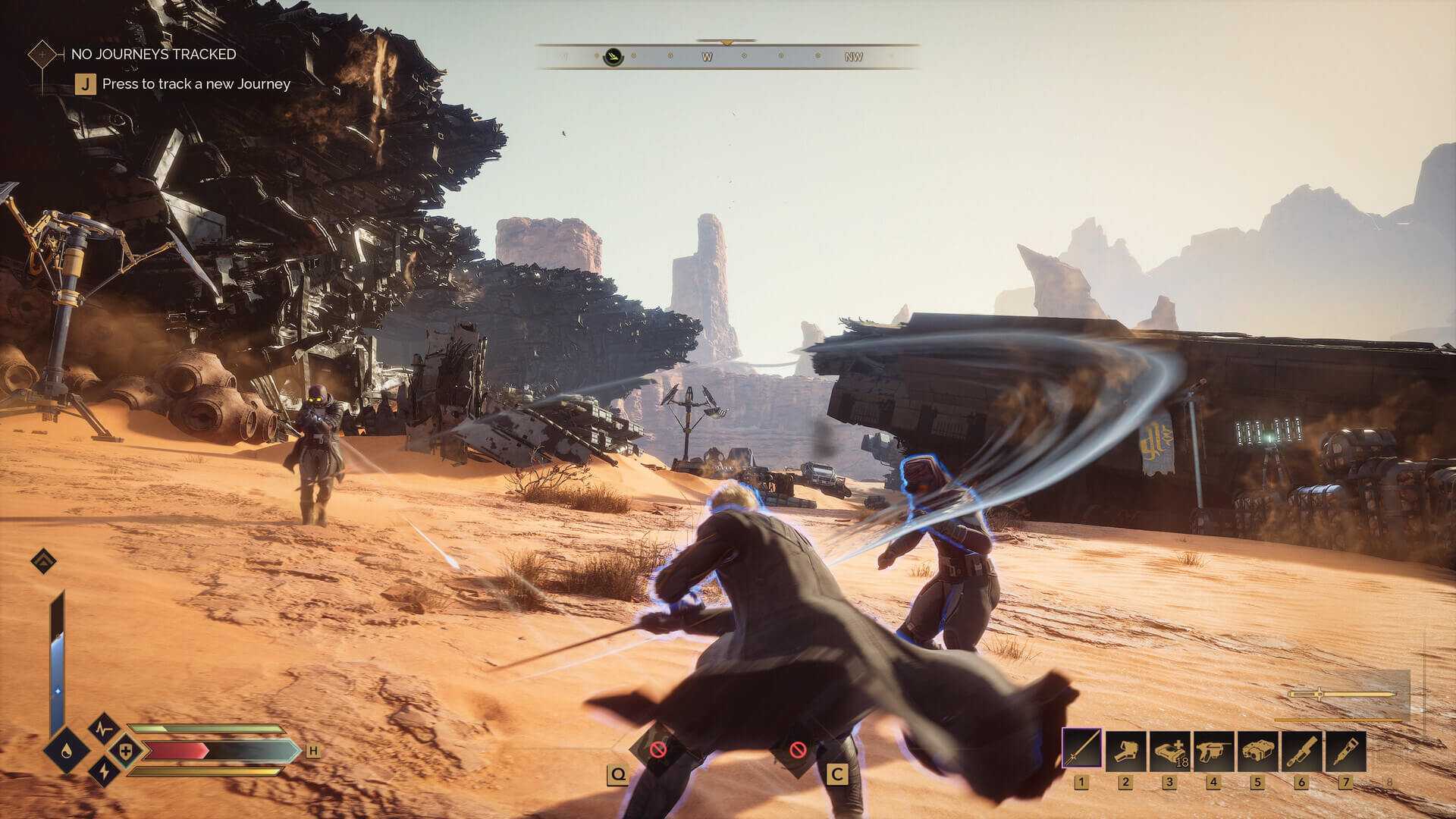
That flexibility is particularly useful because the combat supports several approaches. I can engage enemies directly with conventional weapons, make use of ranged attacks or lean into abilities that allow me to move around the battlefield more effectively. Combat isn’t quite as deep as a dedicated action game, but there’s enough variety to keep encounters interesting, particularly as my character develops.
Gunplay feels responsive, while melee combat provides a useful alternative when enemies get too close. The combination of weapons and abilities also encourages me to think about how I approach encounters rather than simply running towards everything and pulling the trigger.
But combat is only one part of the experience, because survival is where Dune: Awakening really establishes its identity.
Arrakis is dangerous in ways that go well beyond the enemies trying to kill me. Water is precious, the environment can be lethal and spending too much time exposed to the elements can turn a routine expedition into a desperate scramble for survival. I constantly need to consider what resources I’m carrying and how far I can travel before I need to return somewhere safe.
I particularly liked how naturally many of these systems fit together. Gathering resources leads into crafting, crafting improves my equipment, better equipment allows me to explore more dangerous areas, and exploration provides access to materials that let me construct even better gear and bases.
Building also becomes an important part of progression. Establishing a base gives me somewhere to store resources, craft equipment and prepare for the next expedition. It creates a satisfying sense of progression because I’m not just making my character stronger. I’m gradually making my little corner of Arrakis more capable of supporting me.
Then there are the vehicles, which quickly became one of my favourite parts of the game. Arrakis is enormous, and travelling everywhere on foot would become exhausting. Vehicles let me cover huge distances considerably faster, while also making practical sense within the world.
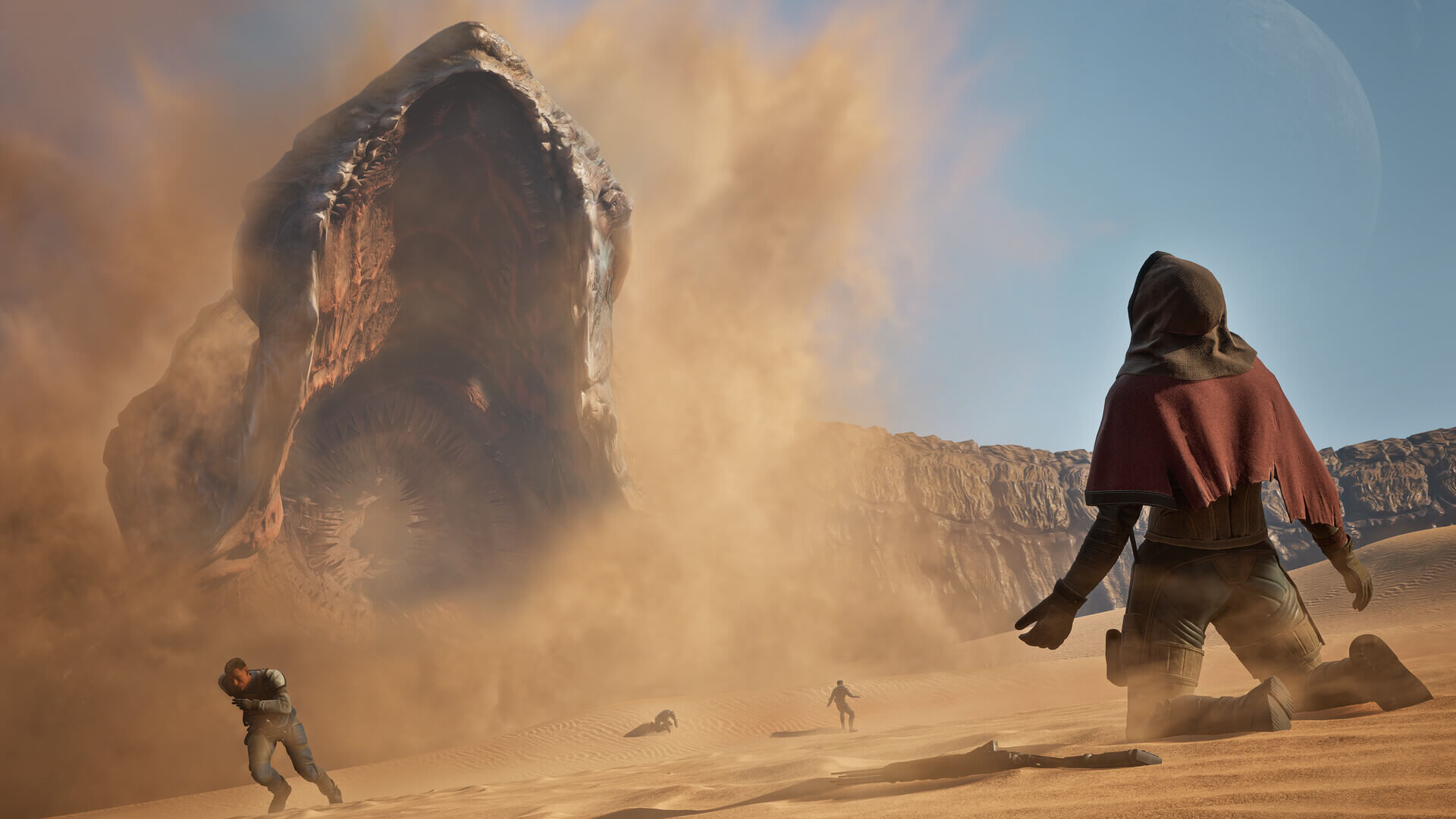
More importantly, travelling across the sand isn’t exactly safe. Anyone familiar with Dune knows that the sand itself can be deadly, and Dune: Awakening does a good job of making me respect the environment. Getting from one location to another isn’t simply a matter of following a marker on the map. I have to think about where I’m going and how I’m getting there.
The PS5 version also benefits from some thoughtful DualSense implementation. The haptic feedback is used particularly well to make the environment feel more physical. I can feel vibrations through the controller as I move around Arrakis, and the effects become especially noticeable when environmental threats are approaching.
Sandstorms are a great example. The controller provides subtle feedback that helps communicate the direction and intensity of the storm, giving me another layer of awareness beyond simply watching the screen. It’s a small feature, but it helps make the PS5 version feel like a genuine console adaptation rather than just a PC game running on different hardware.
The sound design deserves similar praise. Arrakis is a strangely quiet world at times, and the ambient audio does a great job of reinforcing that isolation. The distant environmental sounds, wind and general atmosphere make the world feel considerably more alive.
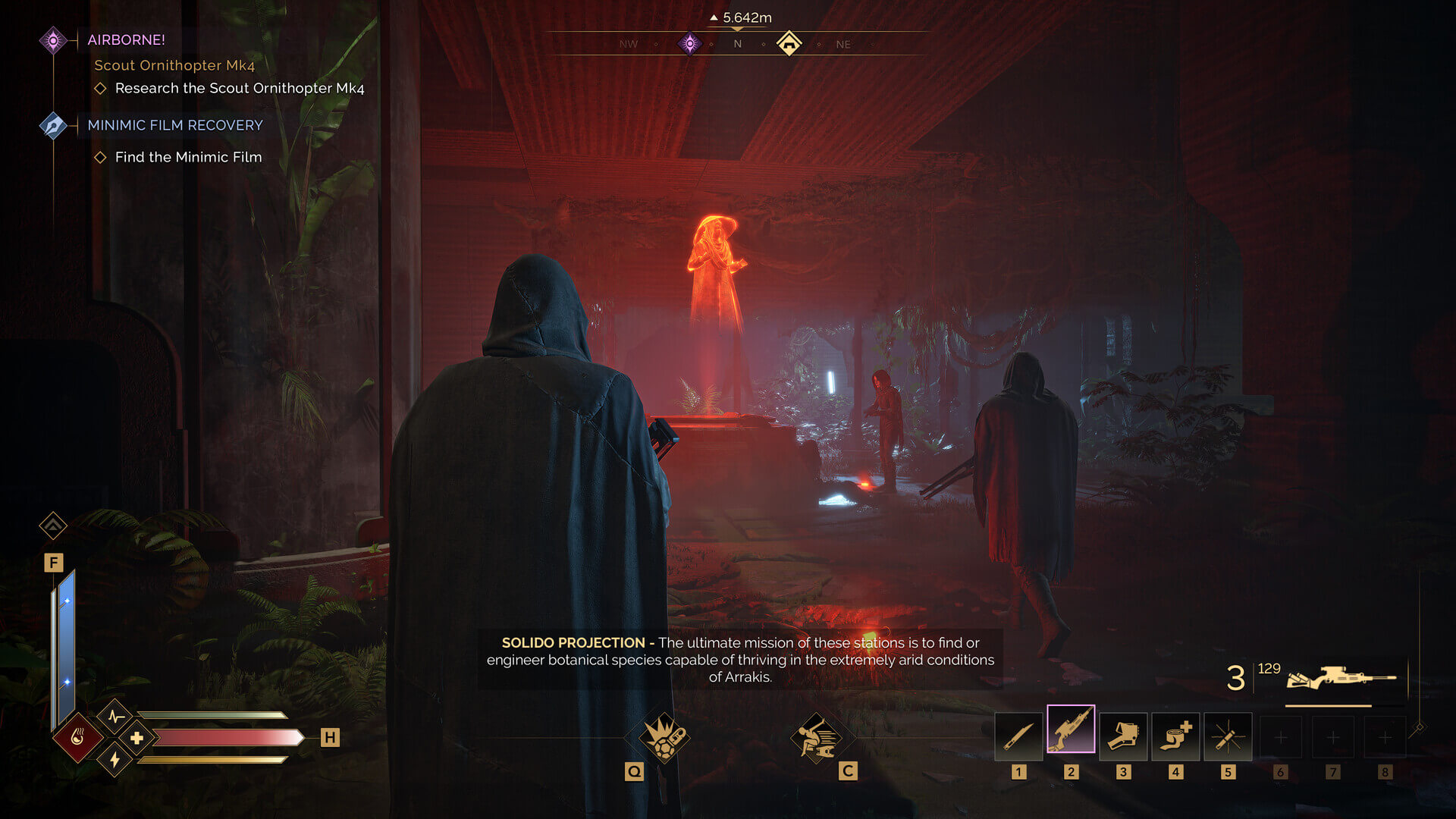
Weapons also have a satisfying weight to them, while the sounds of vehicles cutting through the air help sell the scale of the environment. I often found myself appreciating the audio during quieter moments when there wasn’t necessarily anything happening on screen.
That isn’t to say Dune: Awakening is perfect.
The biggest issue for me is that the sheer size and complexity of the game can occasionally work against it. There are a lot of systems to understand, and while that depth is rewarding once everything clicks, getting there can feel overwhelming. The interface can also become busy, particularly when I have a lot of equipment, resources and objectives competing for my attention.
The MMO foundations haven’t completely disappeared either. There are moments when the game can feel like it is juggling two identities: a large-scale online world and a survival RPG designed to be enjoyed alone. For players who want a tightly paced, purely single-player adventure, some of the systems and online elements may feel like unnecessary baggage.
There is also a certain amount of repetition inherent in the survival genre. Gathering resources, crafting equipment and returning to familiar locations is part of the appeal, but it can become a grind if I’m not in the mood for that particular gameplay loop.
Even so, I came away from Dune: Awakening impressed by just how successfully Funcom has turned Arrakis into a place I actually want to spend time in.
What works best is the way the game’s systems reinforce the setting. Water matters because I’m on Arrakis. Vehicles matter because the world is enormous and the sand is dangerous. Shelter matters because the environment is hostile. Exploration matters because there are always new resources, locations and threats waiting beyond the horizon.
The PS5 version also feels like more than an afterthought. The revamped experience, solo-friendly structure and DualSense features make this a particularly accessible way to experience the game, especially for players who weren’t interested in jumping into its original PC release.
Dune: Awakening doesn’t completely reinvent the survival genre, but it doesn’t need to. Its greatest strength is the way it combines familiar survival mechanics with one of science fiction’s most recognisable settings. I went in wanting to see whether Arrakis could work as an open-world game, and I came away feeling that it absolutely can.
There is still some roughness around the edges, and the sheer number of systems can make the experience feel intimidating at times. But once I settled into its rhythm, I found myself increasingly invested in the process of surviving, exploring and gradually making Arrakis feel a little less hostile.
A PS5 review code was provided by the publisher for the purpose of this review.
If you want to see more content like this and never miss one of our frequent gaming and anime giveaways come and Follow Ani-Game on Twitter.
8
- + Captures the look and feel of the Dune universe
- + The crafting/survival gameplay loop
- + Can now be enjoyed completely solo
- + Has great Dualsense implementation
- - Very complex with lots of systems to learn
- - Still has some MMO-ness in its design that leads to repetition