I’ve always had a soft spot for Dragon Quest. From its colourful worlds and memorable characters to its wonderfully old-school approach to RPGs, it’s a series I’ve returned to time and time again. The Dragon Quest Monsters spin-off, however, is a different story. Despite being a massive Dragon Quest fan, my experience with the series has been surprisingly limited. I briefly played one of the Nintendo DS entries many years ago, but never really got the chance to sink my teeth into what the spin-off had to offer.
That made me particularly keen to go hands-on with Dragon Quest Monsters: The Withered World. Thanks to Square Enix, I recently got the opportunity to play a couple of sections of the upcoming RPG and see what the Dragon Quest formula could bring to the monster-catching genre. My session wasn’t especially long, but it gave me a taste of its world, systems and story, while also leaving me wondering just how deep everything can become over a full-length adventure.
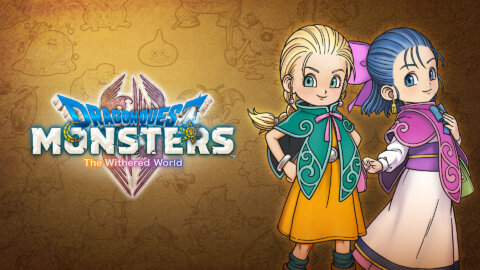
The Withered World puts you in the role of one of two protagonists, Bianca or Nera, two characters familiar to longtime Dragon Quest fans from Dragon Quest V: Hand of the Heavenly Bride. Here, the pair are brought together for a very different kind of adventure. Both of their fathers have fallen ill, and while searching for a cure, they cross paths and decide to work together. Their journey takes them into a strange, withered world where they become monster wranglers, building teams of creatures and using them to overcome the challenges ahead.
I began my hands-on session with a completely fresh save, allowing me to experience the opening moments of the game. An opening cutscene quickly establishes the game’s characters and some of the lore surrounding its world, including the gods and the events that have left the lands in their current, rather barren state.
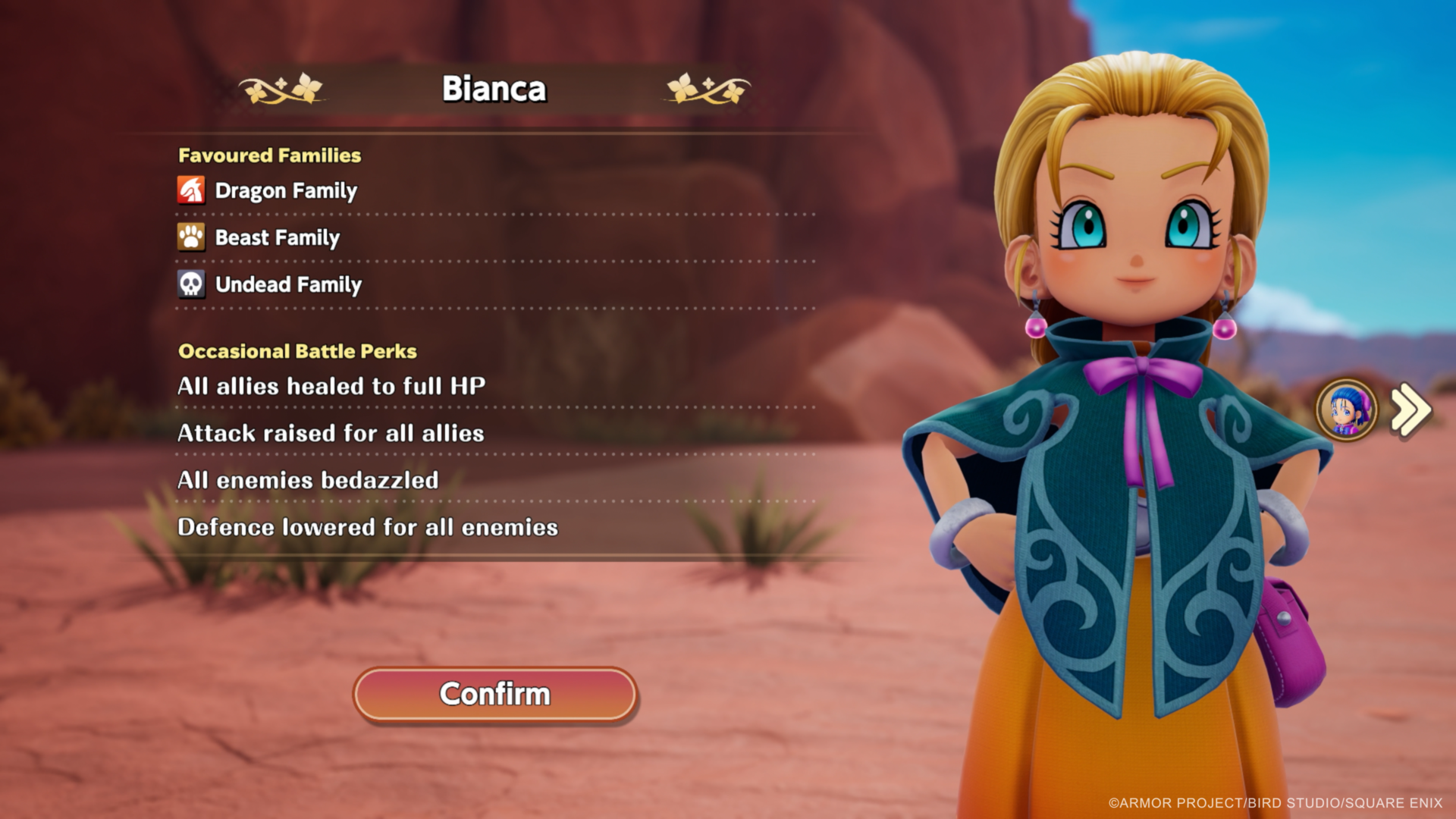
I was then asked to choose between Bianca and Nera. Interestingly, this isn’t simply a cosmetic decision. The selection screen shows that each character has their own specialties, including monster families they favour and different battle perks. Bianca, for example, favours Beast, Undead and Dragon families, while Nera has an affinity for Slime, Nature and Material monsters. That immediately made the choice feel more meaningful than simply deciding which character I liked the look of more.
What I wasn’t able to determine during my relatively short session was just how significant those differences become over the course of the full game. Whether these specialities have a major impact on party-building or simply provide some early advantages is something I’m particularly interested to find out.
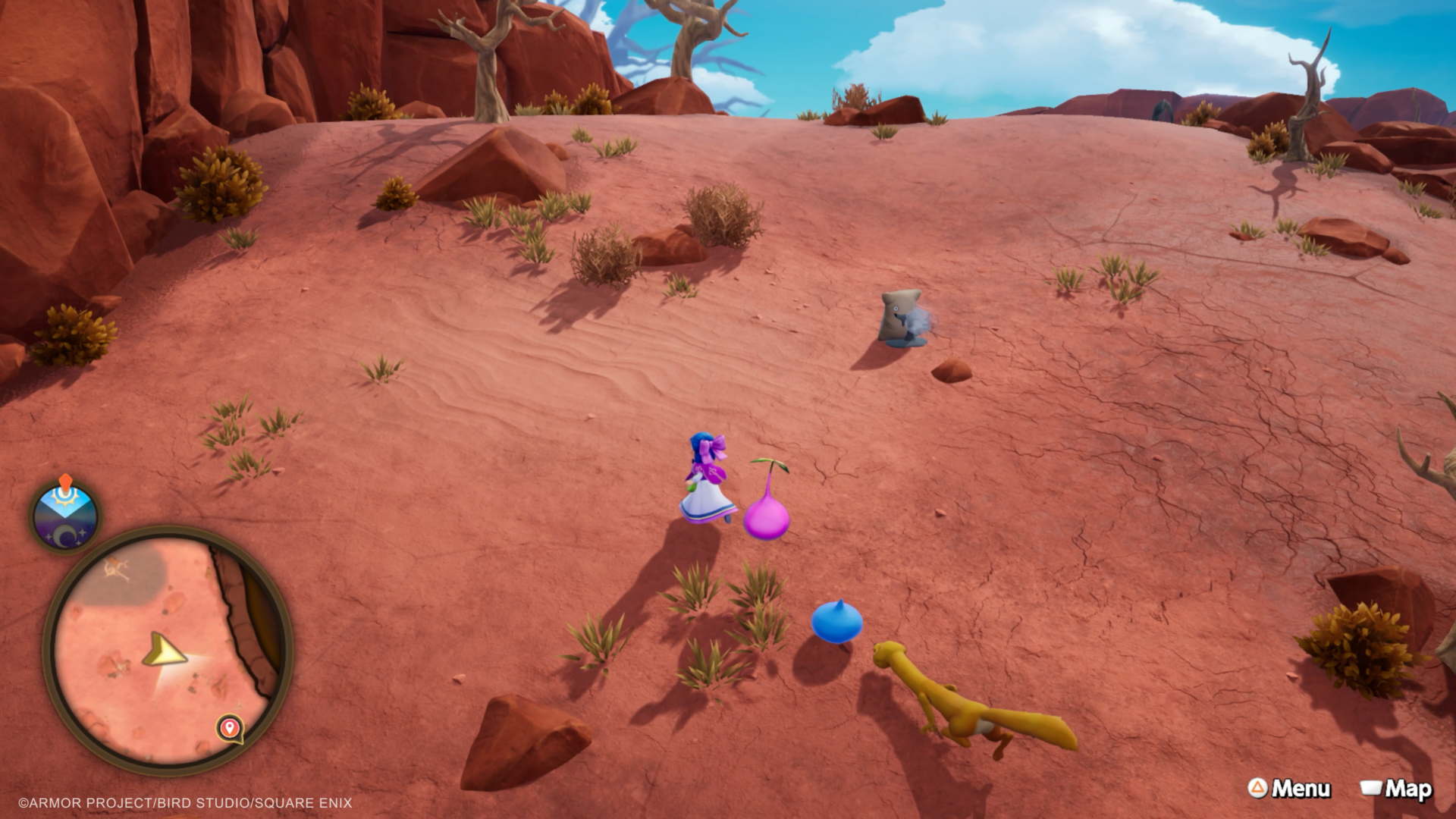
From there, I was let loose in the game’s open world. As the title suggests, this is a world that has seen better days. The landscapes are dry, withered and noticeably lacking the lushness you’d normally associate with a Dragon Quest adventure. Yet there was something quite appealing about wandering through these environments, especially when I began encountering monsters and learning how the game’s core systems fit together.
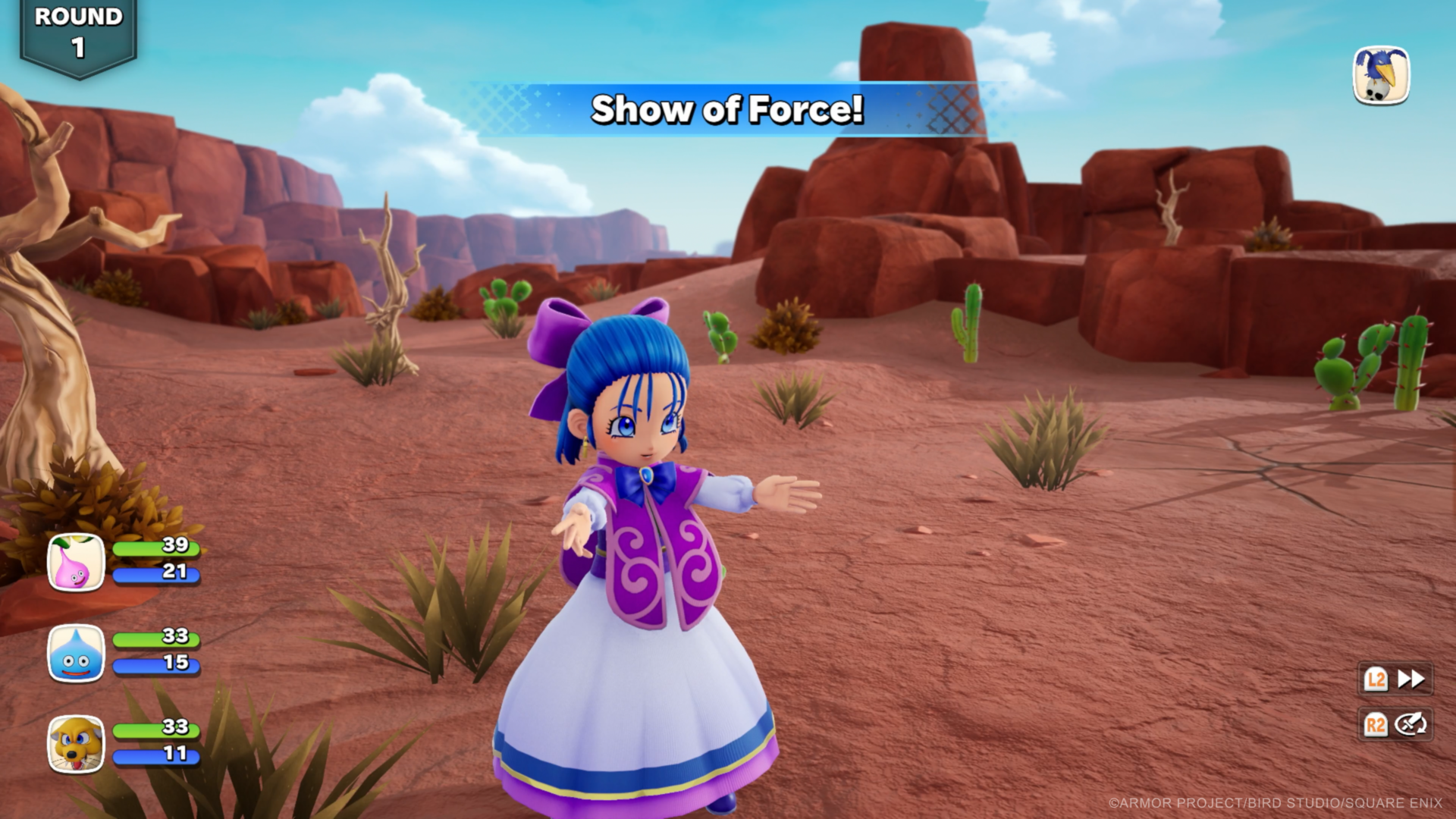
Naturally, collecting monsters is a huge part of the experience. The Show of Force system gives you a way to persuade monsters to join your side, adding a little more personality to the familiar process of building a collection. Like other monster-catching RPGs, you can only take a certain number of creatures with you at once, with additional monsters being kept in reserve. It creates that familiar temptation to constantly reconsider your team as new creatures appear.
Battles themselves are built around traditional turn-based RPG mechanics. I could individually control my monsters, choose their targets, use items, adjust their strategies or simply run away if things weren’t going my way. It felt comfortably familiar rather than revolutionary. The Withered World doesn’t appear to be trying to reinvent turn-based combat, instead using a proven formula as the foundation for its monster-raising systems.
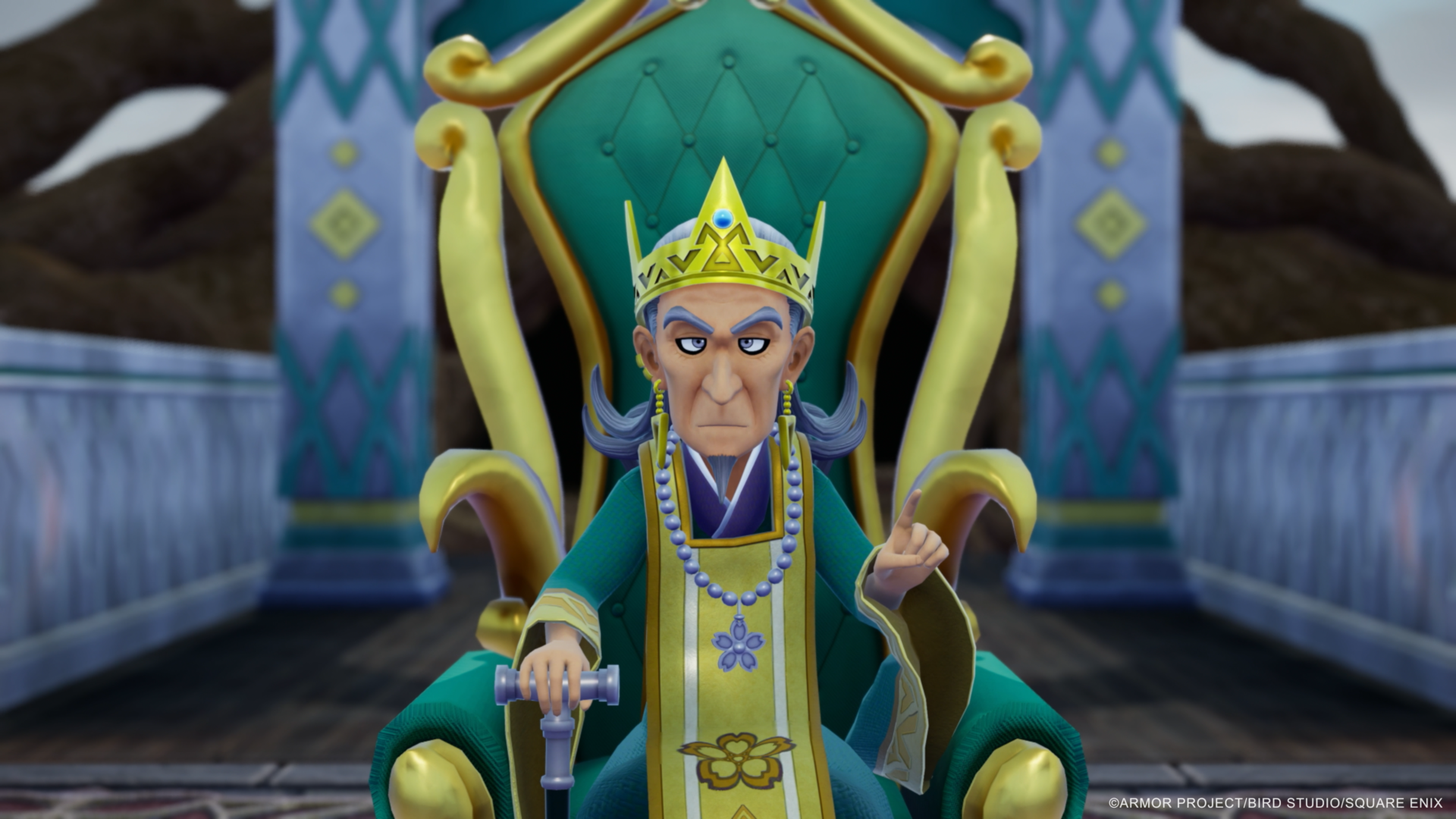
I enjoyed simply roaming around, entering dungeon areas and occasionally being interrupted by cutscenes that offered small glimpses into the wider story. Even from this relatively brief introduction, the basic gameplay loop started to make sense: explore, encounter monsters, recruit them, strengthen your team and continue pushing deeper into this strange world.
I then jumped into a second save that was much further into the game, and this was where I got a better look at some of its more interesting systems. One of the first things that stood out was the design of its environments. The various zones have an almost Super Mario Galaxy-like quality to them, with rounded horizons and a globe-like structure. As a result, moving around a corner or travelling over what looks like the edge of an area can reveal something completely unexpected.
That design makes exploration feel particularly suited to monster hunting. You never quite know what might be waiting around the next bend, whether that’s a new monster, a point of interest or something else entirely. It’s a small design decision, but one that made exploration feel more unpredictable during my time with the game.
The second save also gave me a chance to experiment with the Synthesis system. This is where things started to get considerably more interesting. Synthesis allows you to combine two monsters you’ve collected to create an entirely new creature. The basic concept reminded me of the fusion system from Persona, but it quickly became clear that there could be much more depth here than simply combining two creatures and seeing what happens.
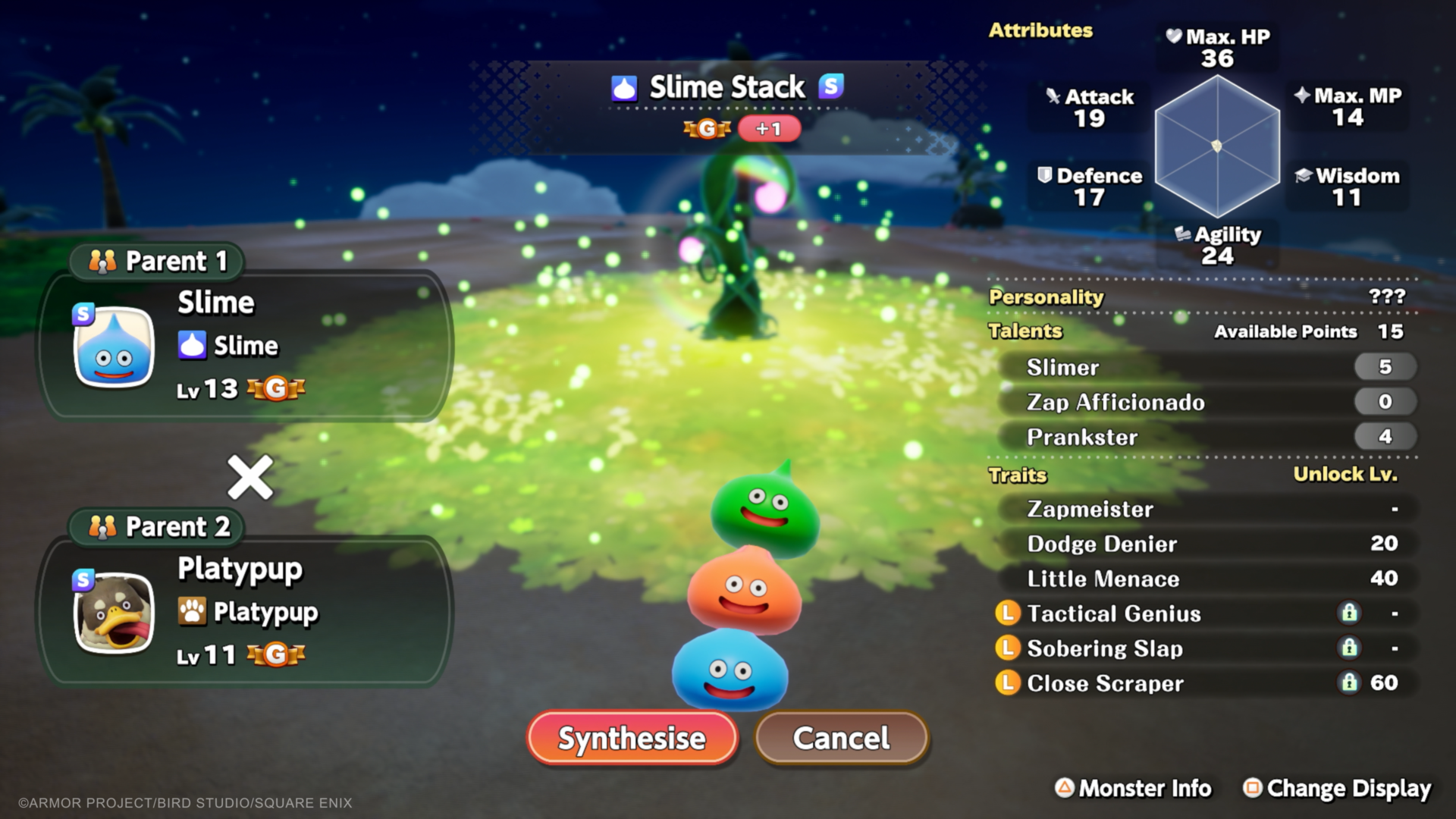
Different combinations can produce rare monsters, while the system also appears capable of creating creatures with carefully selected abilities. I only scratched the surface during my session, but I could already see how this might become one of the game’s biggest time sinks. If the number of possible combinations and abilities expands significantly, creating the perfect monster could become an adventure in itself.
And, of course, this wouldn’t be Dragon Quest without its humour. The series’ wonderfully strange sense of comedy is all over The Withered World, from characters sporting some very distinctive accents to the endless stream of puns. The monster names in particular continue that long-running tradition of taking something cute, silly or completely ridiculous and giving it an equally ridiculous name. It’s exactly the kind of humour I’ve come to expect from Dragon Quest, and it gives the world plenty of personality.
Visually, though, the biggest thing I took away from my time with The Withered World was just how good it looks. The colours pop, the environments have a vibrant sense of personality and the classic Akira Toriyama-inspired Dragon Quest aesthetic translates beautifully into this setting. It reminds me more of Dragon Quest XI than the more realistic approach taken by Dragon Quest VII Reimagined, and I think that suits the monster-focused adventure particularly well.
After my hands-on time, I came away wanting to see more. The Withered World already has the foundations of a very enjoyable monster-catching RPG, but the big question for me is how deep those foundations become over dozens of hours. The Synthesis system in particular feels like it could have enormous potential, while the different character specialities, monster families and abilities suggest there could be plenty of room for experimentation when building a team.
I’ll need considerably more time with the game before I can say whether those systems have the depth to sustain a lengthy adventure, but my first taste has certainly made me curious. For someone like me who has spent far more time with the mainline Dragon Quest games than the Monsters spin-off, The Withered World looks like a very appealing way to finally dive deeper into the series’ monster-collecting side.
Dragon Quest Monsters: The Withered World is scheduled to release on December 3, 2026, for Nintendo Switch, Nintendo Switch 2, PlayStation 5, Xbox Series X|S and PC via Steam and the Microsoft Store.
If you want to see more content like this and never miss one of our frequent gaming and anime giveaways come and Follow Ani-Game on Twitter.