There’s something immediately familiar about Duskfade. From the moment I stepped into its colourful clockwork world, I felt like I’d been transported back to the mid-2000s, when 3D platformers were everywhere and every new adventure seemed to have a lovable mascot, a collection of strange worlds to explore and a combination of platforming, combat and light RPG mechanics. Developed by Spanish indie studio Weird Beluga and published by Fireshine Games, Duskfade is very deliberately built in the image of that era, taking obvious inspiration from games such as Jak & Daxter, Ratchet & Clank and Kingdom Hearts.
That nostalgia is one of Duskfade‘s greatest strengths, although it also highlights some of the game’s weaknesses. This is a game that knows exactly what it wants to be, and for the most part, it gets there. It just takes a little too long to find its footing.
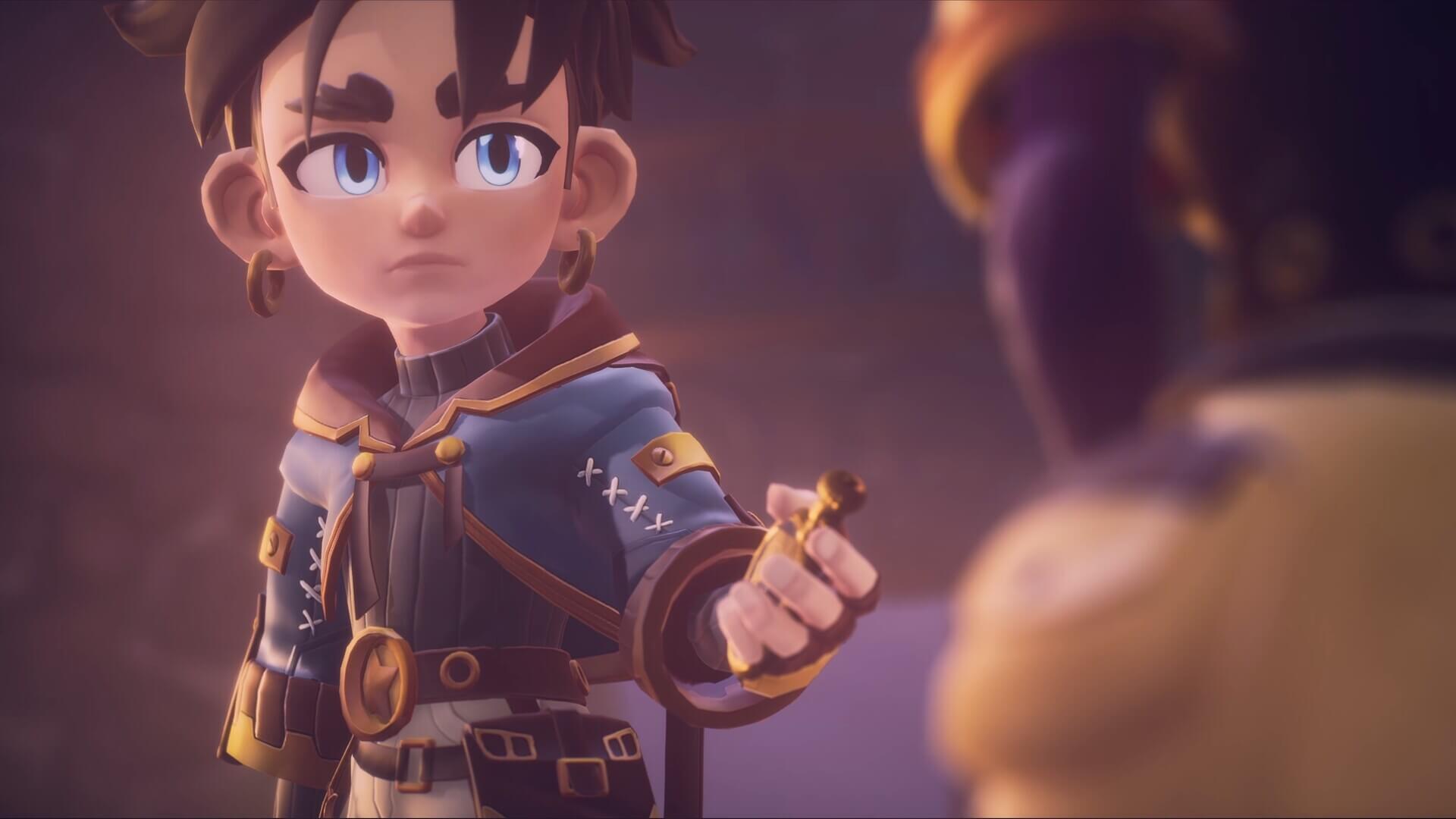
You play as Zirian, a young workshop apprentice whose ordinary life is thrown into chaos when his sister Allira becomes trapped in a mysterious reality connected to the Clock Tower. The clock has stopped, constant night has descended over the world and Zirian sets off on a journey to restore time and rescue his sister from the forces of Despair. Along the way, he has to uncover the secrets of the Master Clockmakers and confront the emotional baggage that sits beneath the game’s colourful adventure.
The story goes in some directions I wasn’t expecting. What initially looks like a fairly straightforward rescue mission gradually becomes a story about loss, grief, memory and moving forward. The relationship between Zirian and Allira is at the centre of it, while the supporting cast helps flesh out the world and gives Zirian some much needed personality and companionship during his journey. His mechanical Cuckoo companion is particularly effective as part of the game’s lighter, more playful side.
I won’t go too deeply into the later story developments, but I was surprised by how emotionally invested I became. Some of the storytelling is quite heavy handed. There are moments where characters essentially stop everything to explain the plot or their feelings, and some of the exposition arrives in places where it feels awkwardly inserted. Duskfade isn’t particularly subtle when it wants me to understand what its characters are going through. Even so, it works. By the end, the different pieces come together into something considerably more satisfying and emotional than I expected when I first started playing.
The problem is getting there. Duskfade starts slowly, and the opening hours tested my patience. There are a lot of cutscenes, character conversations and setup sequences before I feel like I’m properly allowed to get on with the business of actually playing the game. I found myself repeatedly thinking, “Can I just control Zirian now?” when what I really wanted was to start exploring.
The lack of a clear objective at certain points doesn’t help either. There were several occasions where I wasn’t entirely sure where I was supposed to go next, and the absence of a genuinely useful minimap or objective markers made navigating some areas more frustrating than it needed to be. These aren’t deal-breaking issues, but they do interfere with the game’s momentum.
That becomes more noticeable because Duskfade is also simply a little too long. I think this adventure would have benefited enormously from being several hours shorter. Tightening the opening, trimming some of the dialogue-heavy sections and cutting down a few of the less essential areas would have given the entire experience a much better flow. There are plenty of moments where I could see the game stretching itself because it had more content to offer, rather than because that content genuinely needed to be there.
Fortunately, once I got past those frustrations, I found a genuinely enjoyable action-platformer underneath them. Zirian himself is fantastic to control. Movement is fast, fluid and responsive, and Duskfade clearly understands that getting from one side of a level to another should be fun in its own right. Jumping, dashing, grappling and gliding can be combined to cover surprisingly large distances, and the game regularly gives me opportunities to string these mechanics together. There’s a satisfying sense of momentum to moving through the world, and some of the platforming challenges make particularly good use of Zirian’s expanding toolkit.
This is where the game’s PS2-era influences are at their strongest. It doesn’t simply imitate the look of those older games. It understands the appeal of that design philosophy. Give me a character who feels good to control, put some interesting things in front of me and let me experiment with movement.
The upgrade system is less successful. Zirian can improve his abilities and unlock new skills using the currency collected throughout the game, but progression is fairly slow. I didn’t feel like I was constantly gaining meaningful new abilities, and the cost of unlocking and upgrading them can be quite steep. Spending a large chunk of my accumulated currency on a single upgrade sometimes made progression feel more restrictive than rewarding.
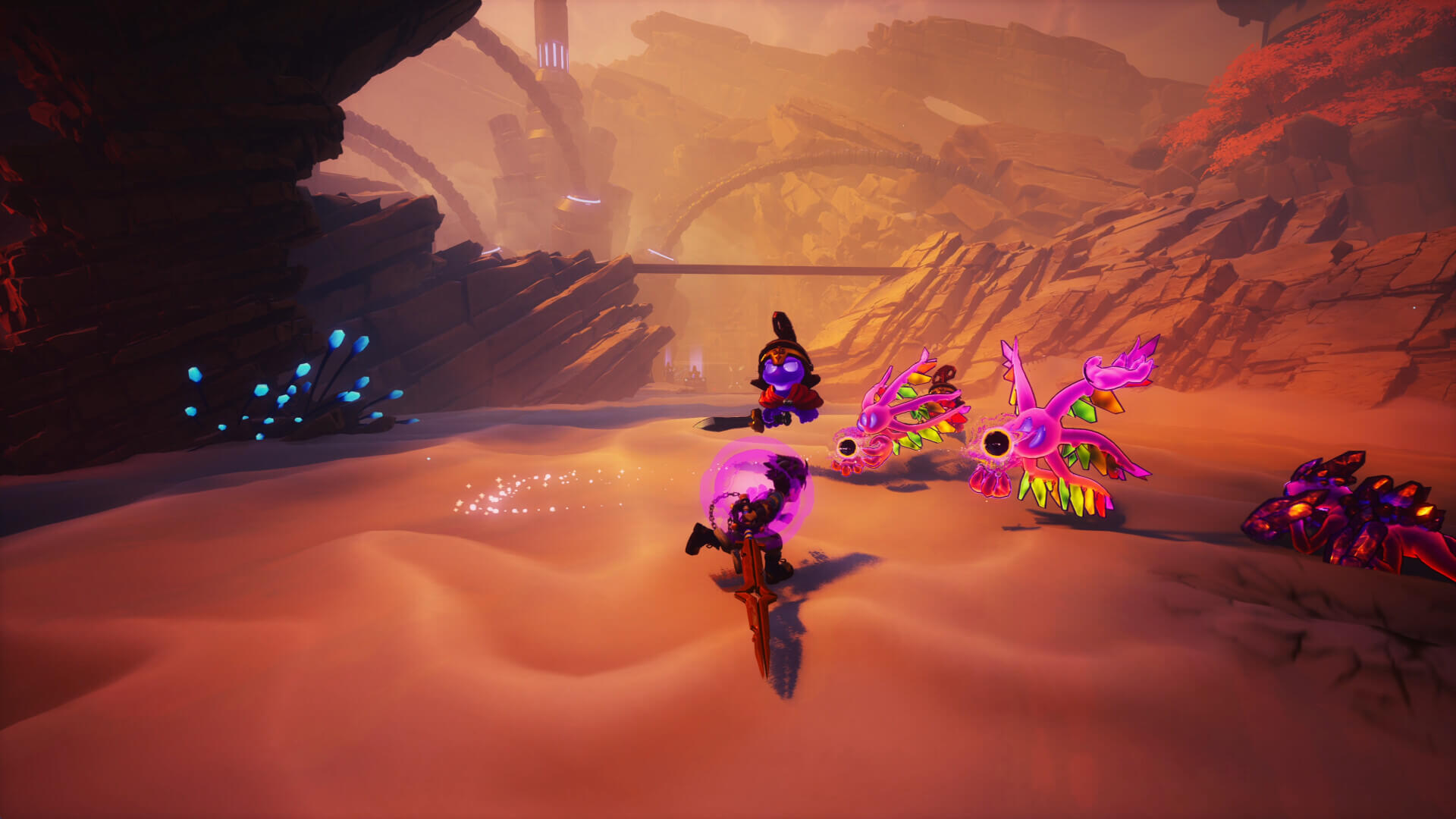
Combat fares better. It’s certainly not the deepest action system I’ve played, but I don’t think it needs to be. I had fun chaining attacks together, dodging around enemies, unleashing skills and cutting through the various creatures and mechanical foes I encountered. The Kingdom Hearts influence is particularly obvious here, and as someone who has always enjoyed that style of combat, I’m completely fine with it.
Not every action game needs six layers of strategy, perfect-timing mechanics and a dozen different systems interacting with each other. Sometimes it’s enough to give me a satisfying combo, a dodge roll and a group of enemies to smack around. Duskfade understands that.
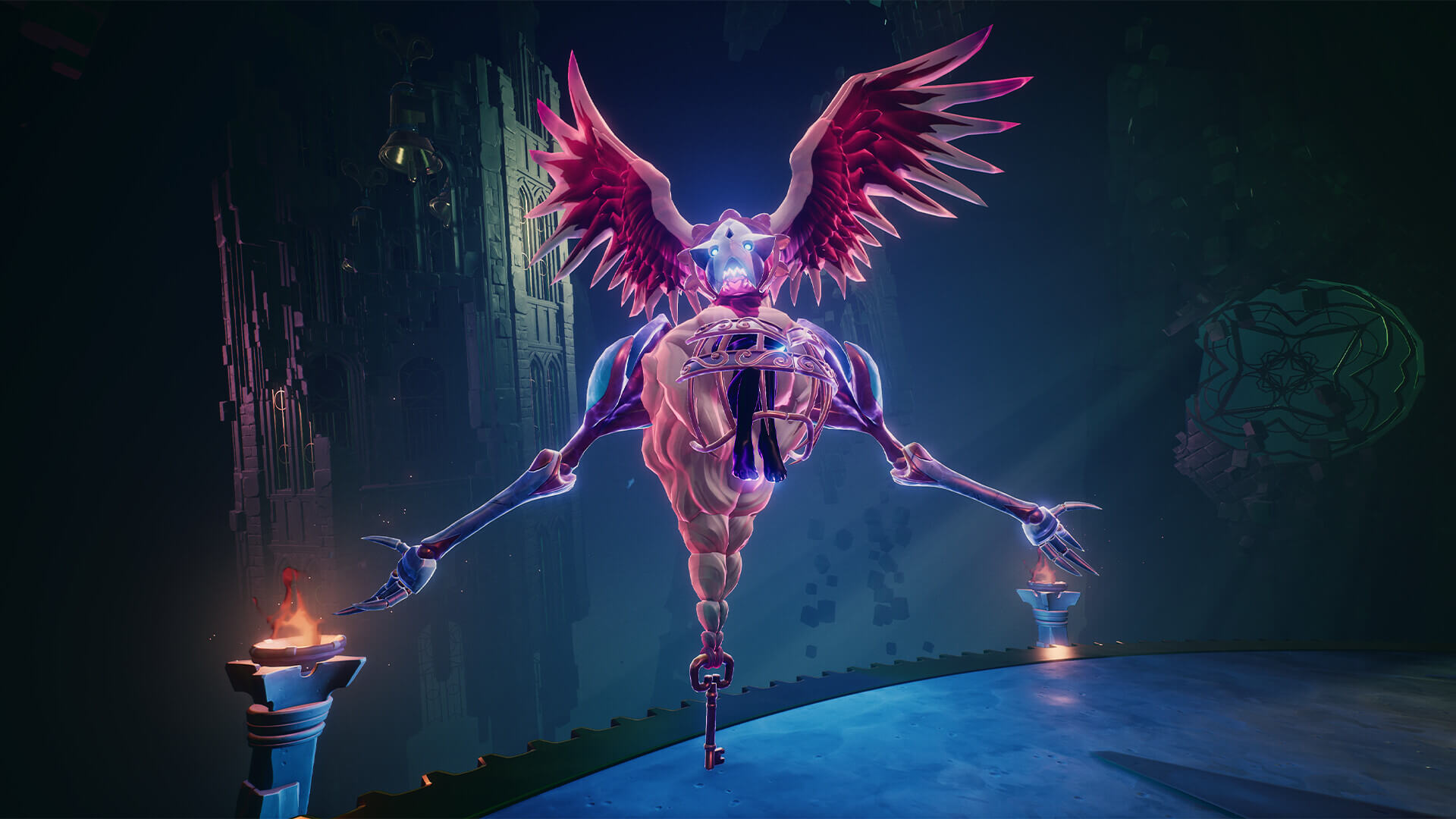
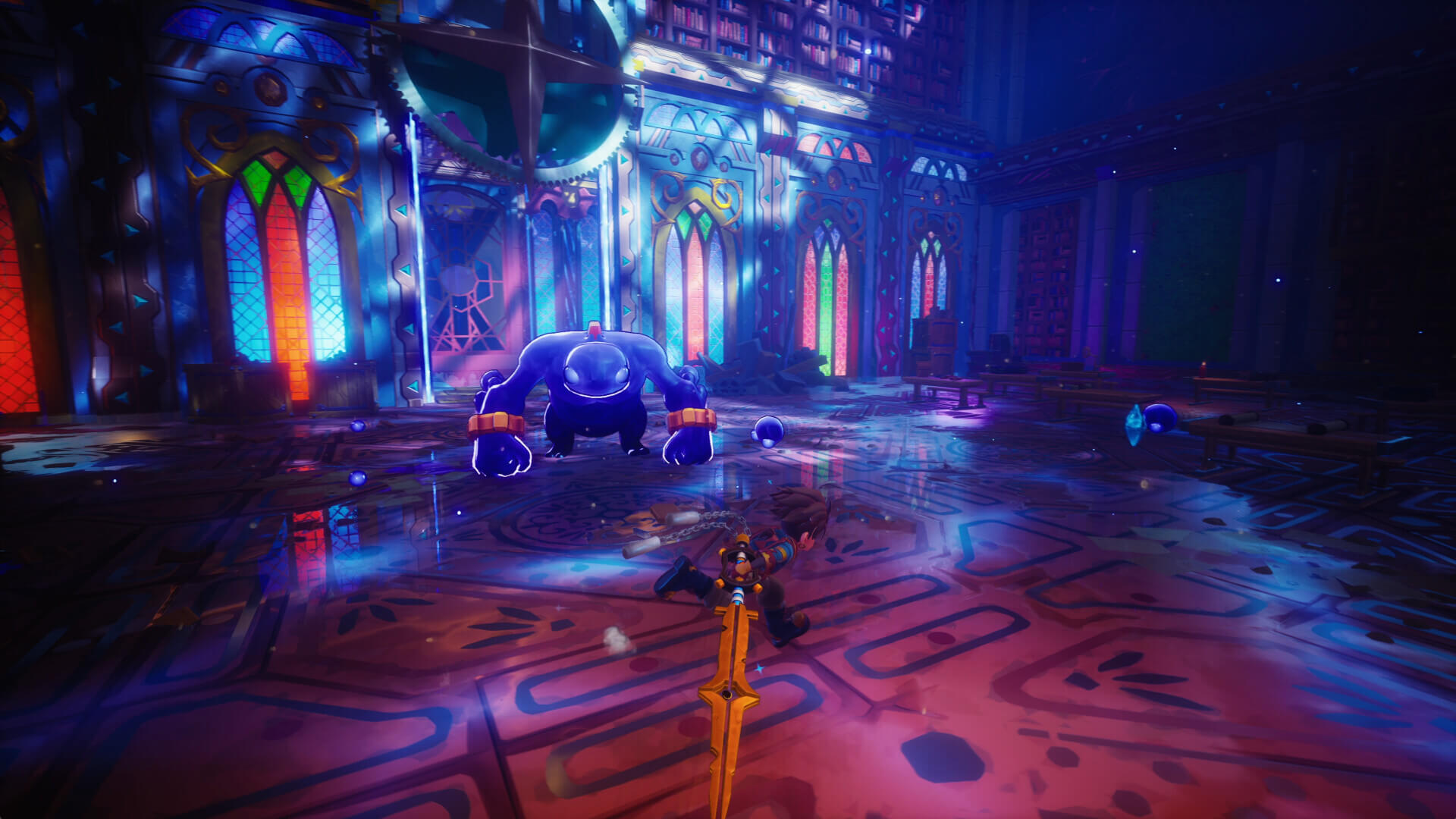
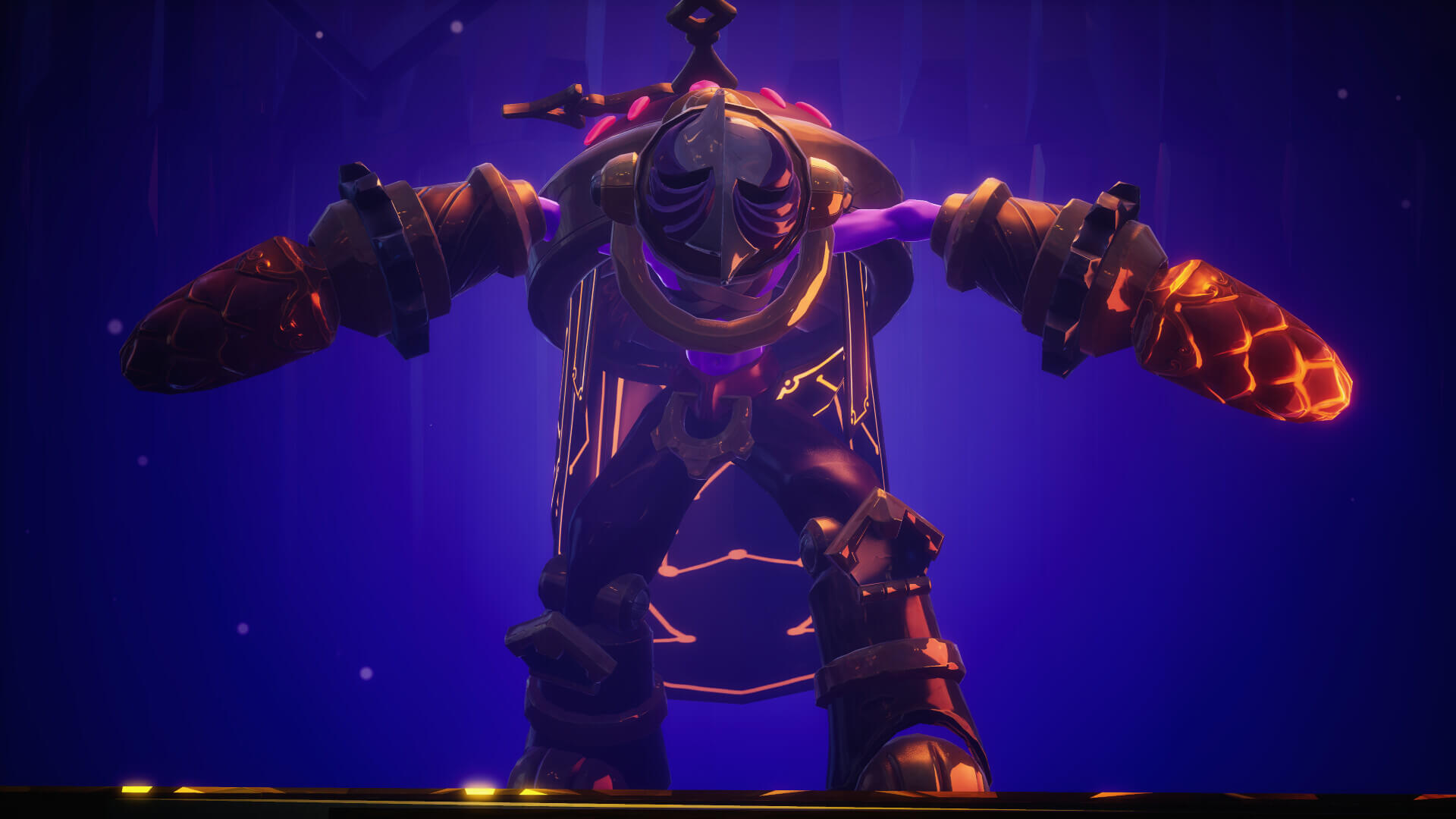
The boss encounters are another highlight. These are enjoyable set pieces that make better use of the game’s movement mechanics than the standard encounters do. Boss designs are varied, and figuring out how to approach each fight while incorporating platforming into the battle makes them feel more memorable than simply throwing a bigger enemy at me.
My biggest complaint is that there aren’t enough of them. The encounters that are here are good, but they’re spaced too far apart. I would have loved to see a few additional bosses or even smaller sub-boss challenges scattered throughout the adventure. They would have broken up some of the longer stretches of exploration and given the combat system more opportunities to shine.
The music also deserves plenty of credit. It complements the colourful, fantastical world nicely and helps sell the sense that I’m playing through a lost PS2-era adventure that somehow arrived decades late. The soundtrack adds warmth to the quieter moments and gives the larger set pieces the sense of occasion they need. It’s another part of the presentation that helps make the game’s nostalgic ambitions feel genuine rather than manufactured.
Ultimately, Duskfade doesn’t get everything right, but I came away from it appreciating what Weird Beluga has attempted. It genuinely feels like a mid-2000s mascot adventure game, complete with colourful worlds, speedy movement, platforming challenges, straightforward action combat, character upgrades and a surprisingly earnest emotional story. The developers have clearly grown up playing the same games that inspired me, and that affection comes through in almost every part of the experience.
I just wish the game had been a little more willing to get out of its own way. A shorter runtime, a tighter opening, clearer objectives, more meaningful progression and a few more boss encounters could have made a significant difference. The foundations are already here, though, and they’re strong foundations.
If Zirian’s story continues, I’d be very interested to see what Weird Beluga does with a sequel. Refine the systems, tighten the pacing and build on the excellent movement and platforming, and Duskfade could evolve from a charming throwback into a genuinely great modern mascot adventure.
A PS5 review code was provided by the publisher for the purpose of this review.
If you want to see more content like this and never miss one of our frequent gaming and anime giveaways come and Follow Ani-Game on Twitter.
8
- + A fun action platformer that captures the spirit it was aiming for
- + Movements and platforming is quite satisfying
- + The boss encounters utilise the game’s systems well.
- + Soundtrack that complements the experience
- - Would have been a much better experience if the pacing was tightened up
- - Upgrades system doesn’t feel satisfying
- - Needed more boss encounters