There are certain games that stick with you long after you’ve finished them. For me, Steins;Gate is absolutely one of those games. Originally released in 2009, the visual novel went on to become one of the most beloved entries in the Science Adventure series, eventually finding an even wider audience through its hugely successful anime adaptation. It’s a story I’ve revisited multiple times, and both the original visual novel and anime remain among my personal favourites.
So, when the Steins;Gate 15th anniversary celebration revealed that a full remake was in development, I was immediately excited. At the same time, I couldn’t help but wonder whether this was a game that actually needed remaking. The original still holds up remarkably well, and there was always the risk that changing too much would damage what made it so special in the first place. After a long wait and a few delays, Steins;Gate Re:Boot is finally here. Thankfully, I can say that the wait has been worth it.
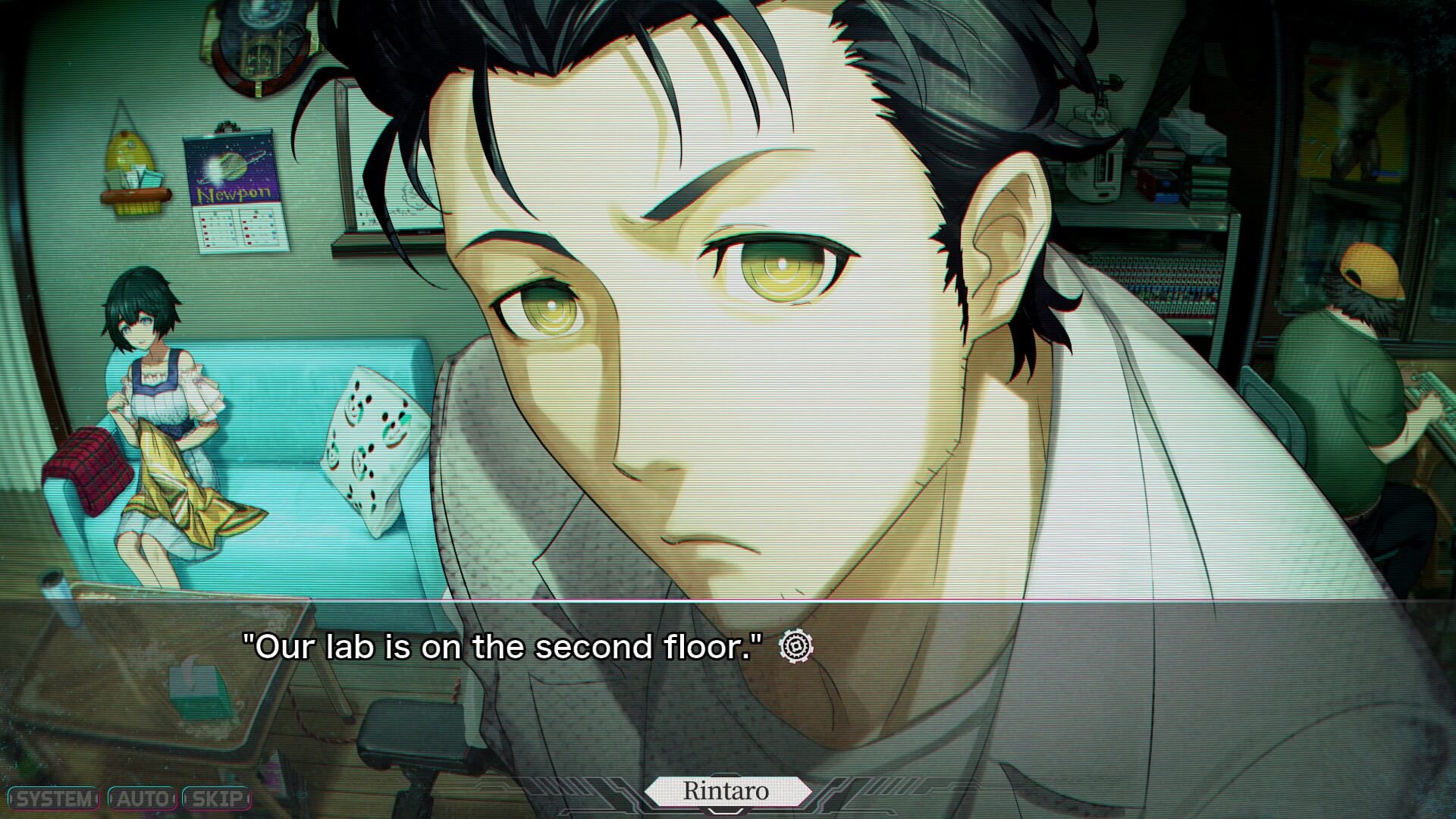
Steins;Gate Re:Boot isn’t simply the original visual novel with prettier artwork slapped over the top. The remake uses the script from Steins;Gate Elite as its foundation, but that script has then been reworked and expanded considerably for this new release. There are new scenes, additional text, new visuals, re-recorded voices, a remade soundtrack and an entirely refreshed presentation.
The result is a version of Steins;Gate that feels familiar while also being noticeably different from the game I’ve played through numerous times.
At its heart, this is still the same story. Rintaro Okabe, a self-proclaimed mad scientist who insists on calling himself Hououin Kyouma, spends his days messing around in a tiny Akihabara laboratory with his friends and fellow lab members. Things take a dramatic turn when Okabe discovers that the strange contraption they’ve created can send messages back through time. From there, what initially seems like a fun scientific experiment quickly spirals into something far more dangerous.
I’ve always been a sucker for time-travel stories, and I suspect a lot of that love can be traced directly back to Steins;Gate. The game takes the familiar idea of changing the past and explores its consequences through worldlines, causality, paradoxes and the increasingly desperate attempts of its characters to change a future that seems determined to remain the same.
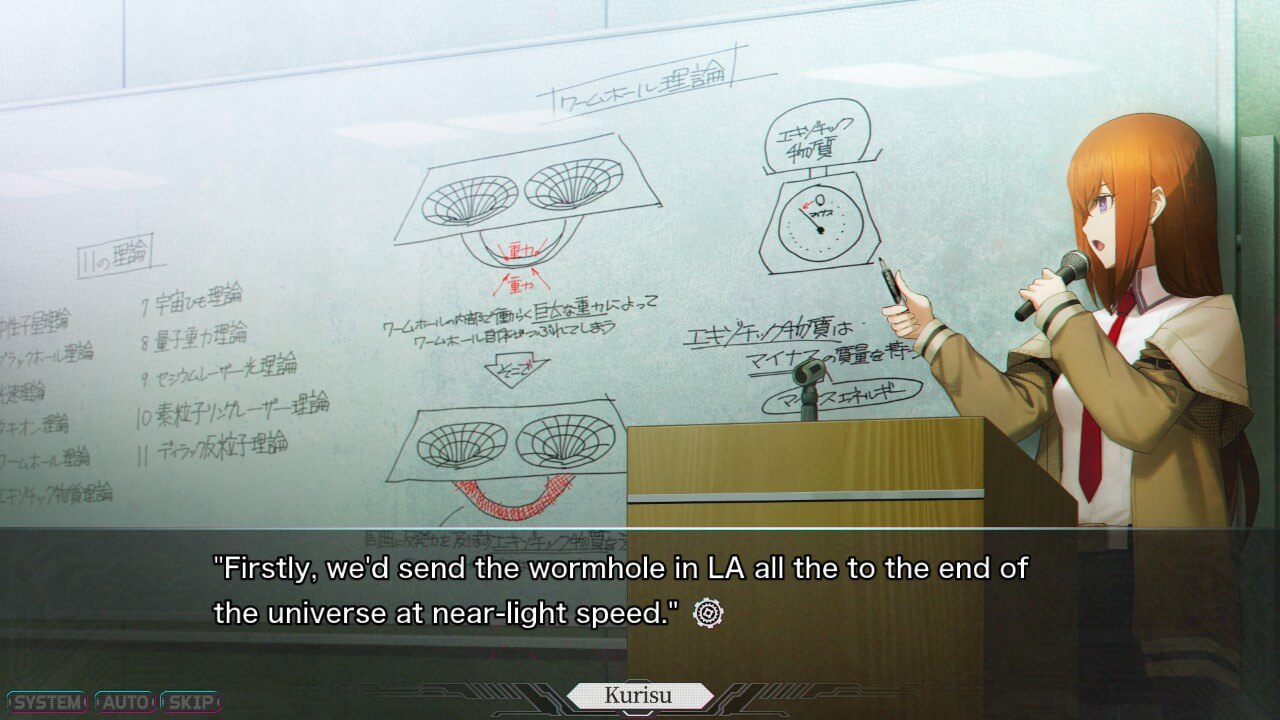
It’s a fairly involved story, too. There’s plenty of real-world science, technical jargon and scientific theory to digest. Yet Steins;Gate never feels like it’s trying to lecture you. Everything is wrapped in mystery and intrigue, while the cast provides plenty of comedy and absurdity to balance out the heavier material.
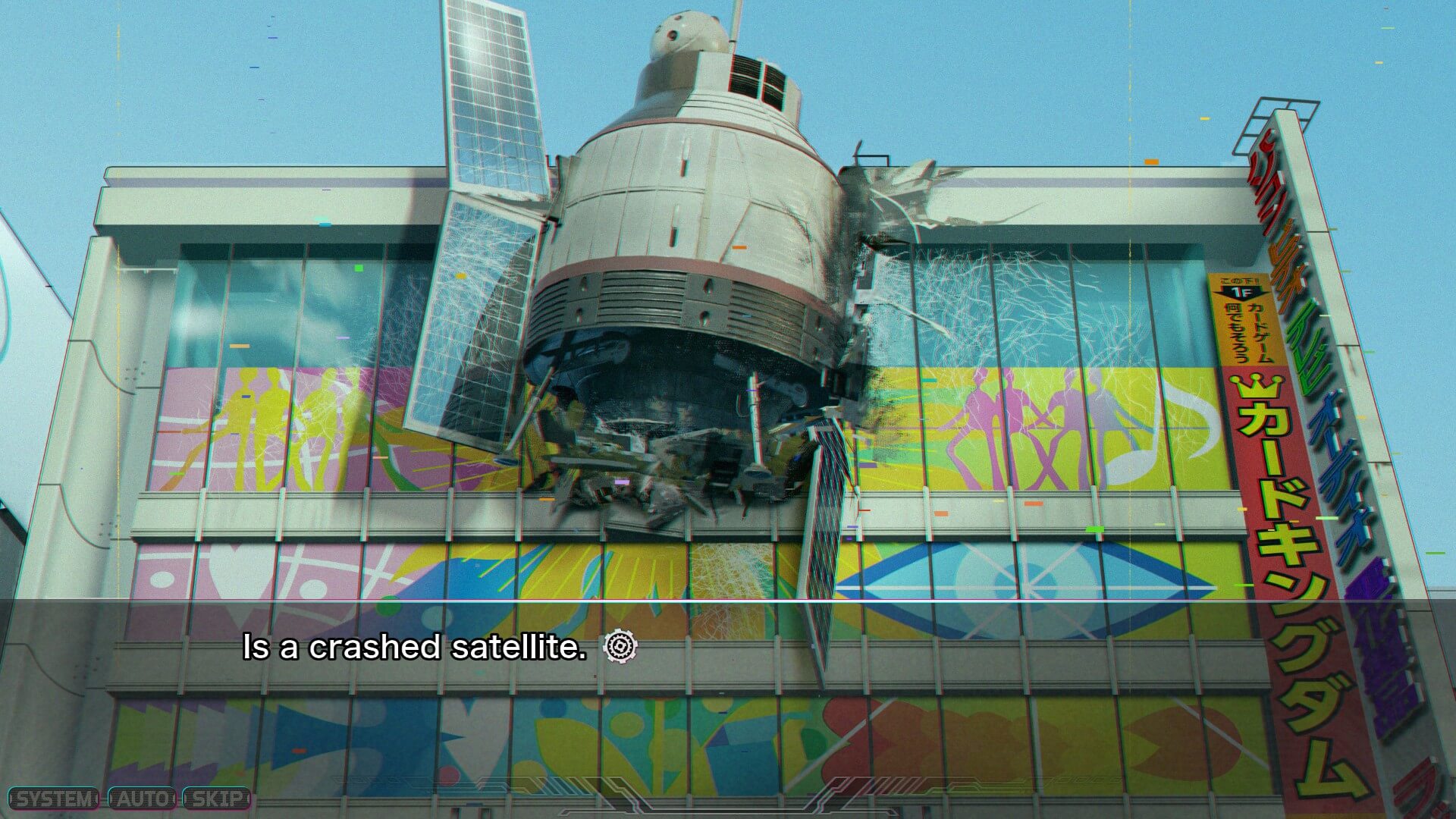
That balance is one of the game’s greatest strengths. One moment you’re thinking about the theoretical implications of time travel, and the next you’re laughing at Okabe’s ridiculous behaviour or one of the bizarre situations the lab members have found themselves in.
For me, the characters are what make Steins;Gate work as well as it does. Okabe is obviously the centre of everything, and watching him gradually change throughout the story remains one of the game’s biggest strengths. His over the top personality, constant references to his “mad scientist” persona and endless stream of ridiculous declarations make him incredibly entertaining, but there’s considerably more to him than that.
Makise Kurisu is another major highlight. Her relationship with Okabe provides some of the game’s best dialogue, with their constant arguing and banter giving the story a fantastic sense of personality. Mayuri, Daru, Suzuha, Luka, Faris and Moeka all bring something different to the group, and their relationships with one another make the laboratory feel like a genuine little community.
The banter between these characters is a huge part of the appeal. Even when nothing particularly important is happening, I still enjoyed simply spending time with them. That’s particularly important during the game’s slower opening hours.
Let’s be honest, Steins;Gate is still a slow burn. The opening section takes its time establishing Okabe, the lab, the characters and the strange circumstances surrounding the story. For returning fans, this isn’t necessarily a problem, but I can imagine new players wondering when everything is going to start happening.
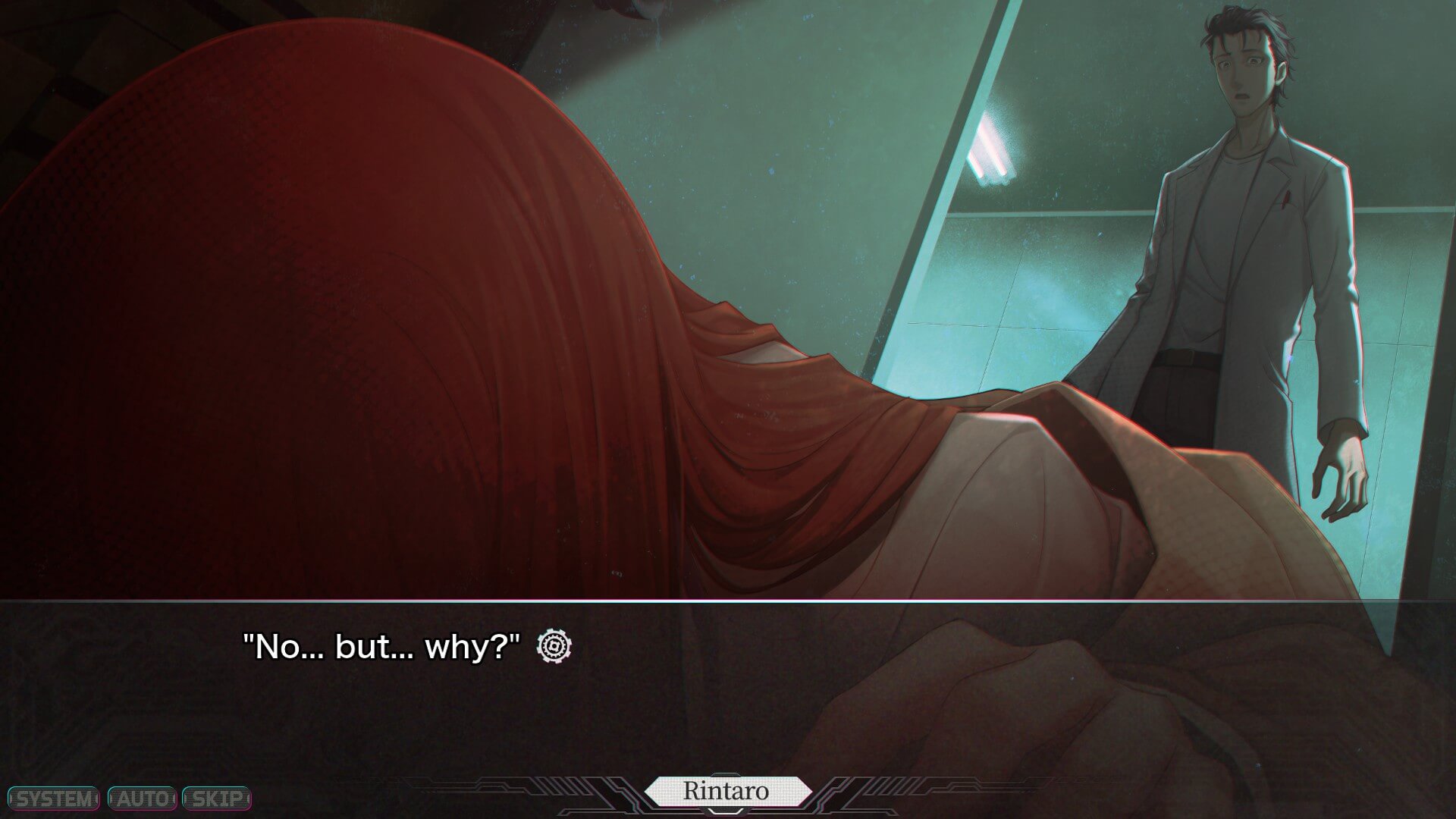
I don’t really blame Re:Boot for retaining this structure, either. The whole point of this remake is to remain faithful to the original while expanding and modernising it. I’m not even sure how you’d restructure those opening hours without fundamentally changing the pacing and character development that eventually make the later sections so effective.
Just stick with it. Once Steins;Gate gets going, it really gets going. The mystery begins to unravel, the stakes escalate and the story starts throwing twist after twist at you. Even knowing where many of those twists lead, I still found myself completely absorbed. That ability to maintain suspense when you already know the destination says a lot about how well the story has been constructed.
All these years later, it still deserves its reputation as one of the best visual novels ever made.
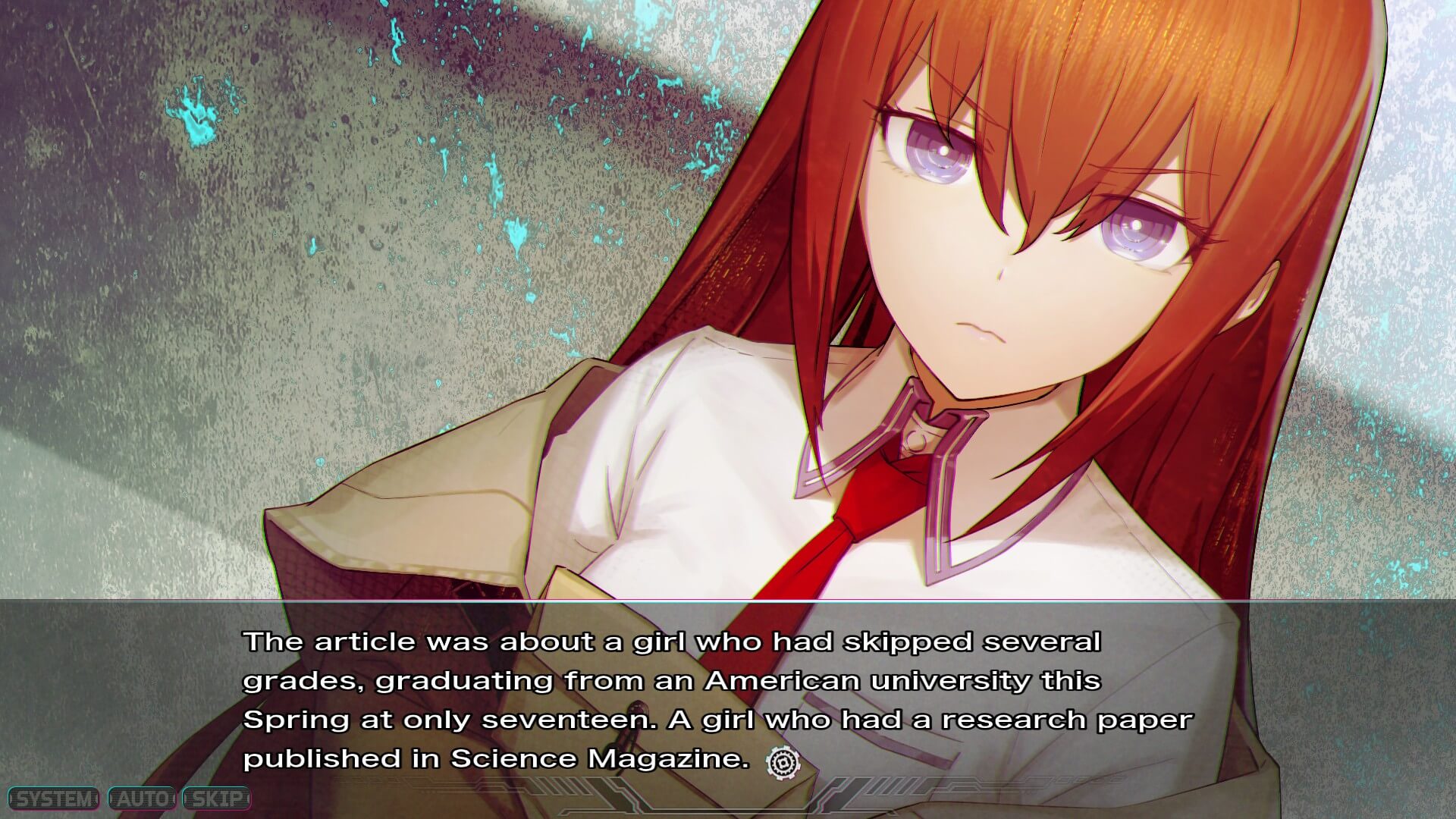
The first thing you’ll probably notice about Re:Boot is just how good it looks. A tremendous amount of work has gone into modernising the presentation, and it gives the game production values that are genuinely impressive for a visual novel. The menus have been redesigned, the backgrounds have been rebuilt and, most importantly, the characters have been completely redone.
The original character designer, Huke, has returned to provide a modern take on the cast and environments. It’s a great decision because the new designs retain the distinctive identity of the original while making everything feel considerably more contemporary.
The characters now also use the animated emote system introduced in Anonymous;Code. Characters have mouth movements, facial expressions and physical animations that make conversations feel much more alive than they did previously.
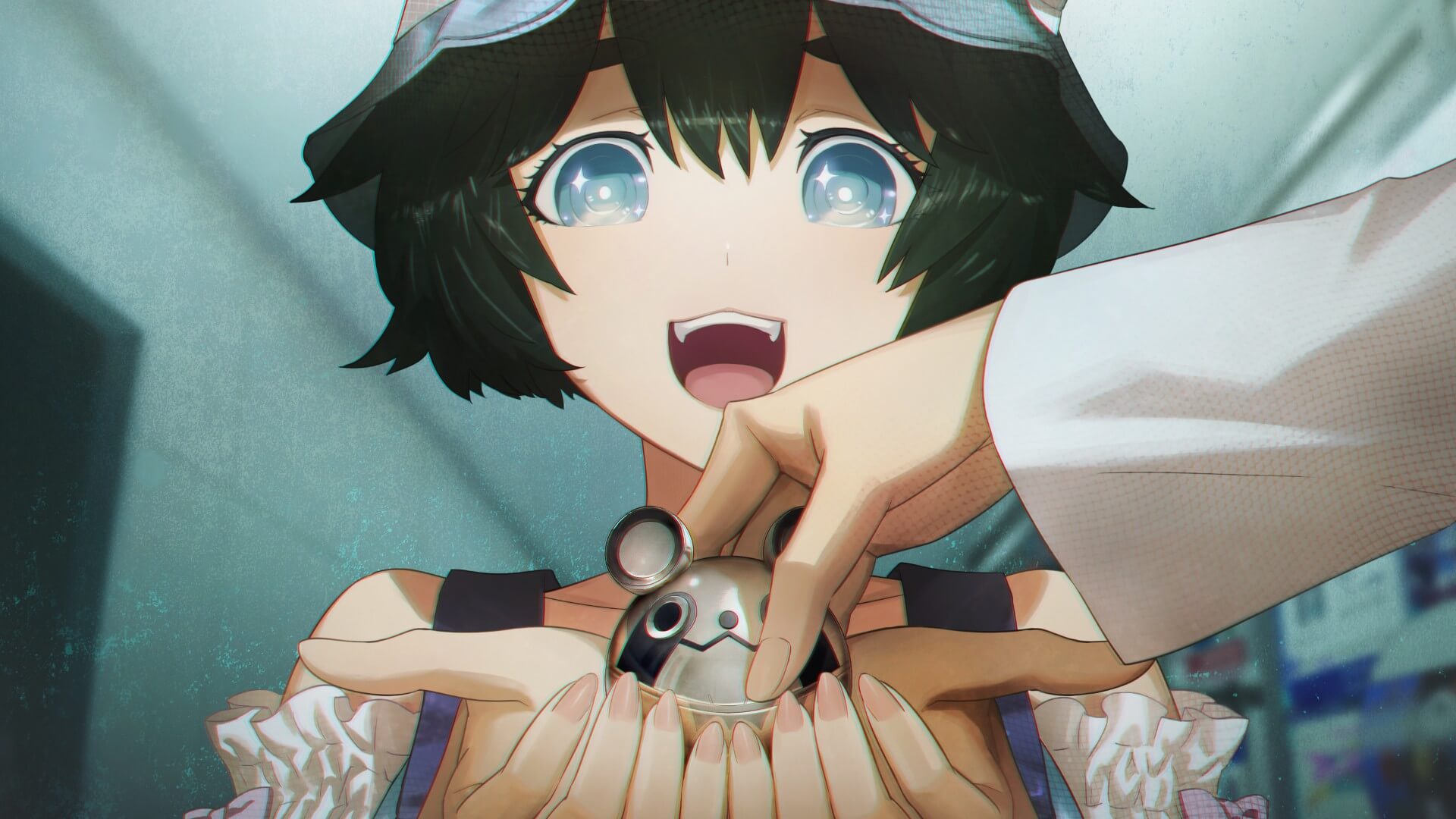
It’s a relatively simple addition, but it makes a huge difference. I’ve already played through Steins;Gate numerous times, so seeing these familiar characters move and react during scenes helped breathe new life into moments I already knew by heart.
The backgrounds are equally impressive. Akihabara has been recreated from scratch, and the extra detail helps make the setting feel like a real place rather than simply a backdrop for the characters. That was particularly special for me because I’ve recently visited Akihabara in person. Seeing this 2010 interpretation of locations that I’ve physically walked through gave the game an extra sense of immersion that I wasn’t expecting.
According to Spike Chunsoft, Re:Boot contains more than twice as many CGs and around 20% more background graphics than the original. Those numbers give you a good idea of just how extensive this remake is. This isn’t a just a simple upgrade. And it doesn’t stop at the visuals. There is also additional text and new story content, giving returning players genuine reasons to experience the game again.
Huke isn’t the only returning member of the original team. Composer Takeshi Abo has also returned to remake the soundtrack, while the original Japanese voice cast has come back to re-record the game’s dialogue.
The music remains one of the things I love most about Steins;Gate. It knows when to sit quietly in the background and when to dramatically shift the mood of a scene. The soundtrack fits the game’s various tones extremely well, moving comfortably between its lighter comedic moments and its darker, more emotional sequences.
Having the original voice actors return was another important decision. Their performances have become so closely associated with these characters that replacing them would have been a noticeable loss.
My one major disappointment here is the lack of an English dub. The English cast from the anime returning to reprise their roles would have been incredible. It also would have provided an excellent entry point for people whose first experience with Steins;Gate was the anime rather than the original visual novel. Perhaps an English dub could still arrive in a future update or release. I’m certainly keeping my fingers crossed.
One of the biggest selling points of Re:Boot is the addition of a brand-new route and an additional ending. I won’t spoil the specifics, but this route throws Okabe into a completely different worldline. The people he knows either don’t recognise him or have entirely different relationships with him, the Time Machine was never completed and the D-Mail technology doesn’t exist.
It’s a fascinating setup because it takes the familiar Steins;Gate formula and removes many of the elements that Okabe has come to rely upon. It creates a world that feels recognisable but fundamentally wrong.
The route also gives Moeka Kiryu considerably more room to develop, and fans of Kiryu should get a lot out of this section. It’s deep, brutal and surprisingly affecting, and I appreciated that the developers chose to explore another corner of the Steins;Gate universe rather than simply deliver a 1:1 recreation of the game I already knew. That additional content makes Re:Boot much easier to recommend to existing fans. There’s a reason to return beyond simply seeing the same story in higher resolution.
As you’d expect from a visual novel, Re:Boot includes a backlog that allows you to scroll through previous dialogue and reread anything you may have missed.
There’s also a Tips section, which is particularly useful here. Throughout the story, various words, concepts and references are highlighted when they first appear. You can then look them up to get additional context and explanations. This is useful for the scientific concepts and theories that Steins;Gate discusses, but it’s arguably even more helpful for the Japanese cultural references and pop-culture terminology.
Considering how much information the game throws at you, it’s a welcome feature. You don’t necessarily need to understand every piece of jargon to enjoy the story, but being able to dig deeper into something when you’re curious adds another layer to the experience.
Unfortunately, my time with Re:Boot wasn’t completely flawless. I encountered a couple of crashes, and on one occasion my save files were completely deleted. Thankfully, getting back to where I was wasn’t particularly difficult thanks to the ability to fast-forward through previously read dialogue, but it was still incredibly frustrating. It’s difficult for me to say whether these issues are simply pre-release problems that have since been patched, so I’d hope these aren’t things players will have to deal with in the long term.
The other issue I noticed was with the dialogue boxes. There are occasional scenes where the game tries to cram too much text into a single box, resulting in the text being visibly squished to fit. It looks particularly strange because almost every other aspect of the presentation is so polished. It’s a small problem, but when you’re looking at such a beautifully remade game, seeing text awkwardly squeezed into the UI sticks out more than it otherwise would.
Ultimately, Steins;Gate Re:Boot has managed to do something I wasn’t sure was possible. It has taken one of my favourite visual novels, modernised it extensively and somehow managed to make me want to play through the entire story all over again.
The slow opening is still there, and I wouldn’t expect that to change in a remake that is so committed to preserving the original experience. But once the story gets moving, it remains every bit as compelling as I remember.
The new visuals are fantastic, the animated character performances add a surprising amount of immersion, the remade soundtrack fits the story beautifully and the returning voice cast makes the whole thing feel authentic. More importantly, the additional story content gives longtime fans something genuinely new to experience.
There are a few technical issues that hopefully get ironed out, and I still wish an English dub had been included. Those complaints aside, Re:Boot feels like the definitive version of a story that has remained special to me for more than a decade.
Steins;Gate was already one of my favourite visual novels. After spending all these years with it, I didn’t necessarily need another reason to love it. Somehow, Re:Boot gave me one anyway.
A PC review code was provided by the publisher for the purpose of this review.
If you want to see more content like this and never miss one of our frequent gaming and anime giveaways come and Follow Ani-Game on Twitter.
9.5
- + Incredible overhaul in presentation
- + The animated character models bring a lot of immersion and emotion
- + Story filled with twists and great characters
- + Interesting new route and ending to experience
- - Did have some technical issues during my playthrough
- - Really would have been great to finally include an English dub