There’s something wonderfully miserable about The Sinking City. Frogwares’ Lovecraft-inspired detective adventure was never the slickest game around, but beneath its rough edges was an unusually atmospheric investigation game with a fascinating world and a genuine sense of unease. Now, The Sinking City Remastered has arrived on PS5, rebuilt in Unreal Engine 5 and given a substantial visual and technical overhaul. It brings improved lighting, ray tracing, 4K textures, greater environmental detail, improved controls and combat, a photo mode, and DualSense support into the murky streets of Oakmont.
Having spent time wandering its flooded streets again, I’m reminded why the original was so interesting. This is still an imperfect game, but its strengths remain remarkably distinctive.
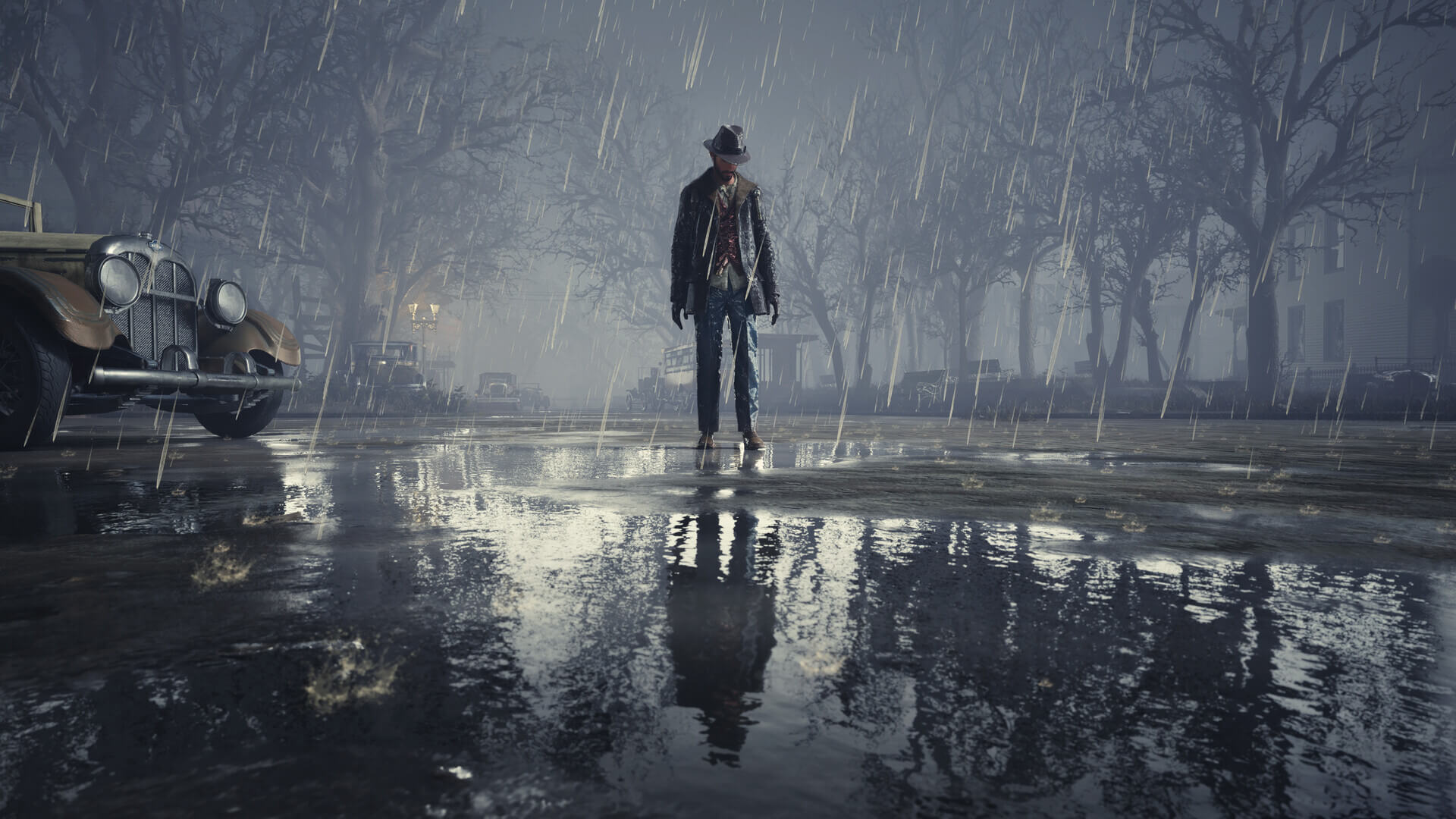
You play Charles Reed, a private investigator and former naval officer who travels to the isolated city of Oakmont, Massachusetts, after experiencing disturbing visions. Oakmont is suffering from a mysterious supernatural flood, while its residents are being affected by strange behaviour, disappearances and increasingly disturbing phenomena.
Naturally, Reed starts investigating. What follows is a sprawling Lovecraftian mystery involving cults, monsters, ancient forces and the gradual realisation that Oakmont is hiding something far more sinister than a conventional crime. The story constantly plays with the idea of forbidden knowledge and the danger of discovering things that perhaps should remain unknown.
It’s one of the strongest aspects of The Sinking City. The game doesn’t simply use Lovecraftian imagery as decoration. Its entire story is built around investigation, paranoia, madness and the uncomfortable consequences of uncovering the truth.
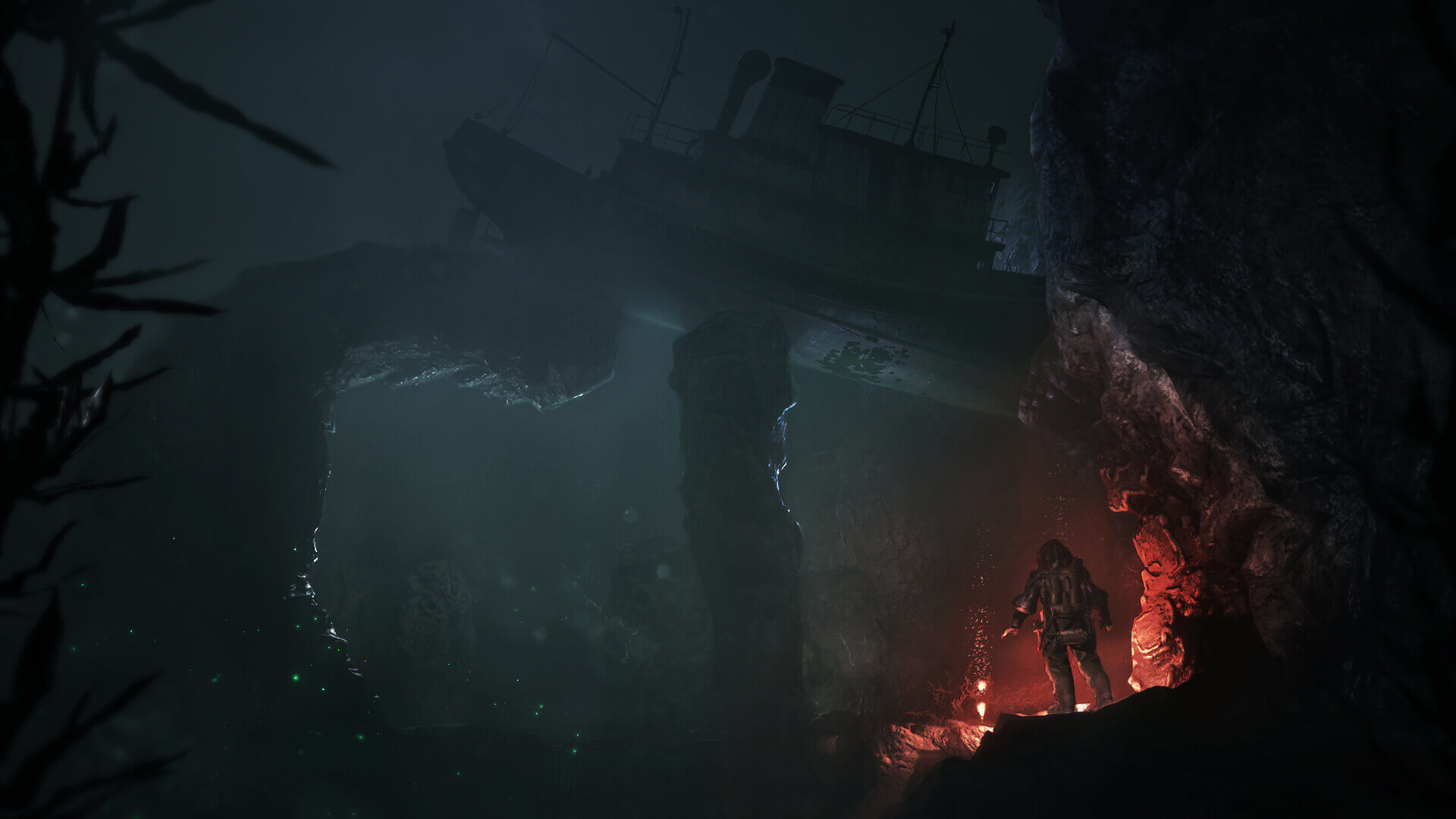
Oakmont itself is arguably the real star. The city is a fantastic setting for this kind of story. Streets are partially submerged, buildings are decaying, strange creatures lurk in dark corners and the inhabitants often behave as though they’re barely holding onto their sanity. The Remastered version makes the environment considerably more convincing thanks to its Unreal Engine 5 overhaul. Improved lighting, reflections, textures and environmental detail give the city a much stronger sense of place.
I particularly like how the game uses the environment to create tension without constantly throwing enemies at me. Walking through a deserted street with the rain falling, hearing something moving nearby and knowing that I might have to investigate it is often more effective than a traditional jump scare.
The core of The Sinking City is investigation rather than combat. Reed has several supernatural abilities that help him uncover clues and reconstruct events. His Mind’s Eye allows him to see things hidden from normal perception, while other investigative tools help reveal traces, memories and connections that aren’t immediately obvious.
The real trick is that these systems work together.
You’re not simply walking from objective marker to objective marker. I’m gathering evidence, examining crime scenes, questioning witnesses, consulting maps and piecing together information to work out what happened. The game’s open investigation structure also means I’m often given enough information to reach my own conclusions rather than being spoon-fed every answer.
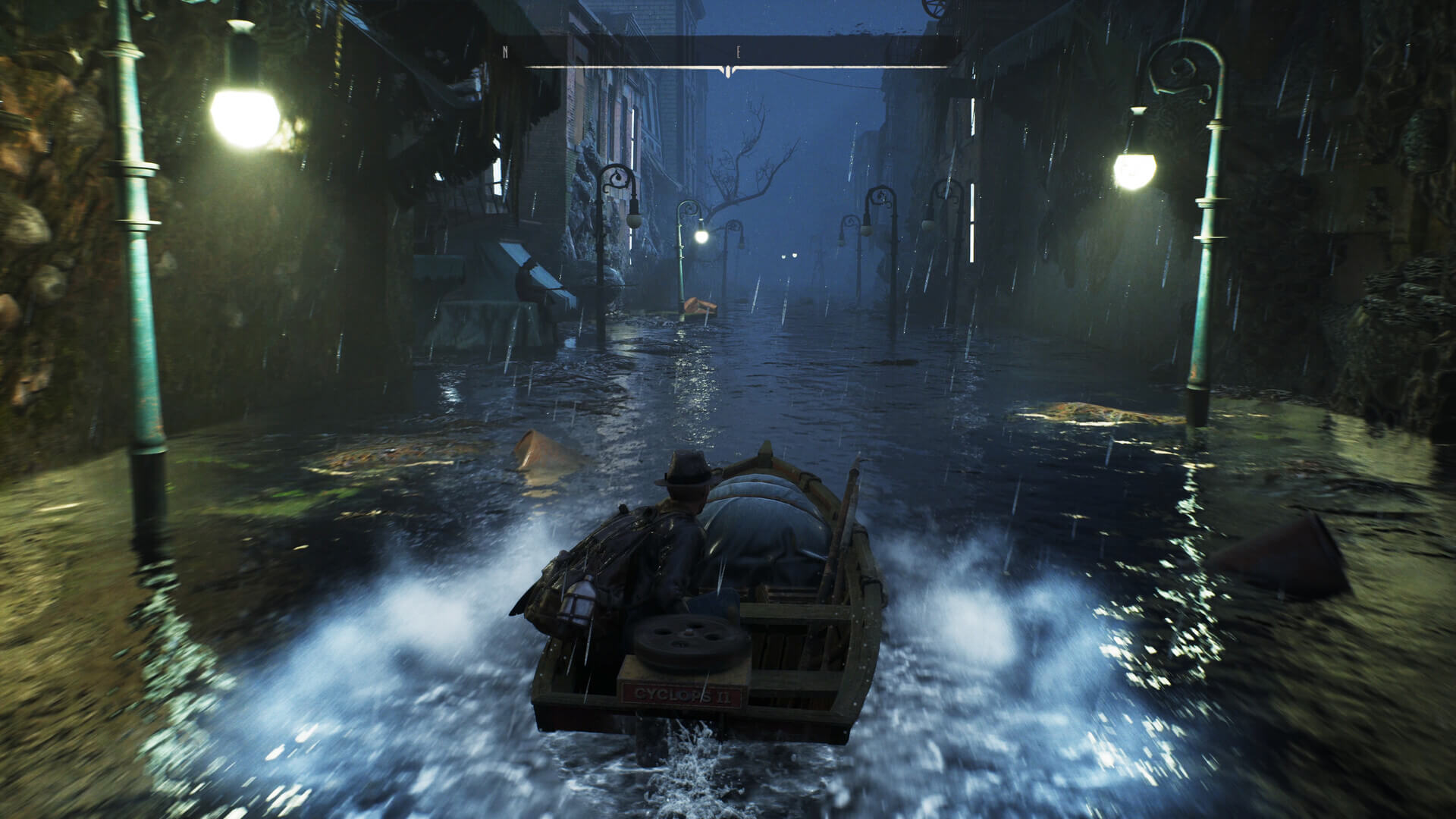
Cases are generally structured around locations within Oakmont, with investigations branching into different areas and occasionally intersecting with other mysteries. You can explore on foot, travel by boat through the flooded sections and use the game’s various investigative abilities to uncover hidden information.
That freedom is one of the game’s biggest strengths.
The downside is that the gameplay can sometimes feel like a lot of walking, searching and backtracking. Combat is also considerably less impressive than the investigative side of the game. Reed carries a selection of period weapons, and there’s some satisfaction in blasting away at the grotesque creatures inhabiting Oakmont, but shooting never feels particularly refined.
The progression system is fairly straightforward. As you investigate cases and explore the city, you earn experience and acquire materials that can be used to craft ammunition and other useful items. Skill points allow you to improve Reed’s abilities, making him more effective in combat, investigation and resource management.
It works, although I wouldn’t call the progression especially deep. The real reward for progression is gaining access to more information and becoming better at understanding how the investigation systems interact.
The game’s characters are also a mixed bag. Some of the people Reed encounters are genuinely memorable, particularly when their personalities and motivations become entangled with Oakmont’s larger mysteries. The dialogue choices are also important because I can approach conversations in different ways and occasionally make decisions that have consequences for a case.
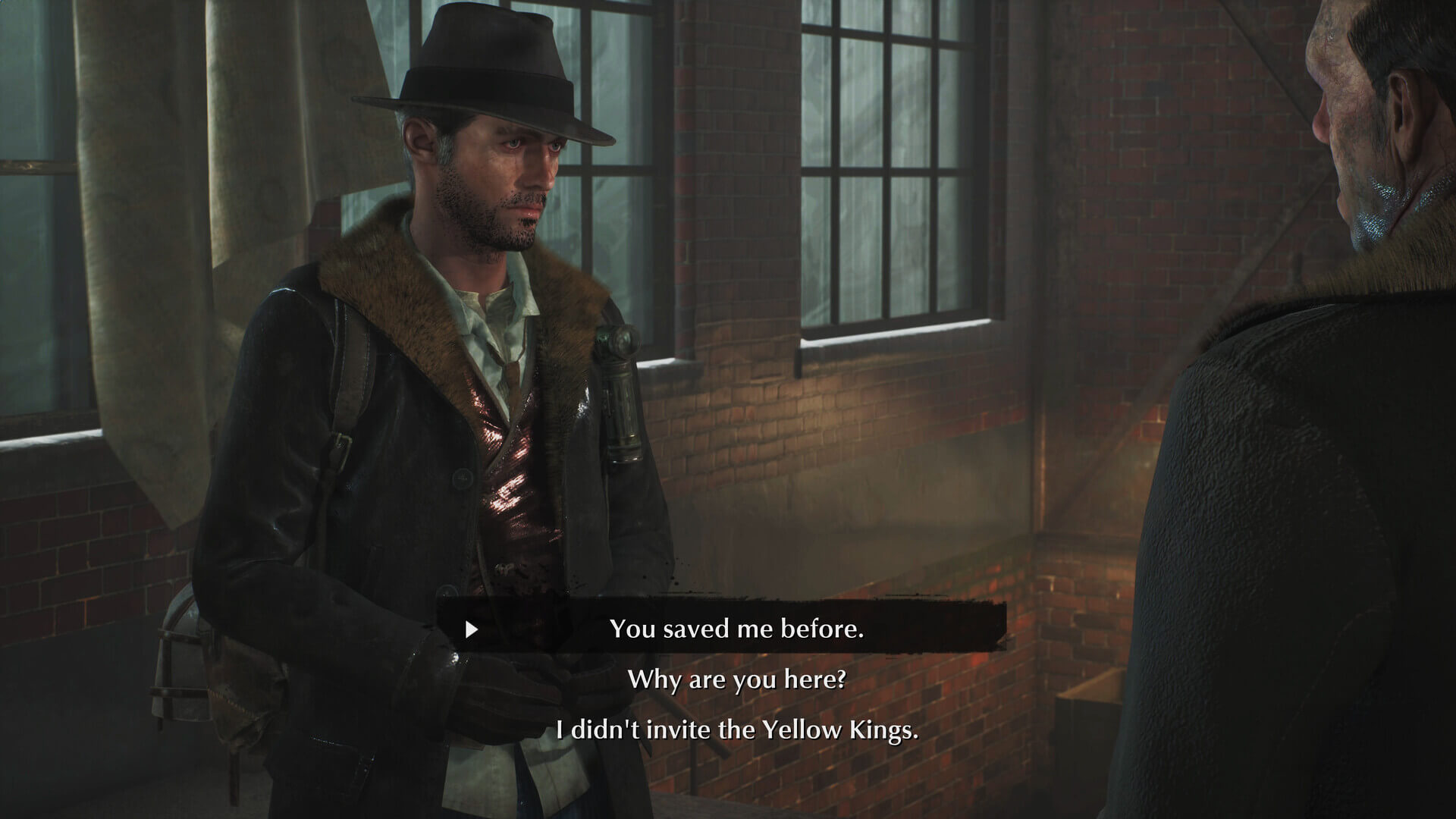
However, the writing can sometimes feel uneven. There are moments when the dialogue successfully captures the strange, unsettling atmosphere, followed by exchanges that feel stiff or overly functional. It’s another reminder that The Sinking City isn’t a polished AAA production.
And that brings me to the game’s biggest problem: the jank.
Even after the remaster, I still encountered moments where the game feels like it belongs to another era. Animations can be awkward, character movement isn’t always smooth, facial expressions can look strange and some interactions lack the polish I’d expect from a modern PS5 release.
The remaster improves a lot, but it doesn’t completely transform the underlying game. Fortunately, the atmosphere does an incredible amount of heavy lifting.
The sound design is excellent at creating a feeling of isolation. Rain, water, distant noises, creature sounds and environmental effects all contribute to the sense that Oakmont is somewhere I really shouldn’t be. The music is similarly restrained, rarely overwhelming the scene and instead appearing at just the right moments to make an already uncomfortable situation feel even worse. It understands that Lovecraftian horror is often about anticipation rather than constant action.
The new PS5 version makes that atmosphere considerably more effective. The Unreal Engine 5 overhaul brings improved global illumination, ray tracing, 4K textures, additional environmental detail and improved reflections. There are also Quality and Performance modes, allowing me to prioritise visual fidelity or frame rate.
The DualSense integration is another welcome addition. The PS5 version supports vibration and trigger effects, adding a little extra physical feedback to weapons and environmental interactions. It isn’t the most revolutionary DualSense implementation I’ve experienced, but it helps make the remastered version feel more at home on PS5.
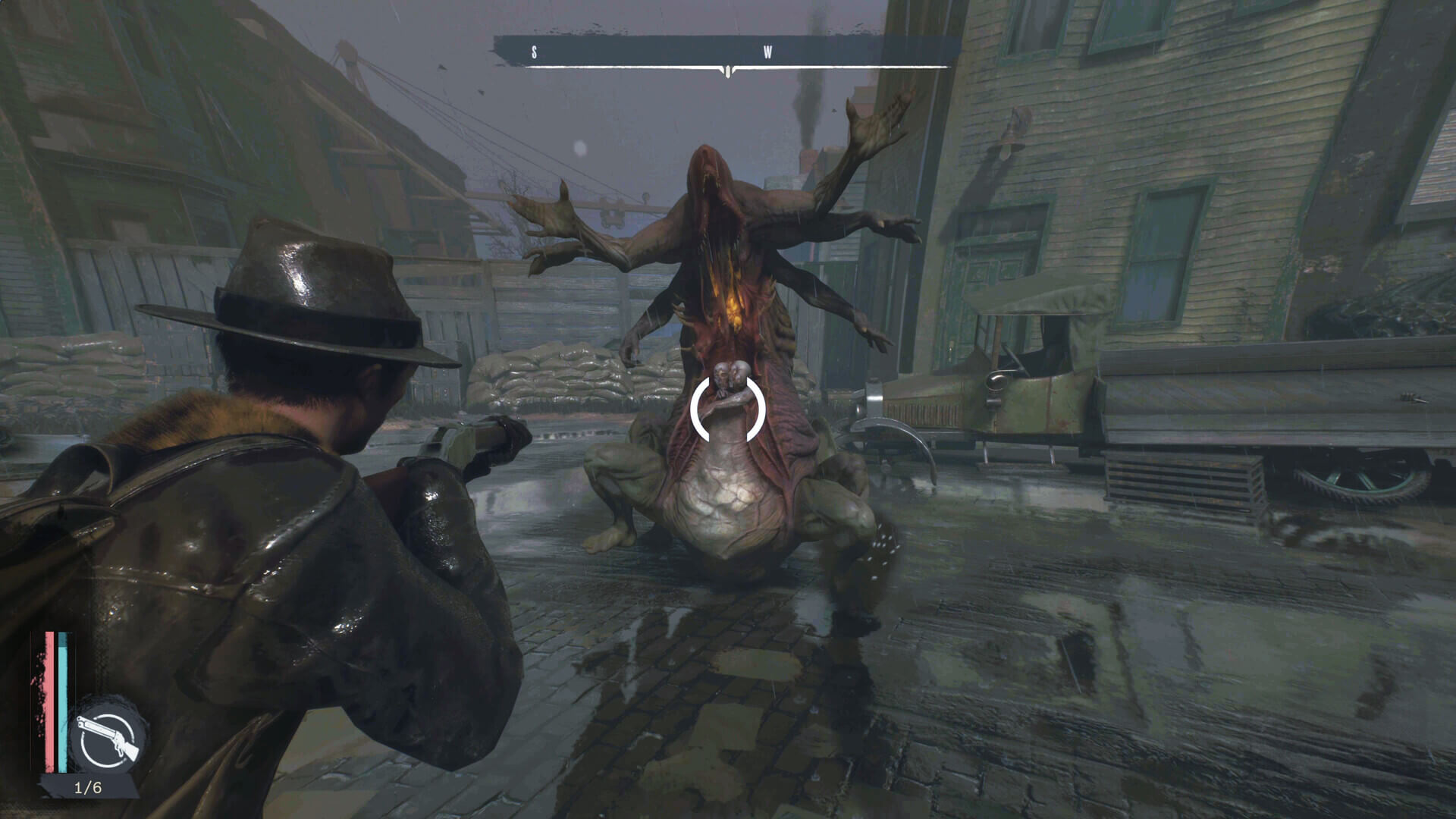
The addition of photo mode is also a nice touch because, visually, Oakmont is now a much more interesting place to photograph.
Ultimately, what The Sinking City Remastered does best is create a world I actually want to get lost in. Its investigation mechanics are unusual, its open-ended cases encourage me to think rather than simply follow instructions, and Oakmont remains one of the more memorable settings I’ve encountered in a Lovecraft-inspired game. The remaster’s visual improvements only strengthen that appeal.
I do wish Frogwares had gone further with the underlying gameplay. Combat could be smoother, character animations could be better, some dialogue could use more polish and the general movement around the city can still feel cumbersome. The remaster hasn’t magically removed the game’s rough edges.
But perhaps that’s part of the strange charm of The Sinking City. It’s a flawed game with a very strong identity.
For me, the biggest compliment I can give it is that I kept wanting to know what was around the next corner. Even when the mechanics frustrated me, Oakmont’s mysteries kept pulling me forward.
The Sinking City Remastered isn’t a complete reinvention. It’s a much better-looking, more polished version of an ambitious horror adventure that already had some great ideas. If you’re willing to tolerate a little jank in exchange for a genuinely atmospheric detective story, there’s still plenty here to appreciate.
The PS5 remaster doesn’t make The Sinking City perfect.
It does, however, make one of Frogwares’ strangest and most ambitious games a much easier recommendation.
If you want to see more content like this and never miss one of our frequent gaming and anime giveaways come and Follow Ani-Game on Twitter.
8
- + Captures the look and feel of a Lovecraftian world really well.
- + An intriguing story that has you wanting to solve mysteries
- + Looks better than ever in this new remaster
- + The sound design builds the aesthetic
- - Still has some jank to deal with in both the gameplay and animations
- - Inconsistent writing