I’ve always had a soft spot for Mario’s sporting spin-offs. They’re the kind of games I dip into for “just a quick match” and then look up two hours later wondering where the time went. I sank an absurd number of hours into Mario Tennis Open on my 3DS, grinding through tournaments and perfecting trick shots on cramped train rides. And over the years, the various Mario & Sonic at the Olympic Games titles became staples at parties and family gatherings. There’s something about the way Mario sports games blend arcade chaos with tight mechanics that really clicks. So when Mario Tennis Fever was announced as the first Mario sports title to land on the Nintendo Switch 2, I was all in. A new console generation, a new spin on tennis, and a fresh hook in the form of Fever Rackets. It sounded like exactly the kind of bold shake up the series needed.
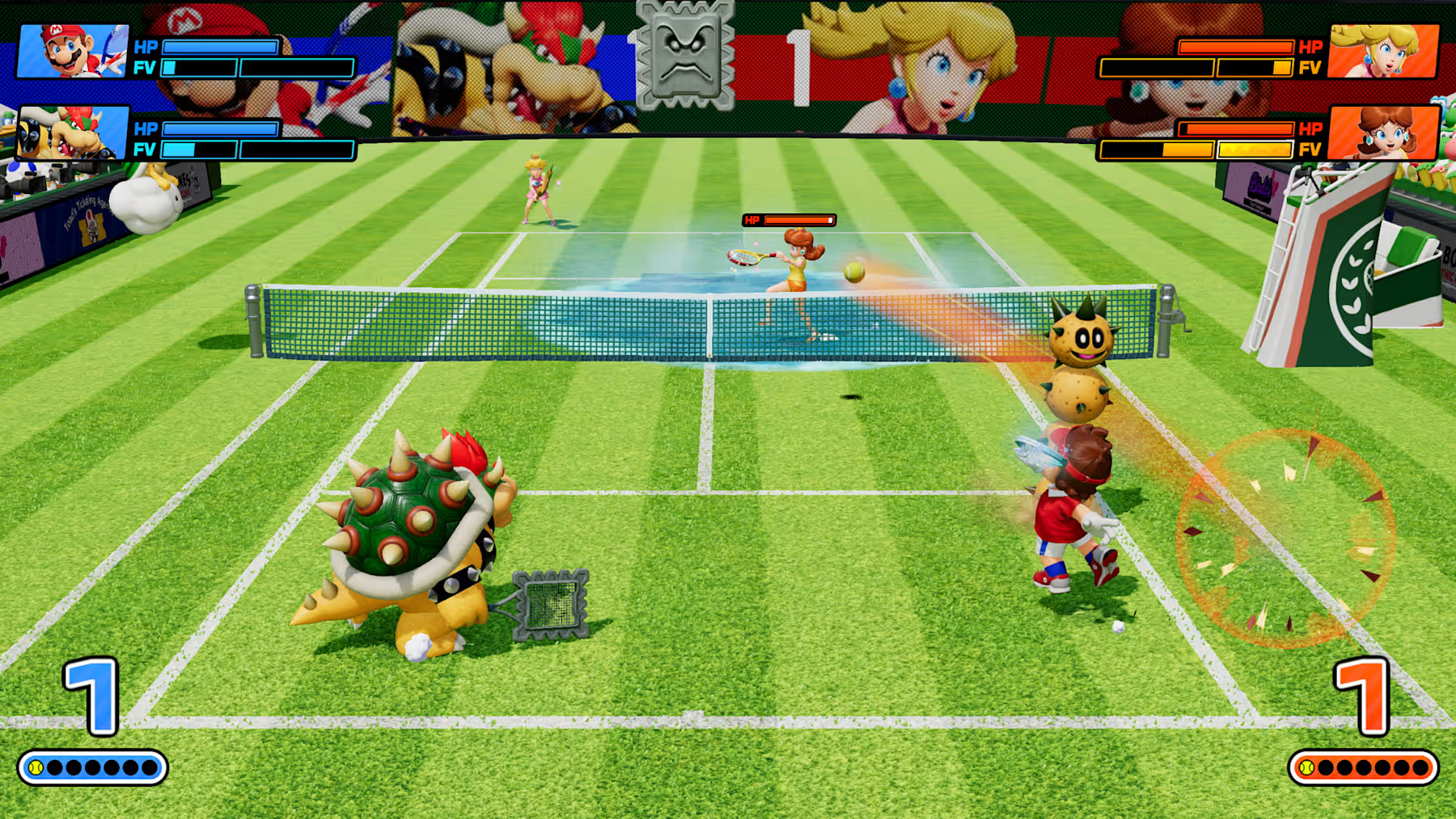
At its core, Mario Tennis Fever is still the fast, accessible, slightly unhinged tennis game you’d expect. You’re trading volleys across colorful courts, charging shots, and scrambling for position as special effects light up the screen. But the big twist this time is the introduction of Fever Rackets. These aren’t just cosmetic upgrades or minor stat boosts. Each one fundamentally changes how you approach a match.
Every Fever Racket comes with its own bonuses and a unique Fever effect. Some rackets lean into raw power, boosting your smash potential and making your shots harder to return. Others favor control, letting you place hazards on the field that can affect the enemy, or you if you’re not careful. A few are clearly designed for chaos, enabling aggressive status effects that can trip up your opponent at key moments.
Choosing a racket feels almost as important as choosing your character. In older Mario Tennis games, I’d typically pick a favorite and stick with them. Here, I found myself constantly experimenting with combinations to see how different stat buffs and Fever abilities played off each other. A speed focused character with a power boosting racket feels completely different from a balanced character with one that enhances control. The formula has seen a real shakeup compared to previous Mario Tennis games.
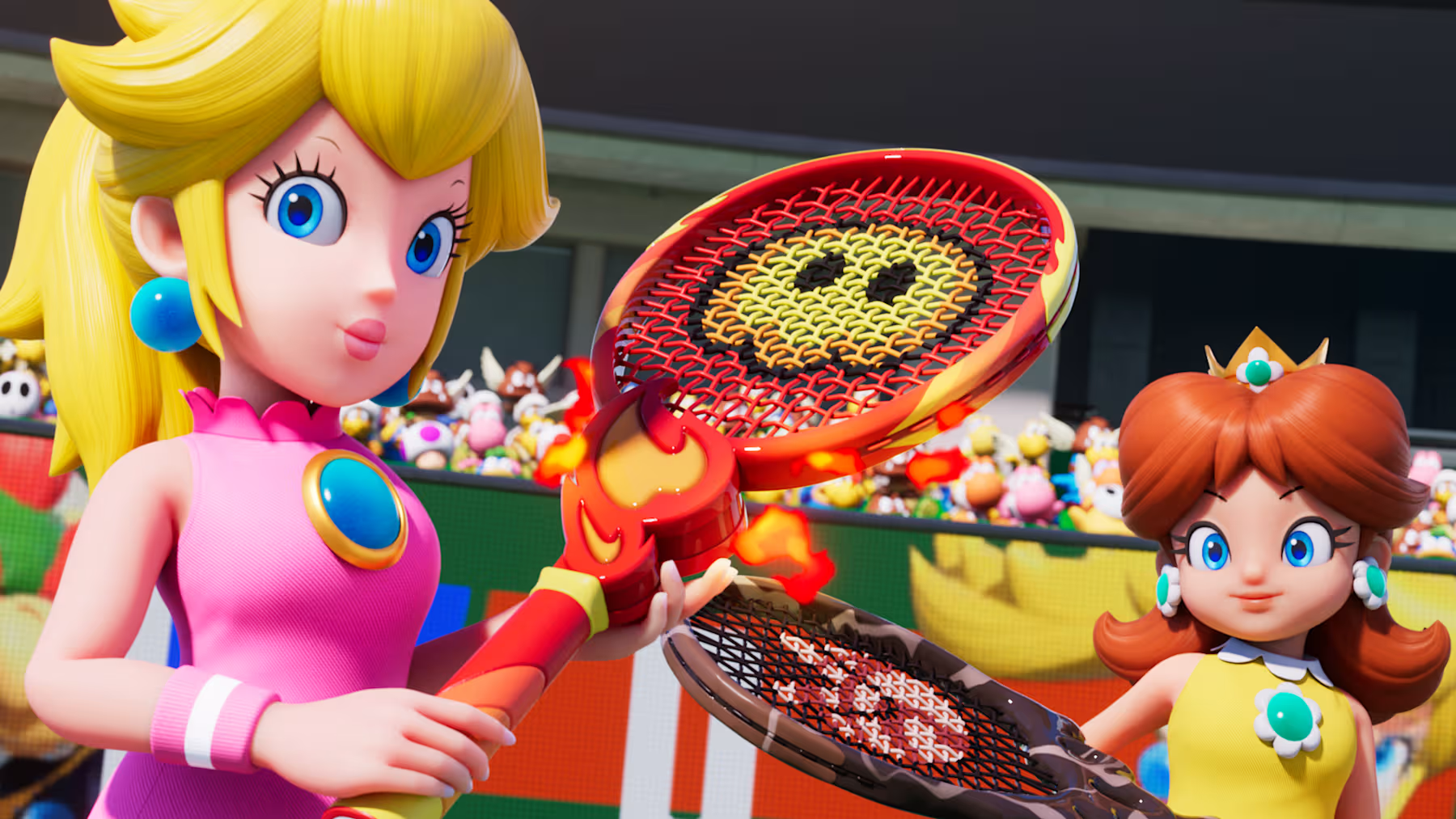
The roster helps a lot with that experimentation. Mario Tennis Fever boasts close to 40 playable characters, pulling from all corners of the Mario universe. You’ve got the obvious heavy hitters like Mario, Luigi, Peach, and Bowser, but also a surprising number of deeper cuts and fan favorites. It had some real surprises that I didn’t expect to see, but they made them work in a sports game.
Each character comes with defined stats in four categories, speed, power, control, and spin. Speed determines how quickly you can cover the court. Power affects how hard you can hit. Control dictates shot placement accuracy. Spin influences how sharply your shots curve or bounce. On paper, that sounds straightforward. In practice, it creates a lot of subtle variation. A high speed, low-power character forces you to outmaneuver and outlast your opponent. A heavy power hitter can dominate with well timed smashes but may struggle if caught out of position.
When you layer Fever Rackets on top of those base stats, the possibilities multiply. I had a lot of fun building what I thought would be strong setups, only to discover that every combination has trade offs. A glass cannon build might dominate early in a match but fall apart if the opponent adapts. That balance makes competitive play feel alive and keeps the experience fresh.
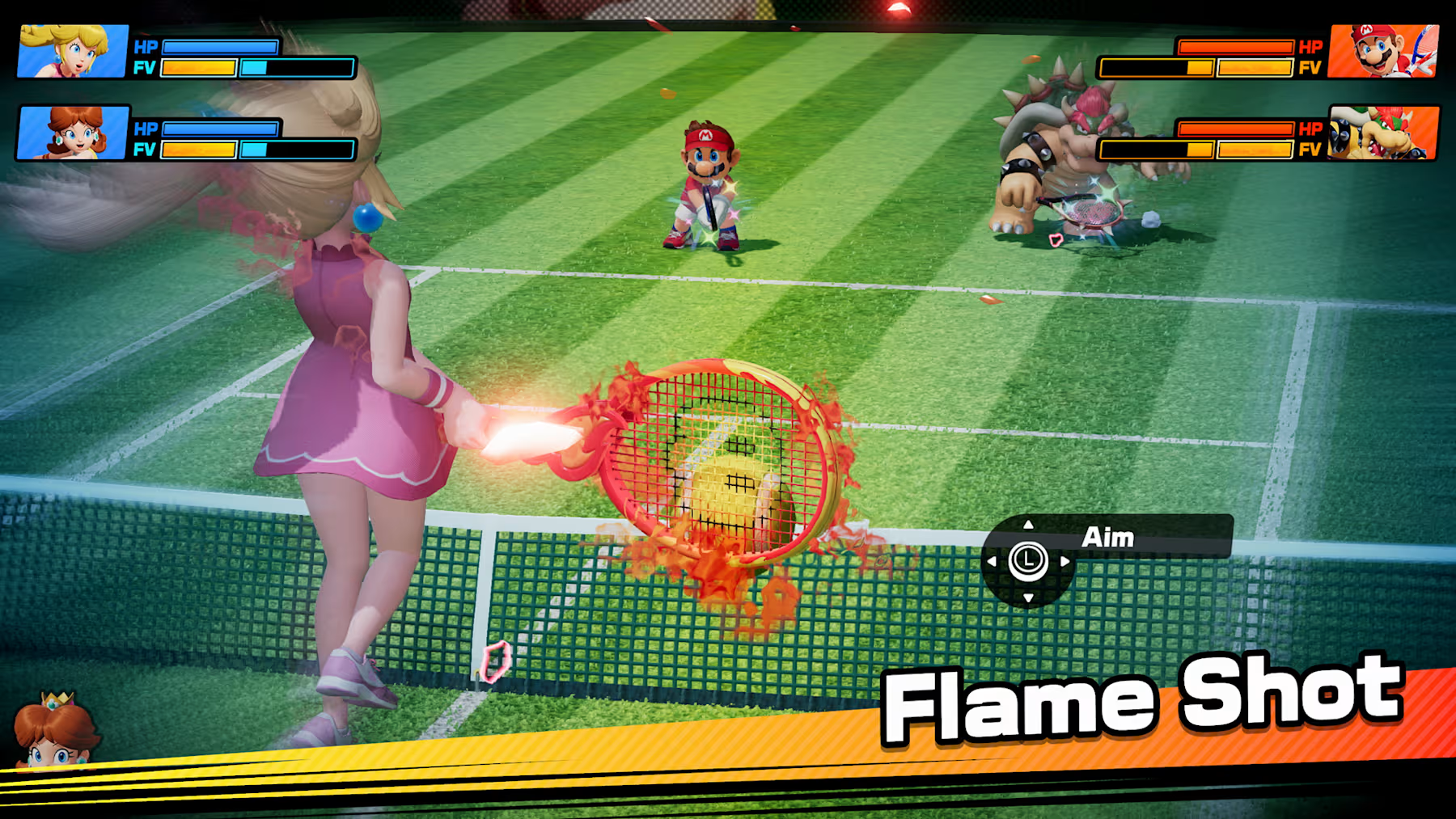
The Fever system itself is where matches really come alive. As you rally and land solid returns, your Fever gauge fills. Once it’s maxed out, you can unleash a Fever Shot. When the ball hits the ground, it triggers the racket’s special effect. Sometimes that means a direct physical attack that knocks your opponent back or stuns them briefly. Other times, it creates environmental hazards on the court, like slippery patches or bouncing shockwaves that distort the usual flow of play.
I love how these effects inject tension into every rally. It adds a mind game element. Do I play aggressively and try to end the point before they can activate their fever shot? Or do I play defensively and prepare to counter the chaos? Fever Shots can absolutely turn the tide of a match, but they’re not guaranteed wins. Smart positioning and timing still matter. That balance keeps the mechanic from feeling cheap.
Beyond the core gameplay, Mario Tennis Fever offers a solid spread of modes. There’s the standard tournament mode, which lets you compete in escalating brackets against the CPU. Trial Tower provides structured challenges that test specific mechanics, like precision shots or endurance rallies. These are great for sharpening skills and pushing yourself outside your comfort zone.
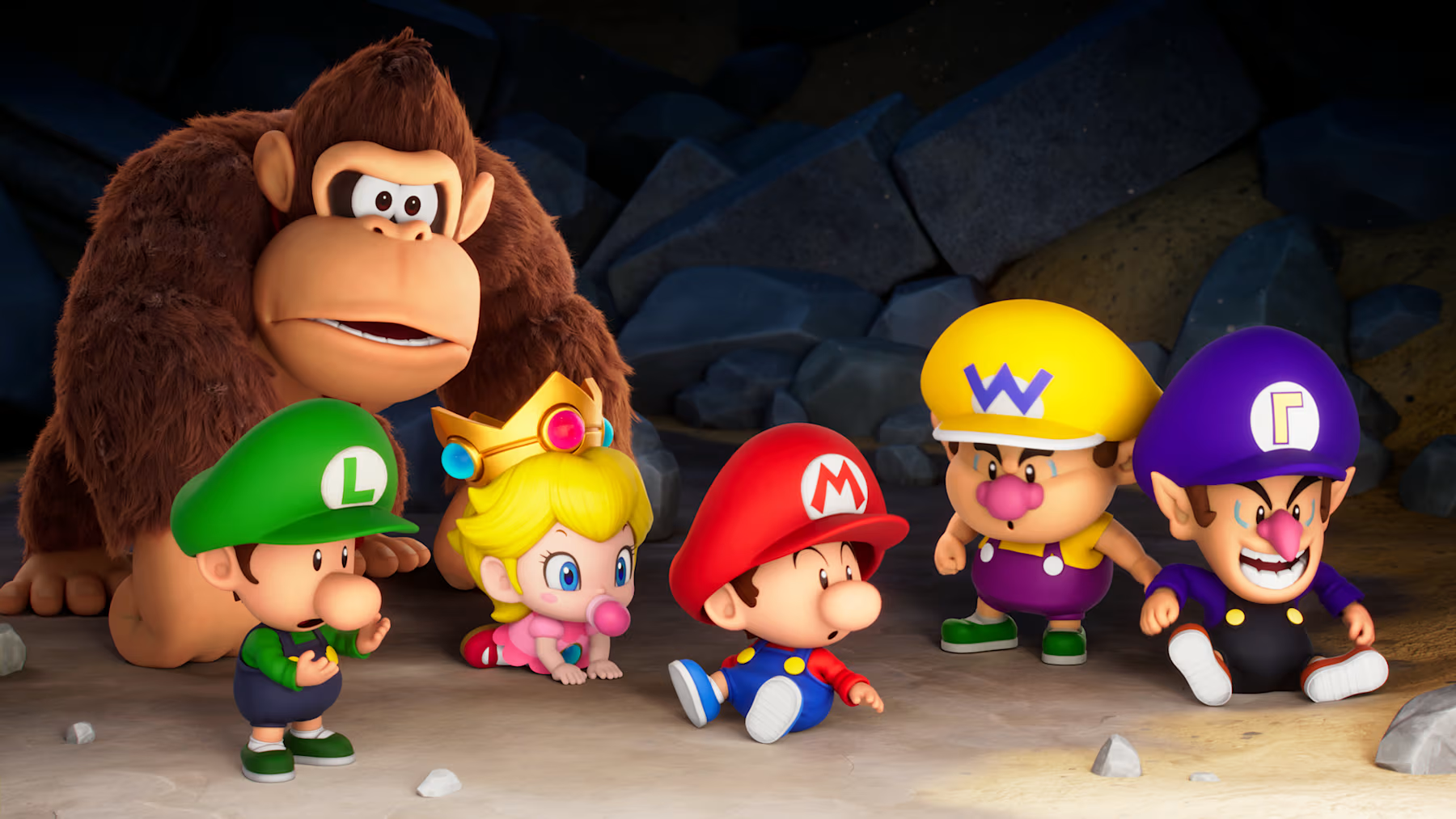
Then there’s Adventure Mode, which is easily the most ambitious part of the package. The premise is surprisingly wild. The core cast has been turned back into babies, and you enroll at a tennis academy to relearn the sport from scratch. It’s a clever excuse to reset your abilities and build them back up over time.
The mode opens with a beautifully animated cutscene that immediately pulled me in. Seeing these familiar characters reduced to toddlers with oversized rackets is both hilarious and oddly charming. I was genuinely intrigued by the setup and the visuals. The idea of relearning tennis mechanics as part of the story felt like a smart way to onboard new players.
Structurally, Adventure Mode functions as an extended tutorial. You start with the basics, simple movement and basic shots, and gradually unlock advanced techniques. As you level up, you gain access to more complex mechanics, including Fever usage and specialised shot types. In that sense, it’s very effective. By the time I finished it, I felt confident jumping into tournaments and more competitive matches.
That said, I did find it a bit too short. Just as the narrative felt like it was building momentum, it wrapped up. There’s also a fair amount of dialogue and mini-game busywork that pads out the runtime and I wanted more actual tennis. Some of the side tasks felt repetitive, and I do wish the pacing were tighter overall.
On the plus side, the boss encounters are genuinely creative. These matches remix the rules in clever ways, forcing you to use specific mechanics under pressure. They’re easily the highlights of the mode and show what the developers can do when they fully lean into the game’s chaotic potential.
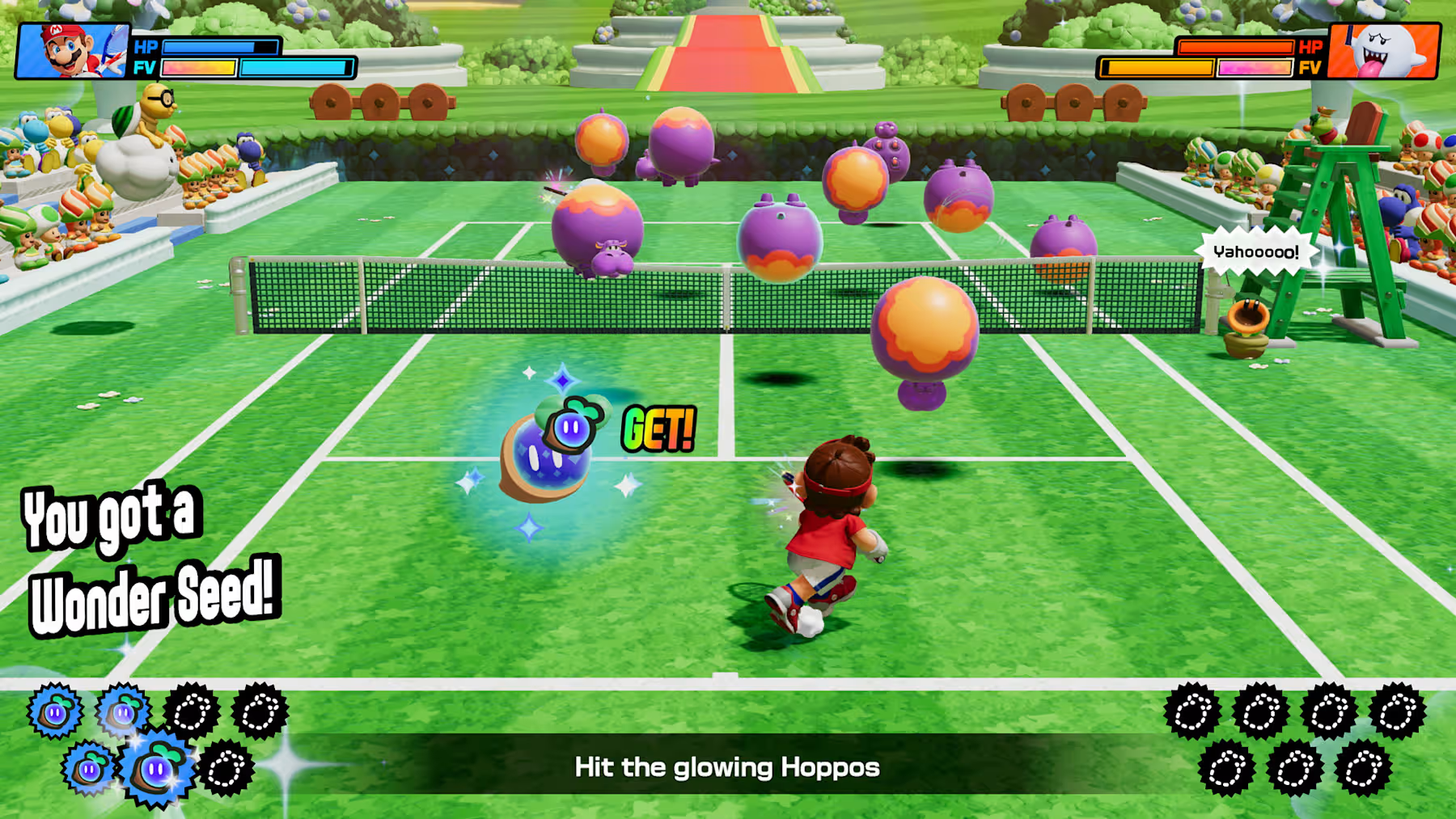
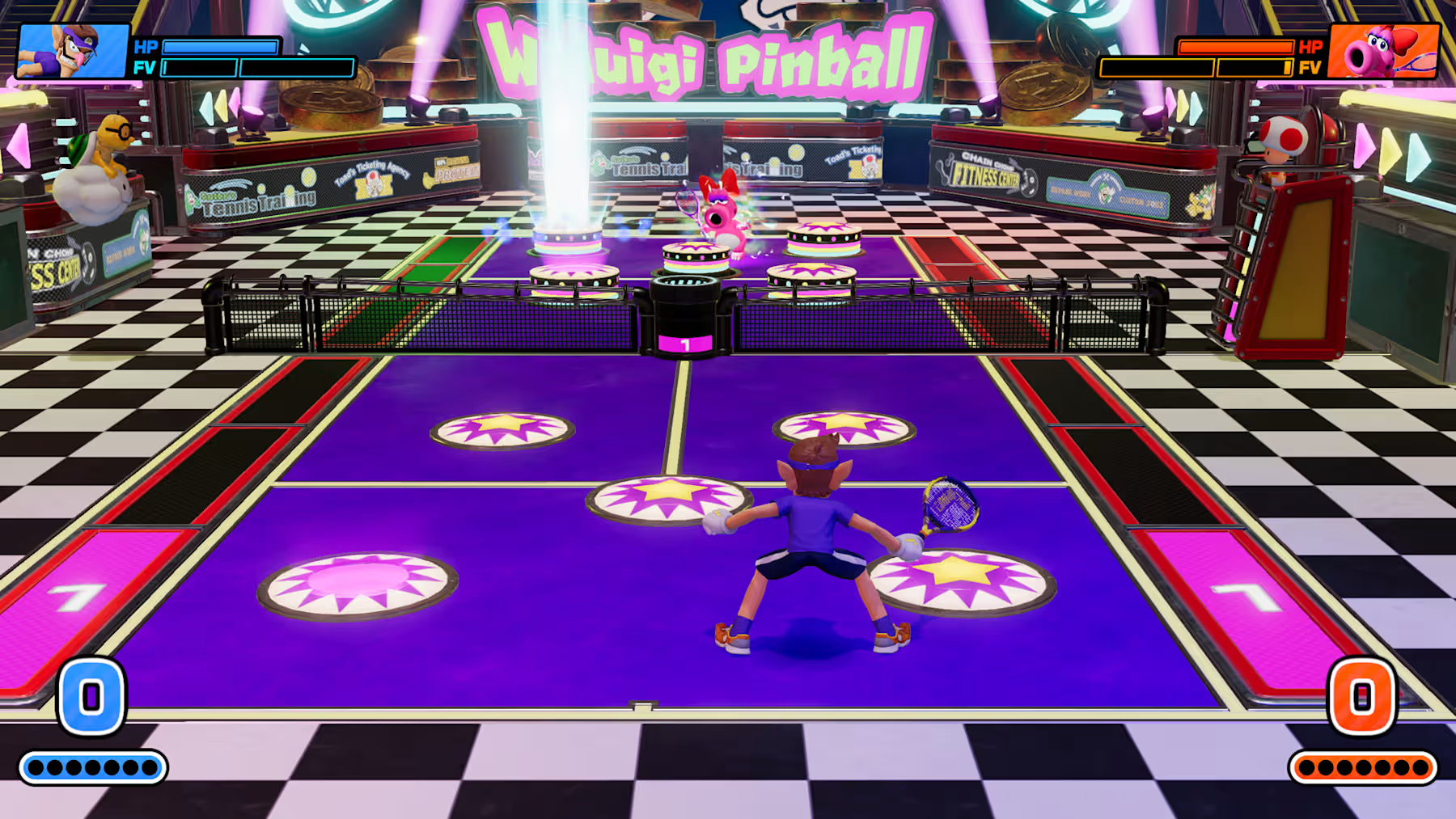
Visually, Mario Tennis Fever is exactly what I hoped for from a first-party title on new hardware. Character models look sharp and expressive, with vibrant colors that pop whether you’re playing docked on a big screen or in handheld mode. The courts are lively, packed with small details and reactive elements that make each venue feel distinct.
The particle effects during Fever Shots are especially impressive. Sparks, shockwaves, bursts of color, and environmental distortions fill the screen without overwhelming the action. It’s chaotic, but readable. The UI carries that classic Nintendo polish too. Menus are clean, intuitive, and snappy. It all feels cohesive and thoughtfully designed.
Performance has been rock solid in my experience. I didn’t encounter any noticeable slowdown, stuttering, or visual hiccups. Matches stayed smooth even when both players unleashed Fever effects back to back. Whether I was playing docked or in handheld mode, the experience felt consistent and stable.
Local multiplayer is, as always, a highlight. There’s something timeless about sitting next to someone on the couch and trash talking between serves. The game supports both competitive and co-op setups, and it’s easy to jump in and out of matches. I can already see this becoming a go-to party game in my rotation.
I didn’t spend as much time with the online modes as I probably should have, but I suspect that’s where the game’s real longevity lies. With the depth introduced by Fever Rackets and stat combinations, there’s clear potential for a competitive scene to develop. If the netcode holds up and the community embraces it, I could see Mario Tennis Fever finding its legs online more than anywhere else.
Mario Tennis Fever takes a familiar formula and injects it with meaningful new ideas. Fever Rackets add strategic depth without sacrificing accessibility. The roster is stacked. The presentation is polished. And at its best, the game captures that perfect Mario sports balance of skill, spectacle, and just a bit of chaos.
A Nintendo Switch 2 review code was provided by Nintendo for the purpose of this review.
If you want to see more content like this and never miss one of our frequent gaming and anime giveaways come and Follow Ani-Game on Twitter.
8
- + A fun change up to the existing Mario Tennis formula
- + Fever Rackets bring a lot of variety and customisation
- + The visuals are amazing
- + Large cast of characters to pick from and customise
- - Story mode is on the short side and had the potential for a lot more