Eighteen years is a long time to wait for anything, let alone a sequel to one of your favorite games. As someone who has been playing Metroid for as long as I can remember, Metroid Prime 4: Beyond feels less like just another Nintendo release and more like the closing of a very long chapter that’s been left hanging since 2007. Metroid has always been one of Nintendo’s most under appreciated franchises. It never sells like Mario or Zelda, and it rarely gets the spotlight it deserves, but for those of us who love it, nothing else quite hits the same. After years of silence, a public reboot, and plenty of development rumors, Prime 4 is finally here on Switch 2. The good news is that it was worth the wait.

Metroid Prime 4: Beyond opens with confidence. It knows what it is and who it’s for. The story wastes little time reintroducing Sylux, one of the more intriguing antagonists in the Prime subseries. If you’ve played Metroid Prime Hunters, seeing Sylux step back into the spotlight feels earned, but newcomers aren’t left behind. The game does a good job establishing the threat without relying too heavily on past lore. Samus begins the adventure fully equipped, a deliberate choice that lets the opening sequences serve as a refresher course in movement, combat, and scanning. It feels empowering at first, and then, in true Metroid fashion, it’s all taken away. Samus is thrown into a new location, stripped of her abilities, and forced to rebuild herself piece by piece. It’s familiar, but it still works, especially because the new upgrades go beyond the usual variations on beams and missiles.
The standout addition to Samus’ arsenal this time around is her new psychic abilities. These powers are woven into nearly every part of the game, from combat to exploration to puzzle solving. At first, they feel almost subtle, like an extension of existing mechanics rather than a radical shift. As the game goes on, they become essential. You’ll manipulate objects from a distance, interact with alien technology in new ways, and even bend certain environmental elements to your will. What I appreciated most is that these abilities never feel gimmicky. They are introduced gradually and expanded thoughtfully, making them feel like a natural evolution of Samus rather than a one off hook for this entry.
Exploration has always been the heart of Metroid Prime, and Beyond absolutely understands that. The environments are dense, layered, and packed with secrets. Scanning returns as a core mechanic, and I’m glad Retro Studios doubled down on it instead of sidelining it. Scanning enemies, plants, ruins, and ancient technology adds a huge amount of worldbuilding. You learn about extinct civilisations, hostile ecosystems, and the history of the environments you’re traversing. It rewards curiosity in a way few games do. If you rush through areas without scanning, you’ll still get the main story, but you’ll miss so much of what makes these worlds feel alive.
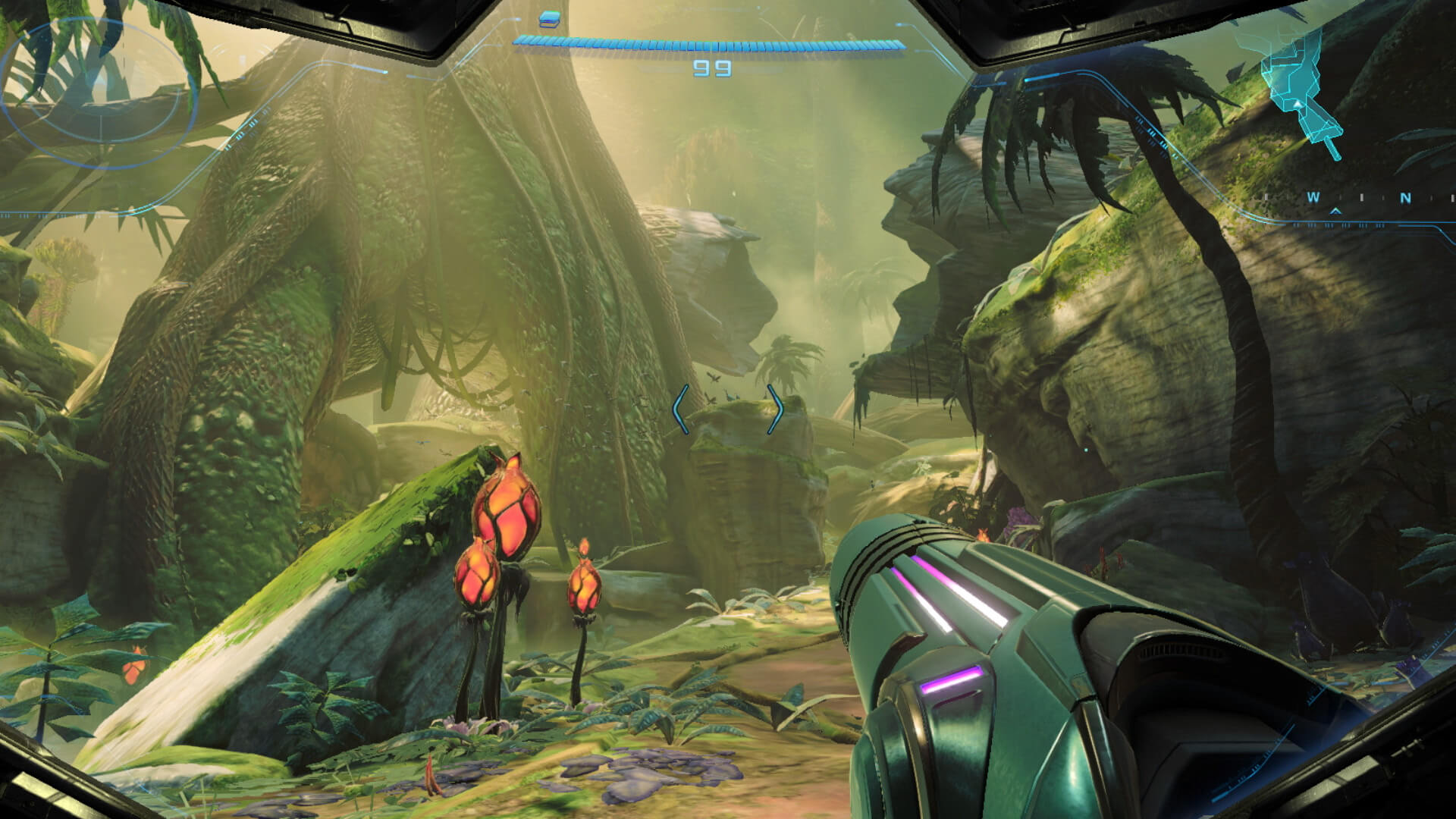
Visually, Metroid Prime 4: Beyond is stunning. This is easily the best looking Switch 2 game so far when it comes to high fidelity visuals. The art direction is impeccable, blending realism with the alien strangeness Metroid is known for. Lighting in particular stands out. Beams of light cut through foggy ruins, bioluminescent plants glow softly in dark caverns, and metallic interiors reflect explosions and weapon fire with impressive clarity.
The variety of environments is another major strength. You’ll move through icy wastelands, dense alien jungles, ancient stone structures, and high tech facilities, each with its own distinct personality. These areas are not just visually different, they play differently too. Wildlife behaves uniquely depending on the biome, environmental hazards force you to adapt, and secret paths are hidden in clever ways. Every location is packed with flora and fauna to scan, and everything pops on screen. Nothing feels copy pasted or phoned in.
Boss fights are a highlight throughout the entire adventure. Each major boss feels fresh, both in design and in how the encounter unfolds. These aren’t just oversized enemies with bigger health bars. They test your understanding of Samus’ tools and demand that you pay attention. Some require precise use of your psychic abilities, others push your mobility skills, and many force you to rethink how you approach combat altogether. I loved that so many fights revolve around identifying a weakness and then executing a specific strategy rather than just unloading missiles until something dies. They kept me engaged from start to finish, and a few of them genuinely surprised me.
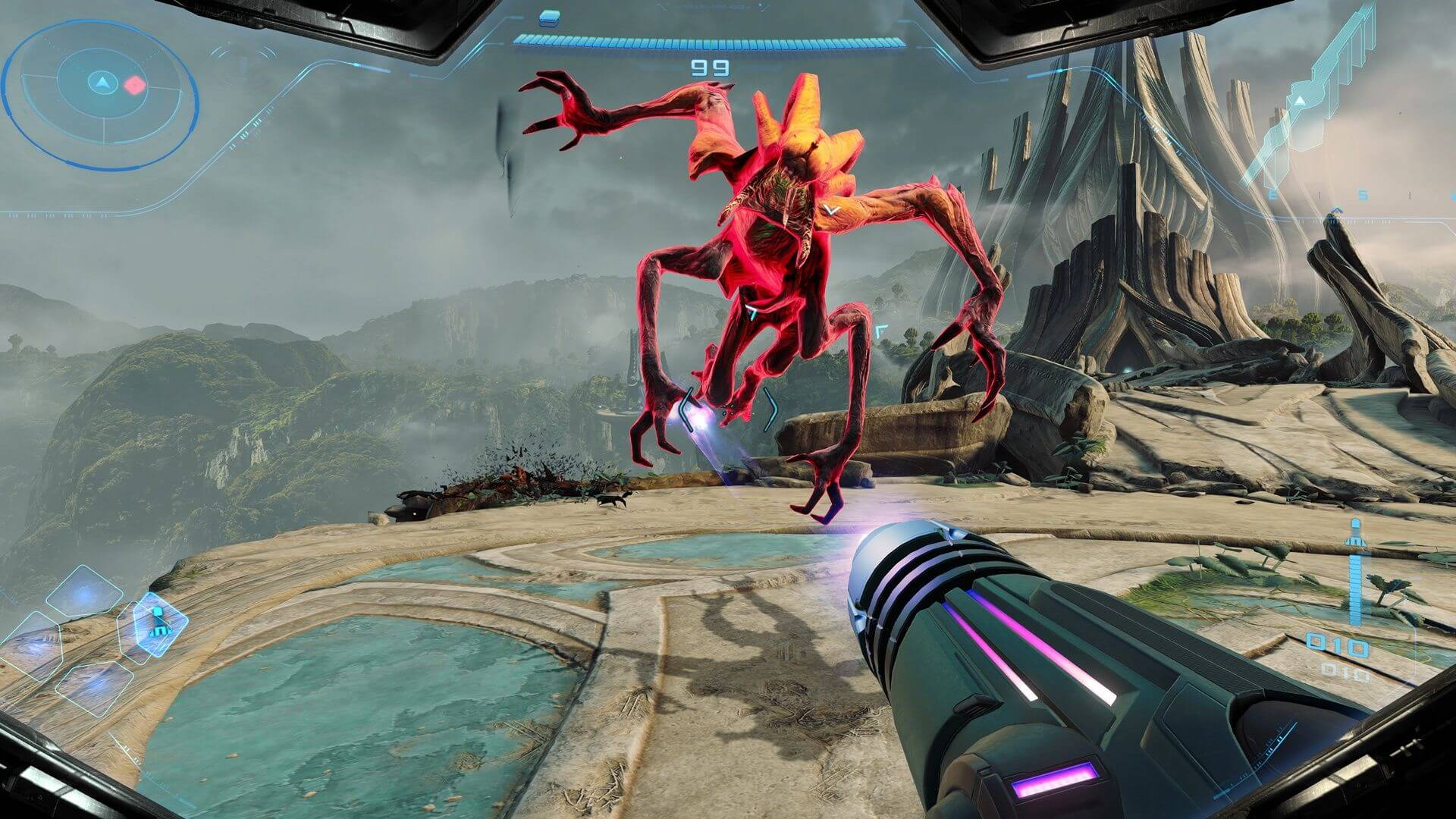
On the technical side, Prime 4 offers two performance modes on Switch 2. Quality Mode focuses on visual fidelity, while Performance Mode prioritises higher frame rates. I spent most of my time docked and playing in Quality Mode, and I have no regrets. The game looks incredible, and I rarely noticed any performance issues that pulled me out of the experience. Performance Mode is there for those who prefer smoother motion, but Quality Mode feels like the way the game was meant to be seen.
The soundtrack deserves special mention. This might end up being my favorite Metroid soundtrack ever, and that’s saying a lot. The music strikes a perfect balance between atmosphere and emotion. Some tracks are eerie and minimal, letting the sound of the environment take center stage. Others swell during major story moments or boss fights, heightening the tension without overwhelming the scene. It adds so much to the overall experience and reinforces the feeling of isolation, wonder, and danger that defines Metroid.
One of the more experimental additions is Vi-O-La, a new traversal and utility system that plays a significant role in exploration. Vi-O-La can be used to boost movement, fire weapons, and access areas that would otherwise be unreachable. It’s also the primary way you travel through Sol Valley, the game’s open hub area. Sol Valley is where my enthusiasm dipped slightly. It’s not bad, but it is underwhelming compared to the main levels. The environment is largely barren and lacks the vibrant detail found elsewhere. I understand what Retro was going for, creating a visual and structural link between stages, and I do appreciate the shrine concept scattered throughout the area. Those shrines are genuinely cool and hint at something that could be great if refined further. As it stands, Sol Valley feels like a solid idea that didn’t quite reach its full potential.

One thing Prime 4 does exceptionally well is welcoming newcomers. There are callbacks and nods to previous Prime games, but none of them are required knowledge. The story stands on its own, which is probably the right call given how difficult it is to play all the Prime games on modern hardware and how long it’s been since Prime 3 released. As a longtime fan, I enjoyed spotting familiar themes and references, but I never felt like the game was leaning too hard on nostalgia.
By the time the credits rolled, I felt genuinely satisfied. Metroid Prime 4: Beyond is not just a good sequel, it’s a confident continuation of the series that respects its roots while pushing forward. It’s gorgeous, atmospheric, mechanically rich, and filled with moments that reminded me why I fell in love with Metroid in the first place. After eighteen years, the wait could have easily ended in disappointment. Instead, Prime 4 proves that some things really are worth waiting for.
A Nintendo Switch 2 review code was provided by Nintendo for the purpose of this review.
If you want to see more content like this and never miss one of our frequent gaming and anime giveaways come and Follow Ani-Game on Twitter.
9
- + Visually gorgeous art direction
- + Variation of weapons, skills and environments
- + Incredible soundtrack
- + Great for newcomers and existing fans of the Prime series
- - The Sol Valley area is underwhelming compared to the main levels